

 EN
 ES
 PT
 DE
 FR
 NL
 PL
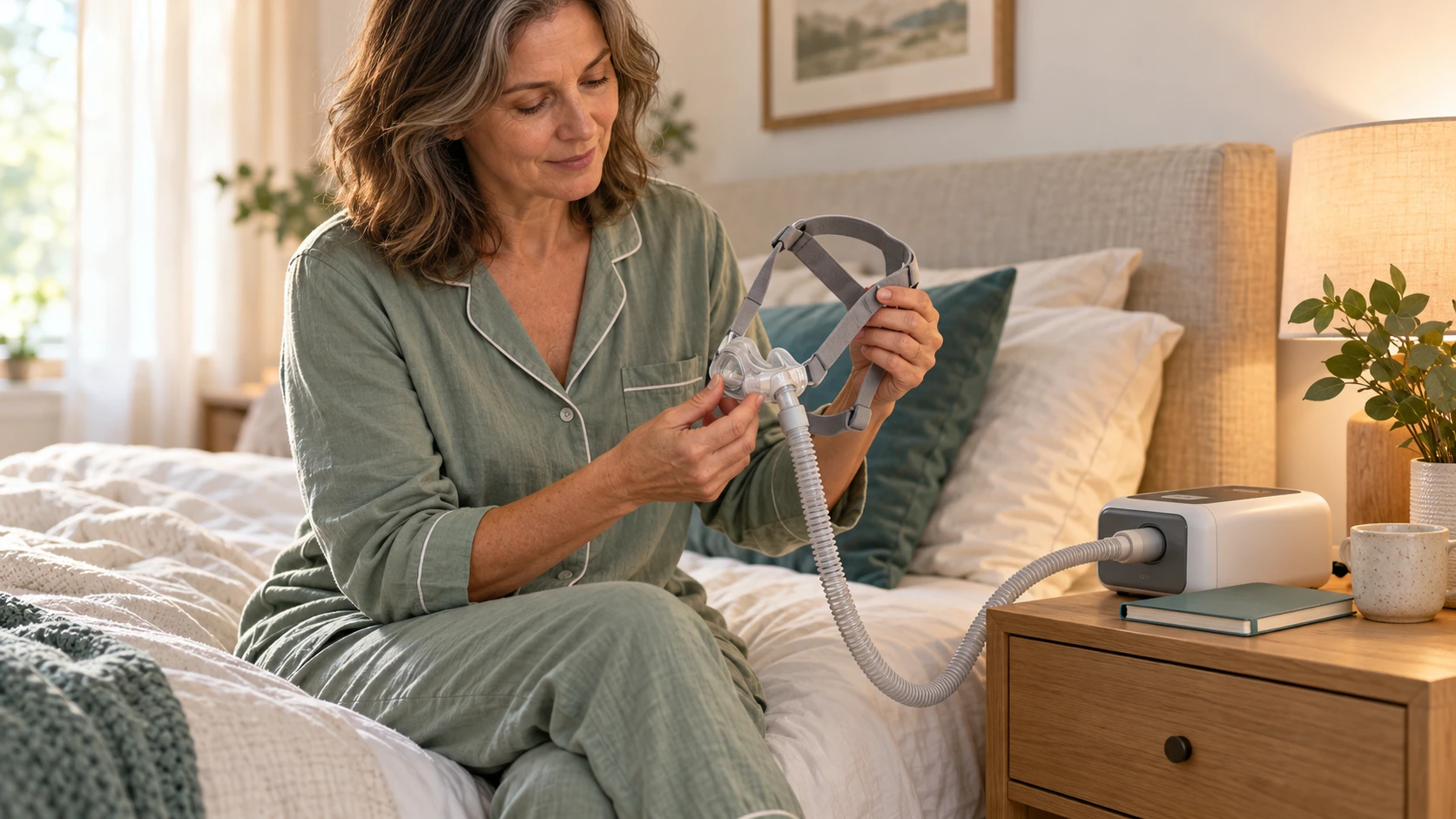
If you are asking how to start CPAP therapy, begin with a clear equipment handover and a plan for getting help. You should know what was prescribed, how your supplied mask and machine work together, and whom to contact when something feels wrong.
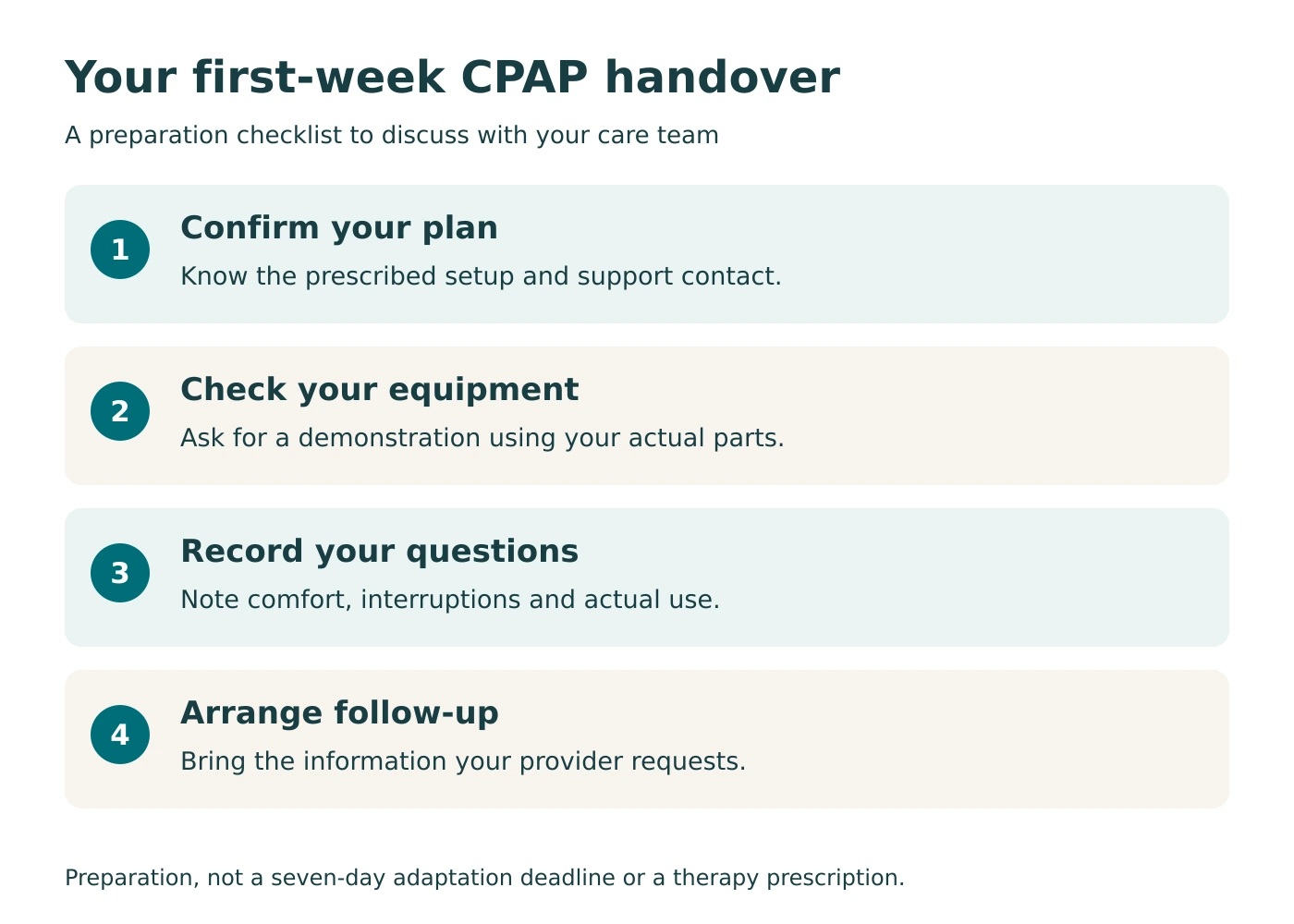
This guide is for adults beginning prescribed PAP treatment for sleep apnea. “First week” is a way to organize preparation and questions, not a deadline for becoming comfortable or a promise of results. Follow the instructions from your treating clinician and the manufacturers of your actual equipment.
Start With Your Treatment Plan
Before the first night, ask your care team to explain the therapy you have been prescribed. CPAP, automatic PAP and bilevel PAP are related terms, but they do not mean that every machine or setting is interchangeable. Our guida CPAP vs BiPAP explains the terminology; choosing or changing treatment belongs with your clinician.
La American Thoracic Society’s adult PAP guide describes the role of the prescription, equipment provider and follow-up data. Use your handover to turn that information into a practical contact plan.
| Confirm | Ask your care team or equipment provider |
|---|---|
| Your prescribed setup | Which machine, therapy mode and clinician-directed settings should I receive? |
| The supplied interface | Which mask model and size is this, and can you watch me put it on and remove it? |
| Equipment instructions | Where are the instructions for this machine, mask, tubing and any humidifier? |
| Help between appointments | Who handles fit problems, equipment faults and clinical symptoms, and how do I reach them? |
| Follow-up | When will we review my experience, and what information should I bring? |
Ask for a Hands-On Equipment Demonstration
A delivery box is not the same as a fitting appointment. Ask the provider to demonstrate the actual supplied components, then explain the steps back in your own words. A useful handover ends with you knowing how to start and stop your device as instructed, attach the supplied tubing and manage your mask.
- Identify each component. Keep the exact machine and mask names with their manuals. Ask which connectors, filters and optional parts belong to your setup.
- Check the mask instructions. Ask for a size and fit assessment rather than assuming a size letter transfers between brands.
- Review the bedside arrangement. Ask where the device should stand, how its air openings stay clear and how the hose should run without pulling on the mask.
- Clarify humidifier care. If one is supplied, ask about its water requirements, filling, emptying and cleaning instructions.
For an overview of the parts, see how a CPAP machine works. For the different contact areas of nose-only interfaces, see nasal masks vs nasal pillows. Neither article establishes compatibility for a particular combination of products.
Make the First Bedtime Less Rushed
Set aside time before you are tired to locate your instructions, support contact and equipment. Ask your provider whether an awake practice session would help you learn the mask and controls. If they recommend one, clarify what to practice and how to use your prescribed setup. Familiarization is preparation for sleep use, not a replacement for it.
During a fitting, explain how you normally sleep and ask to check the mask in that position. Tell the provider if your bed pillow pushes against the interface or turning pulls on the tubing. The ATS troubleshooting sheet identifies mask fit and hose pull among practical issues to discuss.
Keep the first-night questions specific: “Where do I disconnect this?”, “Which sound is expected?” and “What should I do if this message appears?” are more useful than leaving with a general instruction to try harder.
Notice Problems Without Diagnosing Them Yourself
Write down what happened and when. You do not need to label an event as a particular leak type, interpret a graph or decide that the prescribed pressure is wrong before contacting your provider. A clear description can guide the next conversation.
| Cosa noti | What to record or ask |
|---|---|
| The mask shifts when you turn | Which position, where the cushion moves and whether the hose or bed pillow pulls on it. |
| Dry mouth or nasal discomfort | When it begins, which interface you use and what humidifier instructions you were given. |
| Straps feel painful | The contact point and whether you tightened them to address a leak; ask for a fitting reassessment. |
| The airflow feels difficult to tolerate | What you feel and at what stage; ask your clinician about the prescribed setup and appropriate comfort options. |
| You remove the mask during sleep | What you remember before removing it, whether you woke and how often it happens. |
Do not copy another person’s pressure settings or change prescribed therapy to compensate for discomfort. Contact your treating team promptly if problems prevent use. The ATS explains that support, fitting changes and clinician-guided comfort measures can be part of working through intolerance; it does not mean you should select a different therapy yourself.
Record Use and Arrange the Follow-Up
La Il National Heart, Lung, and Blood Institute advises using CPAP whenever you sleep, including naps and travel. Ask your clinician what that means for your own treatment plan and bring up difficulties early. Do not treat a short practice session, a guessed usage number or an insurer’s administrative minimum as a substitute for the prescribed plan.
Keep a short record of actual use, interruptions and questions. Our manual CPAP usage tracker can help organize entries you provide; it does not read your device, diagnose a problem or certify insurance compliance. If you are unsure of a duration, mark it as unknown in your notes rather than inventing an accurate-looking total.
Before the review, make a short list: what is comfortable, what interrupts use and which question matters most. Ask whether your provider will review device data and how to share it. A symptom diary and a device report serve different purposes, so bring whichever your team requests.
Keep Cleaning Instructions With the Equipment
Start with the manufacturer’s care instructions rather than a generic accessory schedule. The FDA’s CPAP cleaning guidance says most accessories can be cleaned with mild soap and water as directed by their manufacturer. Add-on bacterial-reduction equipment does not replace that routine. Do not immerse the powered machine.
Il nostro CPAP cleaning overview provides more context. Ask your equipment provider to identify which parts are reusable, how they should dry and when the specific components need attention. This article does not set a universal replacement interval.
Starting CPAP Therapy: Frequently Asked Questions
How long does it take to get used to CPAP?
There is no guaranteed seven-day adjustment period. NHLBI notes that getting used to CPAP can take time. Keep your provider informed about difficulties rather than waiting for an arbitrary deadline to seek help.
Should I buy a different mask before the first night?
Start by reviewing the supplied mask and fit with your provider. Ask what the package includes and whether the particular size and interface suit your setup before ordering a replacement.
Can I change the pressure if it feels uncomfortable?
Discuss discomfort with your clinician. Ask which comfort controls you have been instructed to use, and follow those instructions. Do not alter prescribed pressure settings using advice intended for another person.
What should I bring to the first follow-up?
Bring the equipment details, your questions and a record of interruptions or discomfort. Ask in advance whether the provider wants the device, mask, data card or a particular report.