

 EN
EN ES
ES PT
PT DE
DE IT
IT NL
NL PL
PL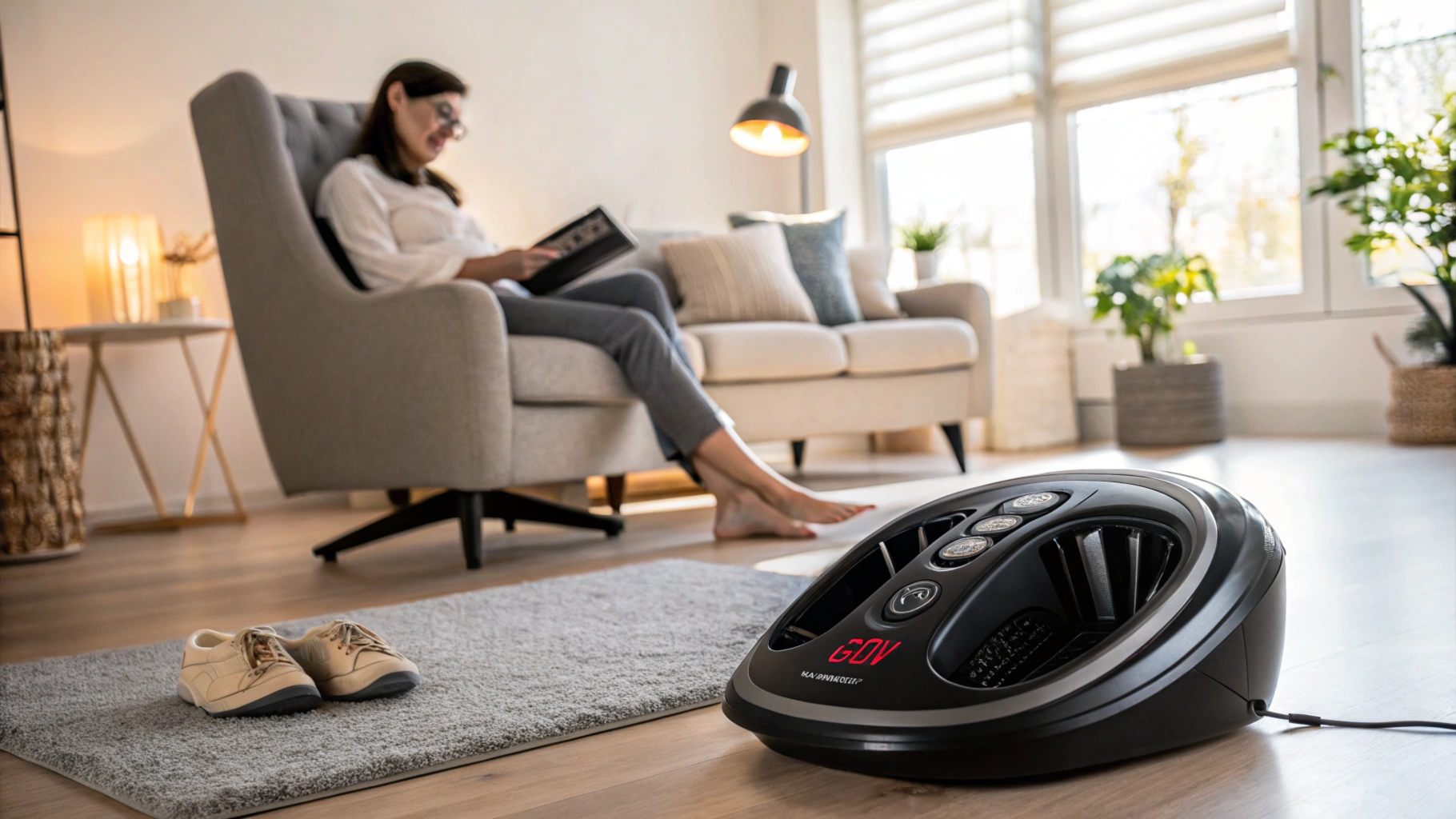
Introduction
Les masseurs de pieds réflexologiques sont des appareils conçus pour exercer une pression ciblée sur des points spécifiques des pieds, correspondant à divers organes et systèmes du corps. Enracinés dans les principes de la réflexologie - une pratique thérapeutique qui consiste à stimuler les points réflexes des pieds, des mains et des oreilles pour promouvoir la santé et le bien-être -, ces masseurs visent à reproduire les bienfaits des traitements manuels de réflexologie.
En exerçant une pression et un massage précis sur les pieds, les appareils de réflexologie plantaire peuvent contribuer à soulager le stress, à réduire la douleur et à améliorer la circulation. Ils constituent un moyen pratique et accessible d'expérimenter les avantages de la réflexologie dans le confort de son domicile.
Dans cet article, nous explorerons les différents types de masseurs de pieds de réflexologie, leurs bienfaits, les principaux facteurs à prendre en compte lors de la sélection d’un appareil, ainsi que les fonctionnalités supplémentaires susceptibles d’améliorer votre expérience. Que vous cherchiez à soulager une gêne au niveau des pieds ou à améliorer votre santé globale, la compréhension de ces appareils peut vous aider à faire un choix éclairé.
Comprendre les masseurs de pieds réflexologiques
Définition et principe
Un masseur plantaire de réflexologie est un appareil conçu pour exercer une pression ciblée sur des zones spécifiques des pieds, appelées points réflexes, qui correspondent à divers organes et systèmes du corps. Cette pratique repose sur les principes de la réflexologie, une méthode thérapeutique qui consiste à stimuler ces points réflexes pour favoriser la santé et le bien-être.
La réflexologie plantaire possède une histoire très ancienne : les premiers traitements consistant à masser les pieds ont été pratiqués en Chine et en Inde dès 5000 av. J.-C., où des thérapies médicales utilisant la pression des doigts servaient à agir sur les champs énergétiques du corps (acupuncture et acupression, acupression, shiatsu).

Le “ tombeau des Médecins ” à Saqqarah (Égypte, vers 2330 av. J.-C.) témoigne de l’ancienneté de cette pratique : une scène de massage des pieds et des mains est peinte sur ses murs. La pratique s’est ensuite propagée en Occident grâce au célèbre médecin grec Hippocrate, qui enseignait le massage des pieds à ses disciples.
On dit (mais il n'y a pas de preuve certaine) que même l'artiste de la Renaissance Benvenuto Cellini, à cause du stress et de certaines souffrances physiques, a eu recours à la réflexologie plantaire.
La réflexologie, une spécialité du massage devenue populaire en Occident, a débuté avec Pehr Henrik Ling en 1834, qui a établi un lien entre les douleurs de certains organes et des zones précises des pieds. Sir Henry Head a ensuite identifié des zones réflexes pour l’anesthésie, que le médecin de Boston William Fitzgerald a réinventées dans les années 1920, démontrant que la pression exercée sur les pieds pouvait éviter le recours à l’anesthésie lors d’interventions mineures. Edwin F. Bowers a ensuite introduit la thérapie des zones de Fitzgerald aux États-Unis, en appliquant une pression le long de dix zones énergétiques allant des gros orteils jusqu’à la tête, à l’aide des mains et d’instruments.
Cette pratique était utilisée par les dentistes et, lorsque le médecin new-yorkais Edwin F. Bowers a découvert la technique de Fitzgerald, il a décidé de promouvoir la réflexologie aux États-Unis au moyen de traités présentant les principes du fonctionnement de la réflexologie, fondés sur les théories du médecin de Boston.
La méthode, appelée “ thérapie des zones ”, reposait sur une pression exercée aussi bien avec les mains qu’avec d’autres instruments. Le corps était divisé en dix zones, des gros orteils jusqu’à la tête, le long desquelles circule l’énergie.
Dans les années 30, les travaux de Fitzgerald et Bowers ont été poursuivis par la thérapeute américaine Eunice Ingham, qui a publié deux livres intitulés Les histoires qui font le pied Could Tell et Stories Told by Feet dans lesquels elle a tendance à ne s'intéresser qu'aux pieds.

Avantages de l'utilisation d'un appareil de massage des pieds par réflexologie
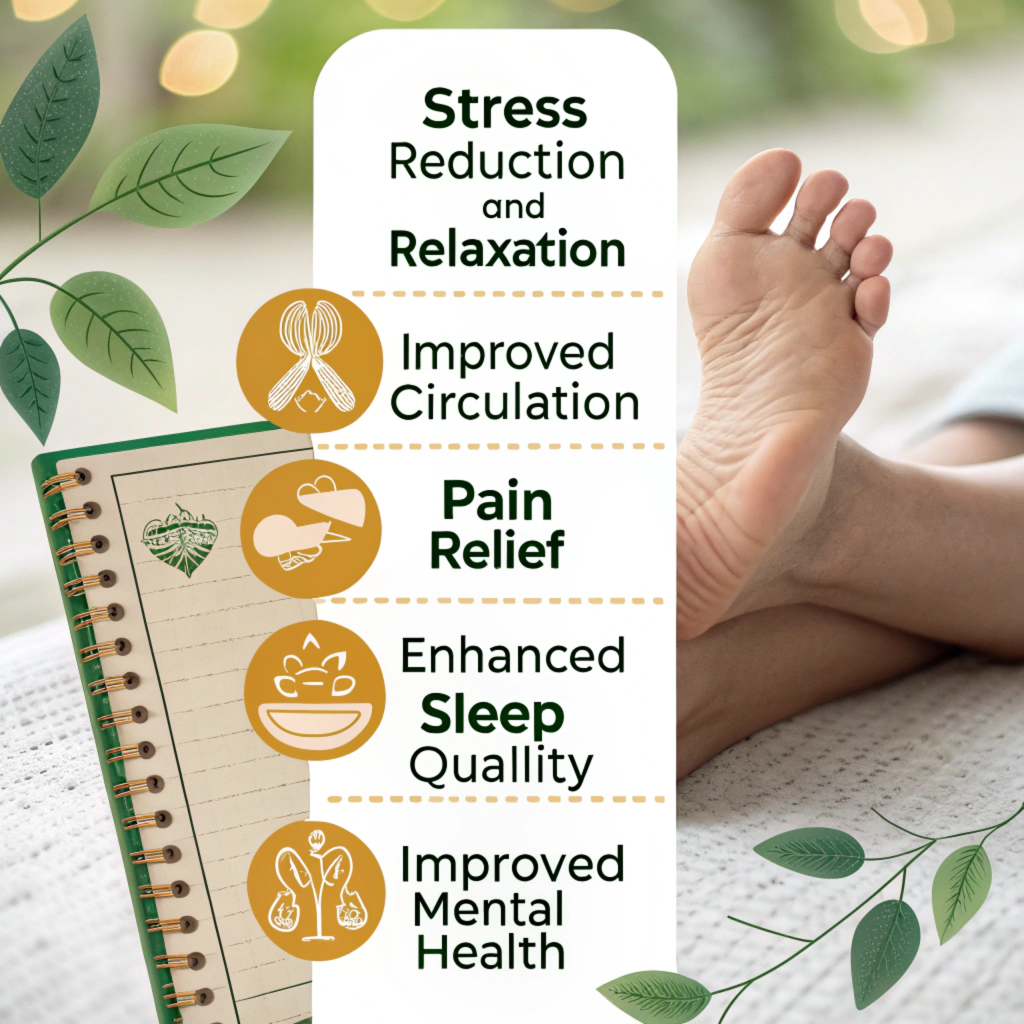
1. Réduction du stress et relaxation
L'un des principaux avantages de la réflexologie est la relaxation et la gestion du stress. Pour ce faire, on exerce une pression sur certains points du pied.
L'étude note que la réflexologie peut être un moyen d'interrompre le schéma de stress répétitif lié au mode de vie en “aidant les systèmes corporels à revenir à leur état naturel”.”
Une étude systématique de 2019 sur la réflexologie dans le cadre des soins palliatifs pour les personnes atteintes d'un cancer avancé a révélé que la réflexologie, ainsi que d'autres thérapies complémentaires telles que l'aromathérapie et les massages, améliorait le bien-être et offrait aux patients un répit et un moyen de s'évader de leur état de santé.
2. Amélioration de la circulation
Le massage des pieds stimule votre circulation, ce qui favorise la guérison et contribue à maintenir vos muscles et vos tissus en bonne santé. C’est particulièrement important si vous souffrez de problèmes de santé qui aggravent une mauvaise circulation ou des lésions nerveuses, comme le diabète.
Frotter vos pieds vous permet également de vérifier l'absence d'autres problèmes, comme les plaies, les cors et les ongles incarnés. Si vous avez une mauvaise circulation sanguine, il est conseillé de vérifier si vos pieds ne présentent pas de plaies.
3. Soulagement de la douleur
La réflexologie plantaire peut contribuer à réduire la douleur après une opération. Une étude réalisée en 2020 a montré que la réflexologie plantaire réduisait significativement la douleur après une opération de transplantation rénale, par rapport à un groupe témoin.
De même, une étude de 2018 a montré que la réflexologie plantaire réduisait significativement la douleur après une hystérectomie abdominale, par rapport à un groupe témoin.
Il existe également des preuves de l'efficacité de la réflexologie plantaire dans la réduction des douleurs chroniques. Dans une étude réalisée en 2019, la réflexologie plantaire a permis de réduire de manière significative la douleur et l'anxiété chez des enfants souffrant de douleurs chroniques.
Une étude réalisée en 2018 auprès de militaires souffrant de douleurs chroniques a révélé qu'après une séance de réflexologie plantaire, les scores de douleur étaient réduits de 43% chez les hommes et de 41% chez les femmes.
4. Amélioration de la qualité du sommeil
Étant donné que la réflexologie peut être bénéfique pour vous aider à vous détendre et à réduire le stress, il n'est pas surprenant que certains disent qu'elle peut aider à favoriser un sommeil plus réparateur.
Dans l'étude de 2020 sur la réflexologie plantaire après une transplantation rénale, le groupe ayant bénéficié de la réflexologie plantaire a vu la qualité de son sommeil s'améliorer de manière significative.
5. Améliorer la santé mentale
La réflexologie est censée induire la relaxation, et certaines recherches suggèrent que cela peut avoir un effet bénéfique direct sur la santé mentale.
Une méta-analyse publiée en septembre 2020 dans la revue Evidence-Based Complementary and Alternative Medicine a examiné 26 essais cliniques contrôlés randomisés portant sur plus de 2 300 patients. Les auteurs ont constaté une amélioration significative de la dépression, de l'anxiété et de la qualité du sommeil chez les adultes et ont conclu que la réflexologie pouvait être une thérapie de soutien pour les problèmes de santé mentale, tout en recommandant des recherches supplémentaires et des études à plus long terme.
Facteurs clés à prendre en compte
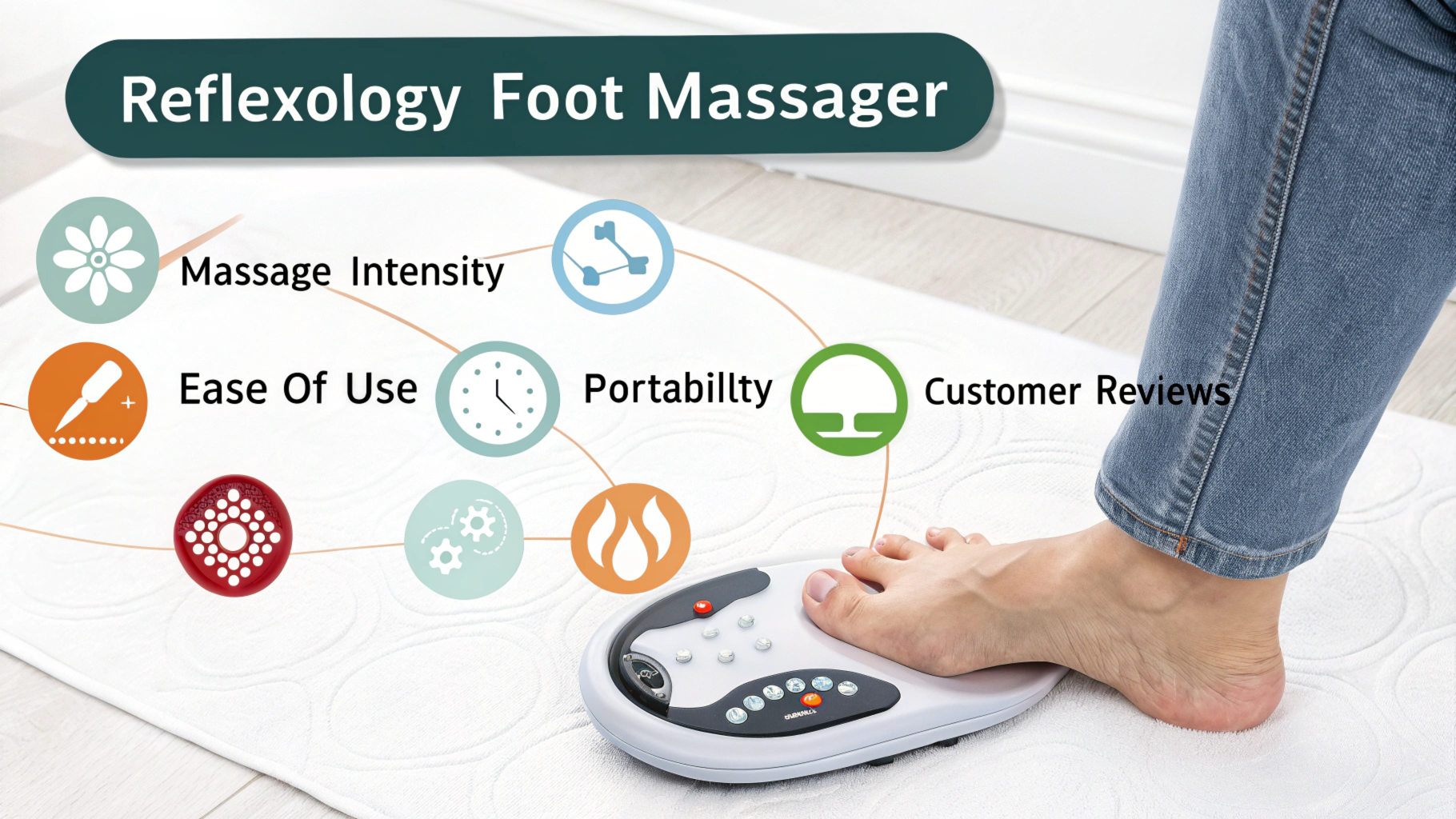
L'achat d'un appareil de réflexologie plantaire peut considérablement améliorer la relaxation et soulager les douleurs des pieds. Cependant, le choix du bon modèle implique de prendre en compte plusieurs facteurs. Nous vous présentons ici les aspects essentiels à évaluer avant de procéder à l'achat.
Type de masseur
Il existe plusieurs types de masseurs de pieds :
- Massagers électriques: Ces appareils fonctionnent à l'électricité et offrent généralement plusieurs réglages d'intensité et de mode, ce qui les rend idéaux pour ceux qui recherchent une relaxation profonde.
- Masseurs manuels: Ils nécessitent un effort physique pour fonctionner et sont plus portables, adaptés aux voyages.
- Modèles combinés: Ils intègrent de multiples fonctions telles que la chaleur, le pétrissage et le roulement, offrant ainsi une expérience de massage complète.
Taille et portabilité
Lors du choix d'un appareil de massage réflexologique des pieds, il est essentiel de connaître les dimensions typiques et les normes de portabilité. Voici un aperçu des dimensions courantes et de ce qui fait qu'un appareil de massage des pieds est portable.
Les masseurs de pieds existent en différentes tailles, ce qui peut avoir une incidence sur leur utilisation et leur stockage :
Modèles compacts : Ils mesurent généralement environ 400 mm x 300 mm x 150 mm (longueur x largeur x hauteur).
Modèles de taille moyenne : Ces modèles ont souvent une longueur de 450 mm à 500 mm et une largeur d'environ 400 mm.
Modèles plus grands : Certains modèles avancés peuvent dépasser ces dimensions, offrant des fonctions supplémentaires mais nécessitant plus d'espace. Ces modèles peuvent avoir une longueur d'environ 600 mm ou plus.
La portabilité est un facteur essentiel pour de nombreux utilisateurs, en particulier ceux qui voyagent ou qui disposent d'un espace limité. Voici quelques normes qui définissent un masseur de pieds portable :
Poids : Un poids inférieur à 6 kg (environ 13 livres) est généralement considéré comme portable.
Conception compacte : Il est essentiel que la conception de l'appareil permette de le ranger et de le transporter facilement. Les modèles qui peuvent être facilement pliés ou qui ont une forme aérodynamique sont plus faciles à transporter.
Poignée de transport durable : Certains modèles sont équipés de poignées ou sont conçus pour être facilement soulevés, ce qui augmente leur portabilité.
Source d'alimentation et longueur du cordon
Lors du choix d'un appareil de massage réflexologique des pieds, la source d'alimentation et la longueur du cordon sont des facteurs cruciaux qui influent sur la facilité d'utilisation, la sécurité et l'expérience globale. Voici un aperçu détaillé des éléments à prendre en compte concernant les types de piles et les longueurs de cordon.
Options de source d'alimentation
Modèles électriques :
Massagers à fil : Ces modèles se branchent directement sur une prise électrique. Un cordon standard d'une longueur de 1,5 à 2 mètres (environ 5 à 6,5 pieds) est idéal pour permettre une certaine souplesse d'installation sans avoir recours à des rallonges. Cette longueur permet à l'utilisateur de positionner confortablement le masseur à différents endroits.
Massagers à piles : Ils sont portatifs et pratiques, en particulier pour les voyages. Recherchez les modèles dotés de batteries lithium-ion, qui offrent généralement des durées d'utilisation plus longues et des capacités de recharge plus rapides. Une capacité de batterie d'environ 1 800 mAh est courante, ce qui permet d'effectuer plusieurs séances avant d'avoir besoin d'être rechargé.
USB rechargeable Modèles :
De nombreux masseurs de pieds modernes sont dotés d'options de chargement USB, ce qui les rend polyvalents pour une utilisation à la maison ou en déplacement. Ces modèles peuvent souvent être rechargés à l'aide de banques d'énergie, d'ordinateurs portables ou d'adaptateurs muraux, ce qui améliore leur portabilité.
Considérations sur la longueur du cordon
La sécurité : Un cordon plus long (1,5 à 2 mètres) améliore non seulement l'utilisation, mais réduit également les risques de trébuchement associés aux cordons plus courts. Il permet aux utilisateurs de placer le masseur loin des zones de passage.
Portabilité : Pour les modèles à batterie, veillez à ce qu'ils soient légers (idéalement moins de 1,5 kg) afin de faciliter le transport sans compromettre la puissance.
Expérience utilisateur : Ta possibilité de placer le masseur dans une position confortable pendant son utilisation est essentielle pour que l'expérience soit agréable. Un cordon plus long ou une batterie portable permettent aux utilisateurs de se détendre sans se sentir gênés.
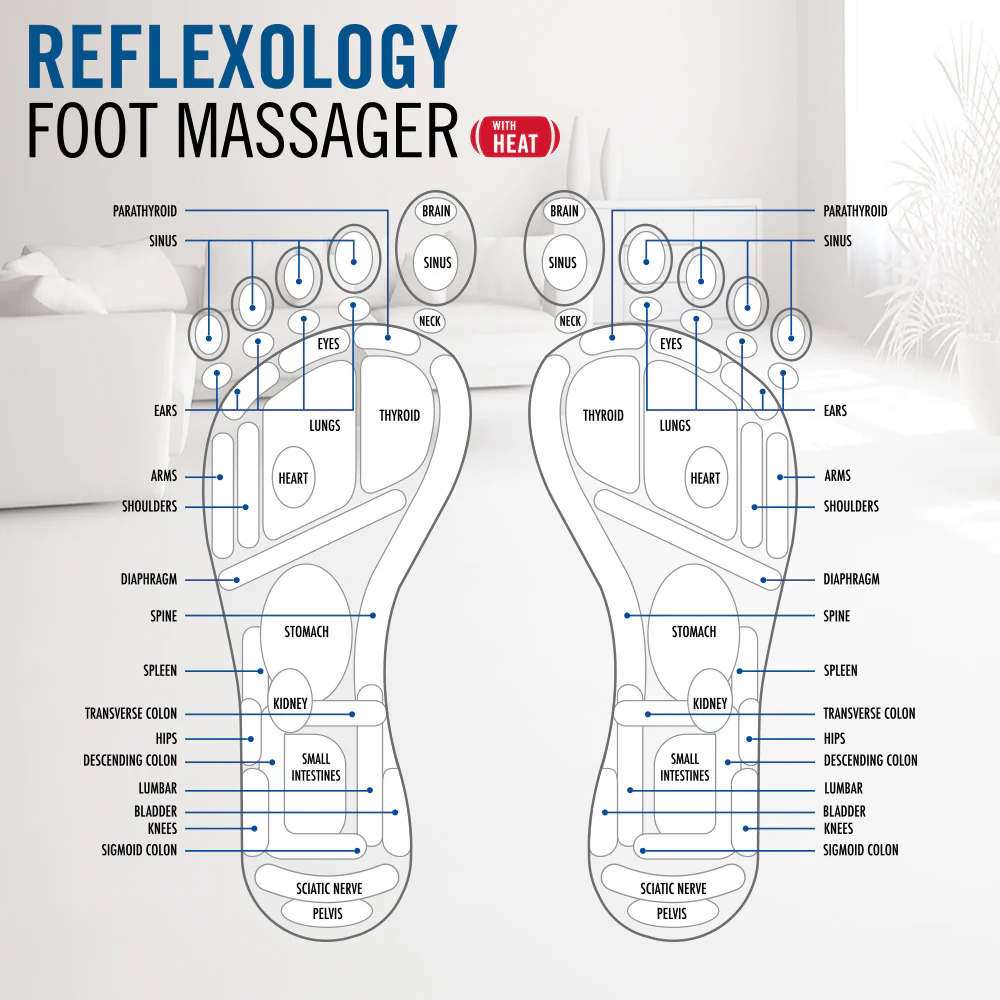
Niveaux d'intensité et réglages
Lorsque vous choisissez un appareil de massage réflexologique des pieds, il est essentiel de connaître les niveaux d'intensité et les modes de massage disponibles pour personnaliser votre expérience. Voici un aperçu des réglages d'intensité et des modes typiques que l'on trouve dans ces appareils.
Niveaux d'intensité courants
| Niveau d'intensité | Description | Cas d'utilisation |
|---|---|---|
| Faible | Stimulation douce pour la relaxation et la circulation | Idéal pour les pieds sensibles ou les débutants |
| Moyen | Pression modérée pour une utilisation normale et un soulagement léger de la douleur | Convient à la relaxation quotidienne |
| Haut | Massage des tissus profonds pour un soulagement significatif de l'inconfort | Recommandé pour les athlètes ou les douleurs chroniques |
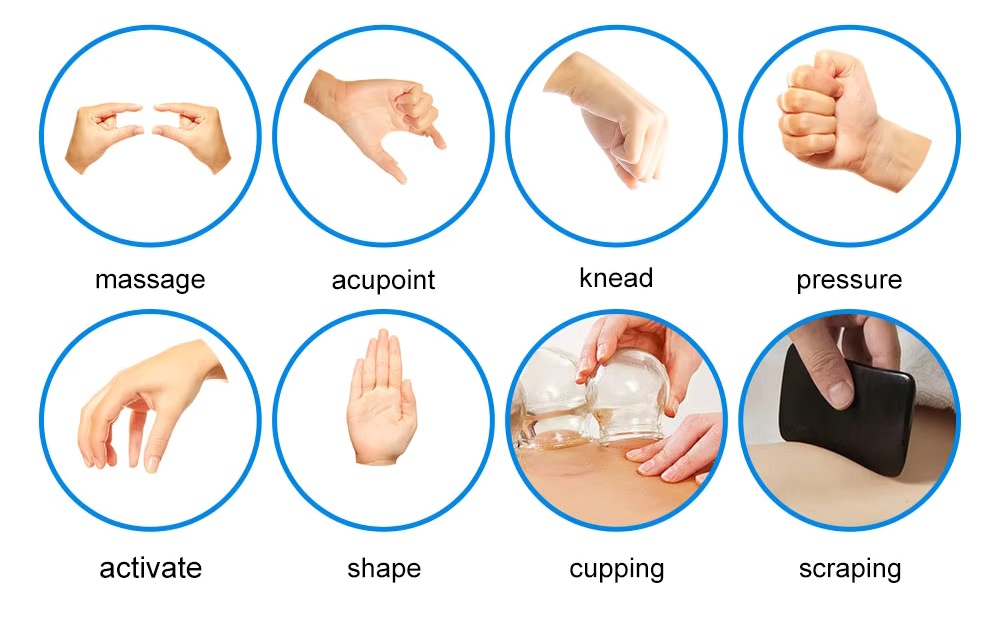
Modes de massage typiques
| Mode massage | Description | Avantages |
|---|---|---|
| Mode pétrissage | Imite l'action d'un massothérapeute professionnel en appliquant une pression rythmée. | Soulage les tensions et améliore la circulation. |
| Mode de roulement | Dispose de mécanismes de roulement qui se déplacent le long de la voûte et de la plante du pied. | Apaise la fatigue et procure un massage en douceur. |
| Mode Shiatsu | Applique une pression ciblée sur des points d'acupression spécifiques, en suivant les techniques traditionnelles. | Améliore le flux énergétique et soulage le stress. |
| Mode de compression de l'air | Utilise des coussins d'air gonflables pour exercer une légère pression autour des pieds. | Favorise la relaxation et réduit les gonflements. |
| Fonctionnalité de la chaleur | Fournit une chaleur réglable pour améliorer l'expérience du massage. | Aide à détendre les muscles et à améliorer la circulation. |
Qualité des matériaux et de la construction
Lors du choix d'un appareil de massage réflexologique des pieds, les matériaux utilisés et la qualité générale de la construction sont des facteurs essentiels qui garantissent la sécurité, la durabilité et la satisfaction de l'utilisateur. Voici un examen approfondi des matériaux qui favorisent la santé et la sécurité, ainsi que des critères de qualité à prendre en compte.
Des matériaux sûrs et sains
| Type de matériau | Description | Avantages |
|---|---|---|
| Plastiques non toxiques | Recherchez des masseurs de pieds fabriqués à partir de plastiques sans BPA. Ces matériaux sont sûrs pour un contact prolongé avec la peau et ne libèrent pas de substances chimiques nocives. | Assure la sécurité de tous les utilisateurs, y compris les enfants et les personnes à la peau sensible. |
| Tissus Soft Touch | De nombreux appareils de massage des pieds sont dotés de tissus doux au toucher ou de rembourrages fabriqués à partir de matériaux hypoallergéniques. | Améliore le confort d'utilisation et réduit le risque d'irritation de la peau. |
| Métaux durables | Des composants en aluminium ou en acier inoxydable de haute qualité sont souvent utilisés dans les mécanismes internes des masseurs électriques. | Assure la solidité et la durabilité, garantissant que l'appareil peut résister à une utilisation régulière sans défaillance. |
| Matériaux imperméables | Les masseurs conçus pour les environnements humides (comme les bains de pieds) doivent être étanches afin d'éviter les risques électriques. | Améliore la sécurité en isolant les composants électriques de l'eau, réduisant ainsi le risque de courts-circuits ou de chocs. |
Considérations sur la qualité
| Facteur de qualité | Description | Avantages |
|---|---|---|
| Qualité de la construction | Assurez-vous que le masseur est bien assemblé et qu'il ne comporte pas de pièces détachées ou d'espaces vides. Une construction solide est le signe d'une meilleure durabilité et d'une plus grande fiabilité au fil du temps. | Améliore la longévité et les performances de l'appareil. |
| Facilité d'entretien | Envisagez des modèles faciles à nettoyer, avec des couvercles amovibles ou des surfaces qui peuvent être essuyées facilement. Cette caractéristique est essentielle pour l'hygiène, en particulier pour les produits exposés à l'humidité. | Favorise la propreté et l'hygiène, garantissant une expérience sûre pour l'utilisateur. |
| Caractéristiques de sécurité | Recherchez les mécanismes de sécurité intégrés tels que la protection contre la surchauffe, les dispositifs d'arrêt automatique et les conceptions étanches. | Améliore la sécurité de l'utilisateur pendant le fonctionnement, réduisant ainsi le risque d'accident. |
| Garantie et réputation de la marque | Une marque réputée qui offre une garantie démontre sa confiance dans la qualité de son produit. Cette assurance peut vous apporter une tranquillité d’esprit quant à une utilisation à long terme. | Il offre une garantie de qualité et de fiabilité, protégeant ainsi votre investissement. |
Autres caractéristiques à rechercher
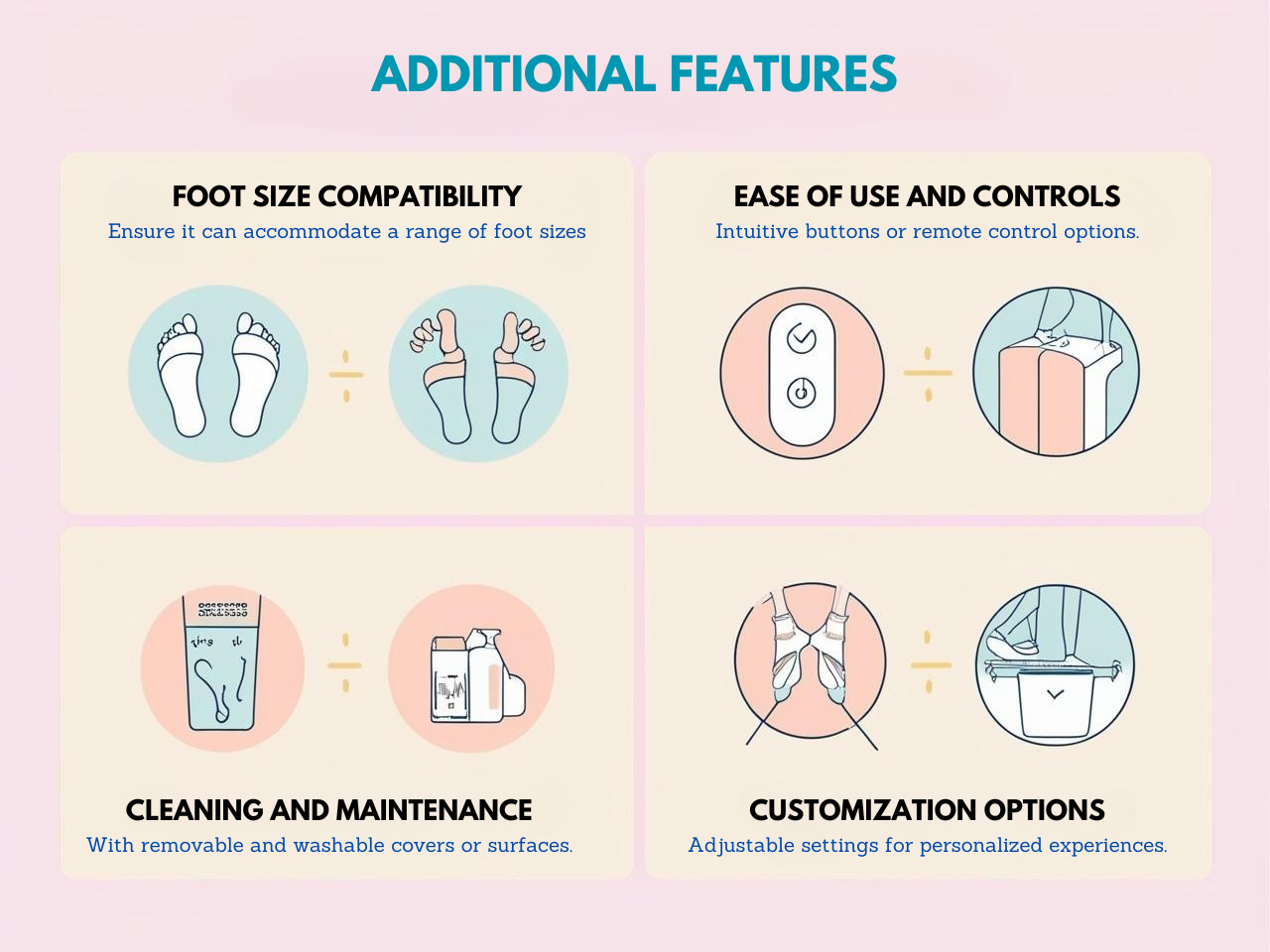
Lors du choix d'un appareil de massage réflexologique des pieds, plusieurs caractéristiques supplémentaires peuvent améliorer votre expérience globale. Voici quelques aspects importants à prendre en compte :
| Fonctionnalité | Description | Avantages |
|---|---|---|
| Compatibilité avec la taille des pieds | Assurez-vous que le masseur peut s’adapter à différentes pointures, généralement jusqu’à la pointure 12 pour les hommes et 13 pour les femmes. | Un bon ajustement maximise le confort et l'efficacité du massage. |
| Facilité d'utilisation et contrôles | Recherchez des commandes conviviales, telles que des boutons intuitifs ou des options de télécommande. | Améliore l'accessibilité pour tous les âges et encourage une utilisation régulière. |
| Nettoyage et entretien | Envisagez des modèles avec des couvercles amovibles et lavables ou des surfaces qui peuvent être facilement nettoyées. | Favorise l'hygiène et la propreté pour une expérience utilisateur sûre. |
Considérations budgétaires
Lors de l’achat d’un masseur de pieds de réflexologie, il est essentiel de trouver un équilibre entre votre budget et les fonctionnalités ainsi que la qualité qui répondent le mieux à vos besoins. Voici une répartition des fourchettes de prix habituelles et des éléments à prendre en compte pour évaluer le rapport qualité-prix :
Gamme de prix des masseurs de pieds de réflexologie
Des options économiques : Les masseurs de pieds manuels ou les modèles électriques de base se situent généralement entre $20 et $50. Ils offrent souvent des fonctions essentielles telles que le pétrissage ou la vibration, mais peuvent manquer de fonctionnalités avancées telles que le réglage de la chaleur ou des niveaux d'intensité multiples.
Options de milieu de gamme : Les masseurs de pieds dont le prix se situe entre $50 et $150 sont souvent dotés de fonctions supplémentaires telles que la thérapie par la chaleur, plusieurs modes de massage et des réglages d'intensité. Ils peuvent également s'adapter à des pieds plus grands et offrir un design plus ergonomique.
Options haut de gamme : Les modèles haut de gamme dépassant le $150 peuvent offrir des fonctions avancées telles que le massage Shiatsu, la compression d'air, des réglages personnalisables et une plus grande durabilité. Ils sont souvent conçus pour les utilisateurs qui recherchent une expérience de spa à domicile.
Rapport qualité-prix
Déterminer s'il est justifié de dépenser davantage :
- Fréquence d'utilisation: Si l'utilisateur prévoit d'utiliser le masseur quotidiennement, l'investissement dans un modèle de milieu ou de haut de gamme pourrait se traduire par de meilleurs avantages à long terme, tels qu'une réduction des douleurs aux pieds et une amélioration de la relaxation.
- Durabilité et caractéristiques: Les modèles plus chers sont souvent assortis d'une garantie et d'une meilleure qualité de fabrication, ce qui permet d'économiser de l'argent sur les remplacements au fil du temps.
Exemple de calcul :
Supposons que vous envisagiez deux masseurs de pieds :
- Modèle A : Au prix de $60, il offre des fonctions de base de pétrissage et de vibration.
- Modèle B : PLe prix de l'appareil est de $120. Il offre une thérapie par la chaleur, plusieurs modes de massage et une garantie de 2 ans.
Si vous appréciez la thérapie par la chaleur et les multiples modes de massage, et si vous prévoyez d'utiliser l'appareil régulièrement, le modèle B peut être plus avantageux malgré son prix plus élevé, en raison de ses fonctions améliorées et de sa garantie.
Avis et recommandations des clients
Importance des examens
Les avis clients sont essentiels lors de l’achat d’un masseur de pieds de réflexologie. Ils fournissent des informations concrètes sur l’efficacité, la facilité d’utilisation et les problèmes potentiels du produit qui ne sont pas forcément apparents dans les seules descriptions des produits. Voici quelques raisons essentielles pour lesquelles les avis sont importants :
- Expériences réelles des utilisateurs: Les avis reflètent l'expérience d'utilisateurs réels et donnent un aperçu des performances du produit dans des situations quotidiennes.
- Identifier les avantages et les inconvénients: Les clients soulignent souvent les points forts et les points faibles d'un produit, ce qui aide les acheteurs potentiels à prendre des décisions en connaissance de cause.
- Assurance qualité: Un grand nombre d'avis positifs peut indiquer que le produit est fiable, tandis que des plaintes constantes peuvent signaler des problèmes de contrôle de la qualité.
Où trouver des avis fiables ?
Détaillants en ligne :
Des sites web tels qu'Amazon fournissent des évaluations et des avis de clients sur différents appareils de massage pour les pieds. Avec une note moyenne de 4,06 sur 5, basée sur plus de 20 564 avis, les clients se déclarent généralement satisfaits des produits de cette catégorie.
Sites d'examen spécialisés :
Des plateformes telles que The Spruce effectuent des tests et des évaluations approfondies des masseurs de pieds, fournissant des informations détaillées sur les performances, les caractéristiques et le rapport qualité-prix. Leurs avis d'experts peuvent guider les acheteurs vers des options de haute qualité.
YouTube Reviews :
Les commentaires vidéo de professionnels ou de passionnés, tels que ceux des kinésithérapeutes, offrent des démonstrations visuelles et des avis honnêtes sur des modèles spécifiques. Ces avis peuvent aider les acheteurs potentiels à voir comment fonctionne un produit en temps réel.
Médias sociaux et forums :
La participation à des communautés sur des plateformes telles que Reddit ou Facebook peut donner lieu à des recommandations personnelles et à des discussions sur les différents appareils de massage des pieds, ce qui permet d'obtenir des perspectives supplémentaires.

Résumé des commentaires des clients
Sur la base des résultats de la recherche, voici un résumé des commentaires des clients sur les appareils de massage des pieds les plus courants :
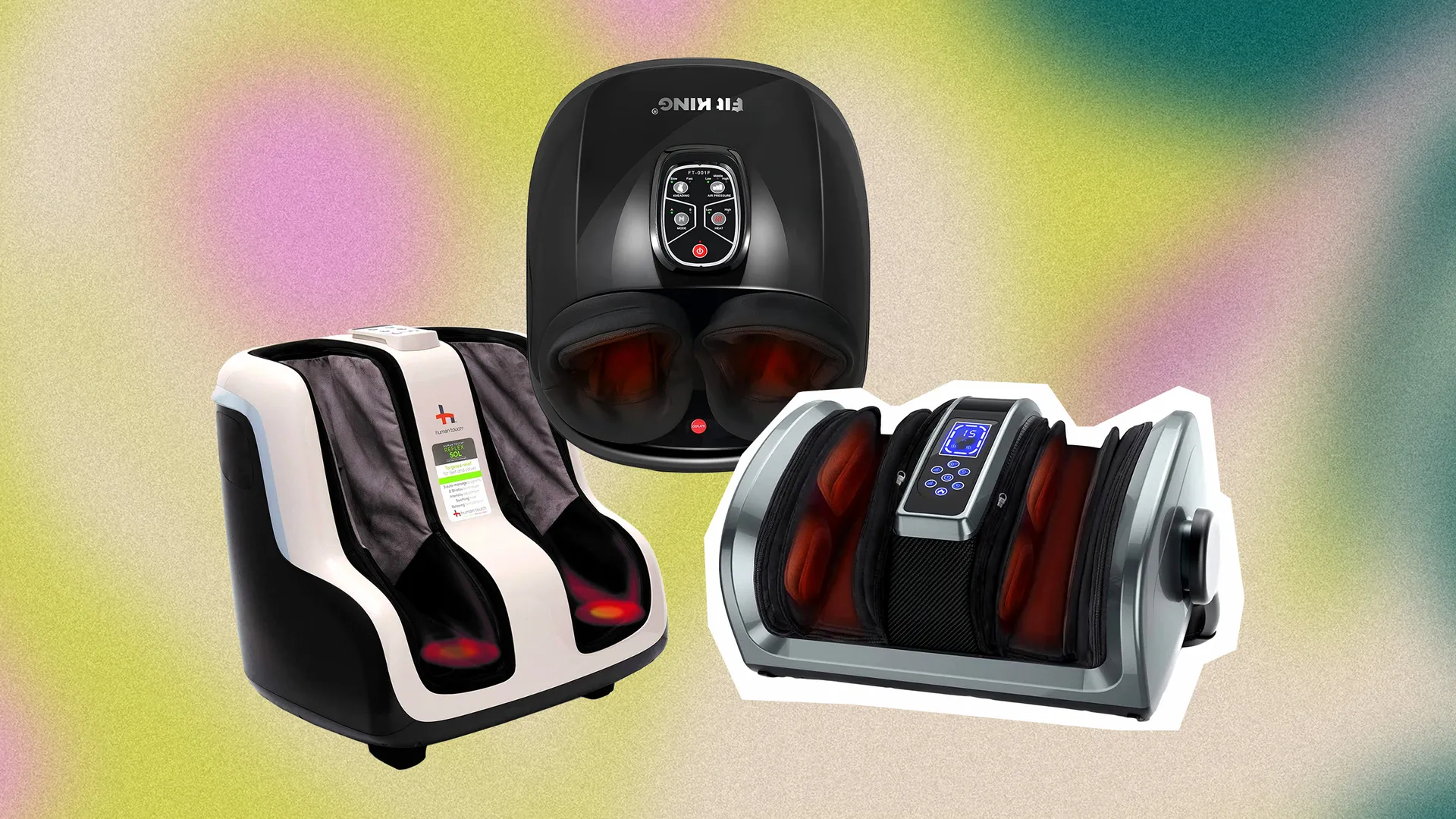
Masseur de pieds Nooro : Loué pour sa portabilité et ses réglages, il stimule efficacement la relaxation et améliore la circulation, mais il a été critiqué pour ses performances irrégulières. Il est trop cher.
Masseur de pieds électrique : Les clients font état d'un soulagement significatif de la douleur et d'une facilité d'utilisation ; toutefois, certains ont ressenti une gêne liée aux réglages de haute intensité et ont rencontré des problèmes avec le service clientèle.
Appareil de massage des pieds : Ce modèle est bien accueilli pour ses options de pétrissage et de compression personnalisables. Les utilisateurs apprécient son démarrage en douceur et son massage efficace, mais notent qu'il ne dispose pas de niveaux de chaleur suffisants.
Conclusion
Pour choisir le bon appareil de massage réflexologique des pieds, il faut tenir compte de plusieurs facteurs, notamment le type, la taille, la source d'énergie, les niveaux d'intensité, la fonction de chauffage, les matériaux, la qualité de fabrication et les caractéristiques supplémentaires. En comprenant ces éléments, vous pourrez prendre une décision éclairée qui correspondra à vos besoins et à vos préférences.
En tenant compte de ces facteurs et en effectuant des recherches approfondies, vous pourrez choisir en toute confiance un appareil de réflexologie plantaire qui non seulement soulagera efficacement les douleurs et la fatigue des pieds, mais améliorera également votre bien-être général. En investissant dans le bon produit, vous bénéficierez d'une expérience de massage plus agréable et plus bénéfique, qui contribuera de manière positive à votre routine quotidienne.