

 DE
 EN
 ES
 FR
 IT
 PL
 PT
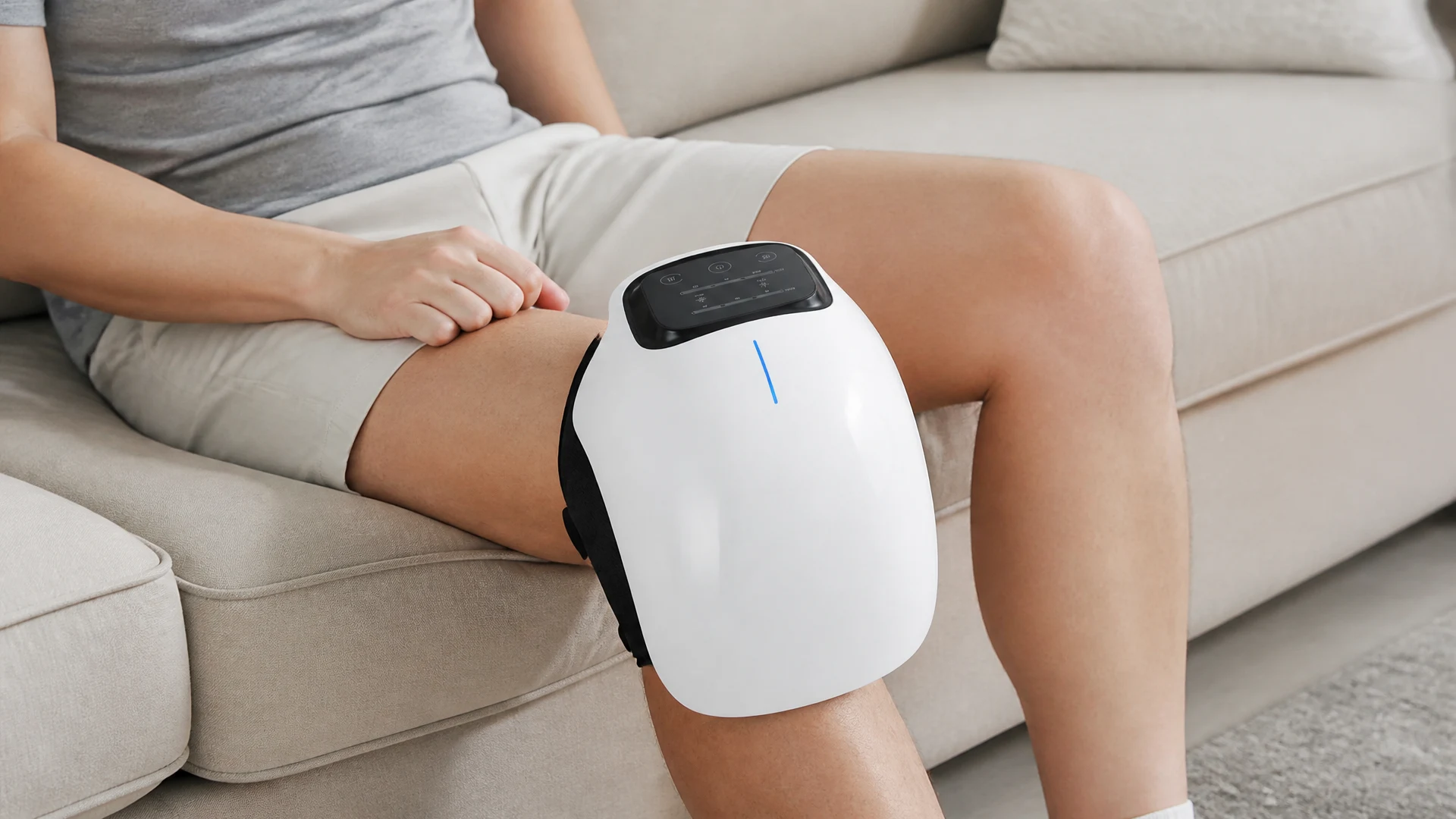
Red light therapy has moved from dermatology clinics to home device marketing fast, and knee pain is one of the most common reasons people search for it. Unlike some electrical stimulation claims covered elsewhere on this site, red and infrared light therapy for knee osteoarthritis actually has a meaningful body of clinical research behind it — but the details of that research matter more than most product pages let on.
What the Strongest Study Actually Found
One of the earliest and most frequently cited trials, published in a rheumatology journal, randomly assigned 50 elderly patients with knee osteoarthritis in both knees to red light, infrared light, or a placebo device, applied to both sides of the knee for 15 minutes twice a day over 10 days. Pain dropped more than 50% in both the red and infrared groups on every scoring method used, with no meaningful improvement in the placebo group. Relief also lasted months longer in the treated groups before patients needed to restart treatment.
The Larger Picture: Modest, Real, Not a Cure
A larger pooled analysis of 22 placebo-controlled trials covering over 1,000 people found a more modest but still real effect: pain dropped about 14 points on a 100-point scale more than placebo, growing to roughly 19 points when the dose matched expert-recommended protocols. A separate 2024 meta-analysis of 10 trials confirmed the same direction but rated the overall certainty of evidence as low, noting that none of the trials were free of bias risk. One earlier 2015 review of 9 trials actually found no significant difference from a sham device at all. Newer reviews have leaned more positive, but the field hasn’t settled into unanimous agreement.
The Detail Most Product Pages Leave Out: Wavelength and Dose
This is the single most important caveat in this entire article. The trials that showed the clearest pain relief mostly used near-infrared laser light at specific wavelengths — commonly in the 785 to 860 nanometer or 904 to 905 nanometer range — delivered at a measured dose per treatment spot, often using medical-grade laser equipment rather than consumer LED panels. A network meta-analysis ranking different wavelengths against each other found that devices mixing several wavelengths together did not reliably beat a placebo, while the specific near-infrared ranges did.
De Slimme kniemassager met warmte en vibratie, like most consumer knee wraps combining light with heat and vibration, describes its light feature generally as “therapeutic red light and far-infrared technology” without publishing the specific wavelength or dose per session used in the research above. That’s not unusual for this product category, but it does mean you can’t assume a consumer light-and-heat wrap replicates the exact clinical protocol that produced the strongest study results — it uses a related mechanism, not an identical, dose-matched one.
Does It Help More Than Exercise Alone?

This is where the evidence gets most humbling for light therapy as a standalone fix. In a six-month trial where everyone did strengthening exercises, adding real light therapy made no measurable difference compared to exercise plus a placebo device — both groups improved about the same amount. A separate year-long trial found a similar pattern for pain specifically, though the light-therapy group did end up using fewer pain medications and performed slightly better on a physical function test. The consistent theme across these comparison trials: exercise is the best-tested treatment for knee osteoarthritis, and light therapy functions as a possible add-on, not a replacement.
How Heat and Vibration Fit Into the Picture
The light research above was conducted on devices using light alone, not combined with heat and vibration the way a wearable knee wrap typically is. Heat has its own long-standing, separate evidence base for muscle relaxation and short-term pain relief, and vibration can help reduce the perception of pain through a different neurological pathway. Combining all three in one device is a reasonable design choice, but it also means the specific combined-device research is thinner than the light-only studies cited above — you’re layering three individually-supported mechanisms rather than relying on a single trial of the exact product category.
Safety Considerations (General Guidance, Not Product-Specific)
This product’s own description does not include a dedicated safety or contraindication section, so the following reflects general precautions for heat, vibration, and light therapy devices broadly rather than manufacturer-specific warnings. Across the clinical trials reviewed above, no adverse events were reported from light therapy itself. Standard precautions for heat-and-vibration wraps include avoiding use over broken skin, active infections, or areas with poor circulation, and consulting a doctor if you have a pacemaker, are pregnant, or have a blood clotting disorder. A knee that’s hot, visibly swollen, locking up, or giving way warrants a doctor’s evaluation rather than at-home treatment of any kind.
A Realistic Way to Use It
Based on the trial protocols reviewed above, consistency over single sessions is what the research supports — trials typically ran 2 to 3 sessions a week for 3 to 8 weeks before evaluating results, not a single use. If you’re trying a heat-and-light knee wrap, treat it the same way: commit to a regular schedule for several weeks before judging whether it’s doing anything, rather than expecting a noticeable difference after one session. Pairing it with basic strengthening exercises for the knee and surrounding muscles is also well-supported as the more impactful half of the equation.
Veelgestelde vragen
Does red light therapy actually work for knee pain?
Placebo-controlled trials show a modest but real reduction in knee osteoarthritis pain, roughly 14 points on a 100-point scale on average in the largest pooled analysis. It’s not a cure and the evidence quality is rated low to moderate depending on the review, but multiple trials found a measurable effect beyond placebo.
Can red light therapy regrow knee cartilage?
No human trial has shown cartilage regeneration from red or infrared light therapy. The clinical trials measured pain and functional scores, not joint structure. Claims about cartilage repair come mainly from lab and animal research, not human knee studies.
Is a consumer knee wrap the same as the devices used in clinical trials?
Not necessarily. Many of the strongest trials used medical-grade near-infrared lasers at specific, measured wavelengths and doses. Consumer wraps combining red light, heat, and vibration typically don’t publish that level of technical specification, so they should be understood as using a related mechanism rather than replicating the exact clinical protocol.
How long before I’d notice a difference?
Trials that showed benefit generally ran 2 to 3 sessions weekly for 3 to 8 weeks before evaluating results, with relief often peaking 2 to 4 weeks after treatment ended. A single session is unlikely to produce a noticeable, lasting change based on how the research was structured.
Kort samengevat
Red and infrared light therapy for knee osteoarthritis has real, if modest, placebo-controlled evidence behind it — a genuine rarity in the world of at-home pain devices. The honest caveats are that the strongest results came from specific near-infrared wavelengths and doses that most consumer products don’t publish, and that light alone didn’t outperform a good exercise program in head-to-head trials. Used as a consistent add-on alongside movement and strengthening, rather than a standalone fix, it has a reasonable evidence-based case. Full specs for the device discussed here are on the Smart Knee Massager with Heat & Vibration product page.