

 EN
EN ES
ES PT
PT FR
FR IT
IT NL
NL PL
PL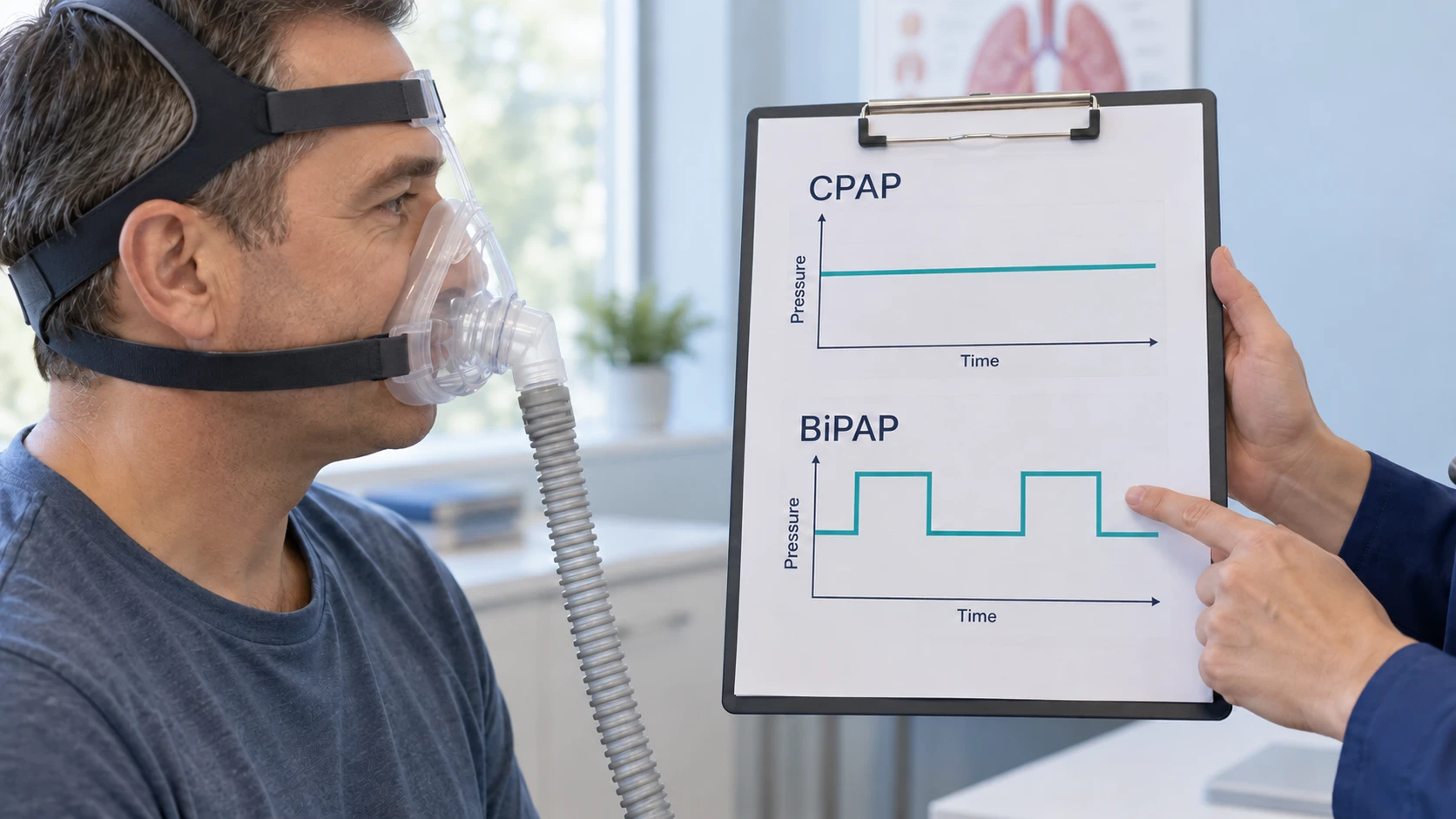
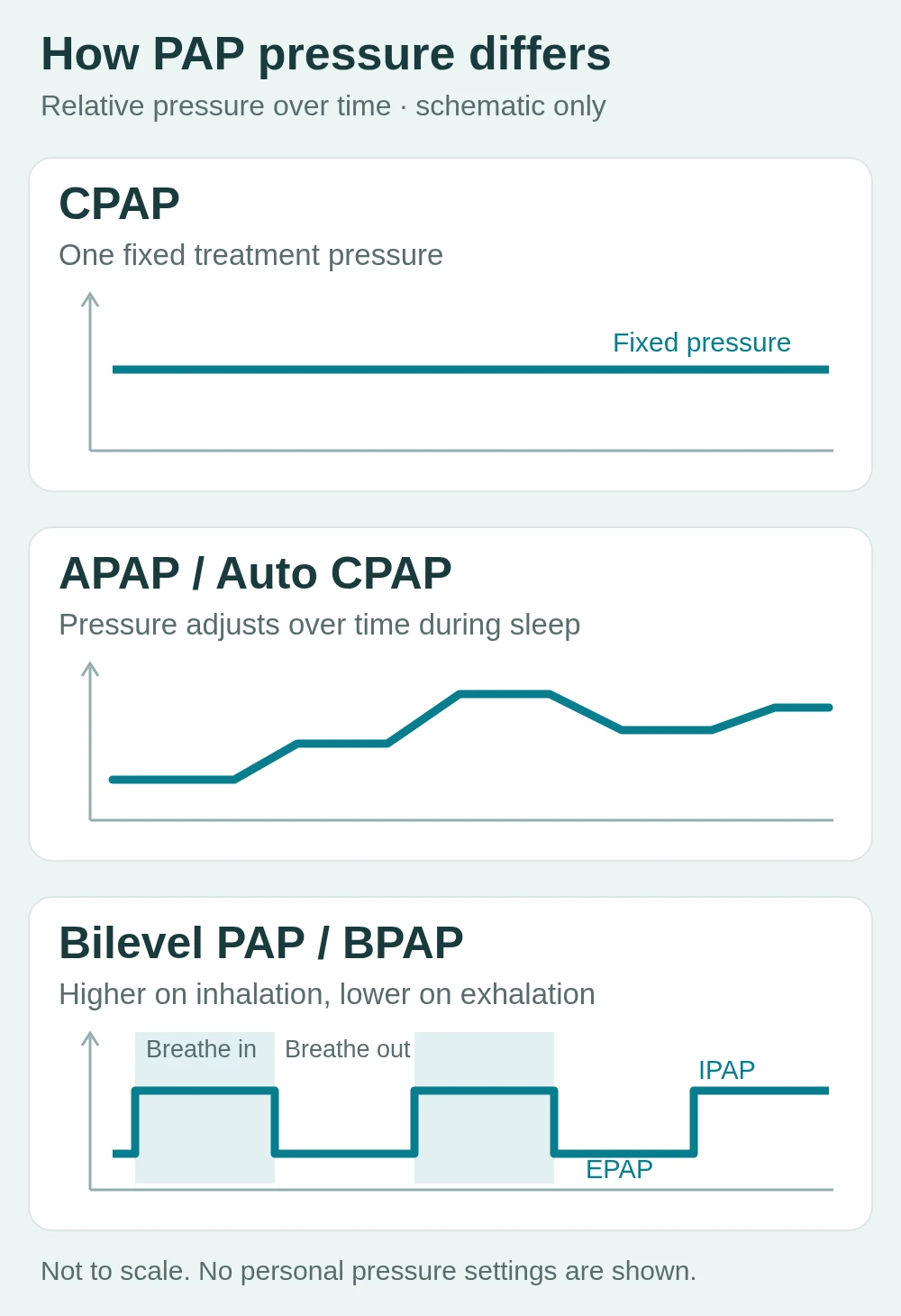
CPAP delivers one treatment pressure; bilevel PAP delivers a higher pressure when you breathe in and a lower pressure when you breathe out. APAP is another option: it automatically adjusts pressure during sleep. These differences describe how pressure is delivered, not which machine is right for every person. Your treating clinician should determine your therapy type and settings. NHLBI explains the three PAP types.
CPAP vs BiPAP: The Main Difference
CPAP means continuous positive airway pressure. A CPAP system supplies pressurized air through tubing and a mask to help keep the airway open during sleep. The machine, tubing and mask work together as a system. For a broader introduction to the equipment, read our guide to CPAP machines. NHLBI describes CPAP and its components.
Bilevel PAP, also called BPAP and commonly searched for as BiPAP, uses separate inspiratory and expiratory pressure levels. APAP means auto-adjusting positive airway pressure. “Auto” describes automatic adjustment; it does not by itself identify a device as bilevel. Compare the PAP definitions at NHLBI.
CPAP, APAP and Bilevel PAP Compared
| Question | CPAP | APAP / Auto CPAP | Bilevel PAP / BPAP |
|---|---|---|---|
| How is pressure delivered? | One fixed treatment pressure. | Pressure adjusts automatically during sleep. | Different pressure levels for inhalation and exhalation. |
| What should I confirm with my clinician? | The prescribed pressure and device mode. | The prescribed mode and pressure limits. | The prescribed bilevel mode and inspiratory/expiratory settings. |
| What should I check in a listing? | That the exact option supports the required mode. | That “Auto” refers to the required therapy, not just another automatic feature. | The exact modes offered; a generic bilevel label is not enough. |
The pressure-delivery descriptions follow NHLBI’s PAP overview. The listing checks are a practical comparison checklist, not treatment recommendations.
What IPAP and EPAP Mean
IPAP means inspiratory positive airway pressure: pressure during inhalation. EPAP means expiratory positive airway pressure: pressure during exhalation. In bilevel therapy, IPAP is the higher level and EPAP is the lower level. Pressure support refers to the difference between them. ResMed explains bilevel pressure and operating modes.
Specifications may show pressure in cmH₂O, meaning centimeters of water. A device’s supported range describes its operating limits; it is not a suggested setting for you. Use the table below to read model specifications, not to calculate or change your treatment settings.
How Clinicians Decide Which Type Fits
NHLBI advises discussing the appropriate PAP type with your provider. CPAP pressure and equipment should also be set up with your healthcare team. PAP treatment options; CPAP setup and follow-up.
Bring your prescription, current device details and questions to your appointment. Useful questions include:
- Which exact therapy type and mode have you prescribed for me?
- What settings or limits must the selected machine support?
- If I find therapy uncomfortable, what should we review before considering a different machine?
- Does my current mask and tubing match the proposed equipment?
- Who will arrange setup, review treatment data and handle follow-up questions?
Use the answers as a checklist when comparing listings. A longer mode list or higher maximum pressure is not a reason to choose equipment that differs from your prescribed requirements.
DS6, DS7 and DS8: A Specification Example
The following example uses the specifications already checked for the DS6, DS7 and DS8 options in Pophaw’s current product listing. It illustrates how to compare supported capabilities; it does not establish suitability for a particular condition or confirm a device’s US regulatory status.
| Spezifikation | DS6 | DS7 | DS8 |
|---|---|---|---|
| Listed machine type | CPAP / Auto CPAP | BiPAP | BiPAP |
| Documented modes | CPAP, Auto | CPAP, Auto, S, T, ST | CPAP, Auto, S, T, ST, APCV |
| Druckbereich | 4–20 cmH₂O | IPAP 4–25 cmH₂O | IPAP 4–30 cmH₂O |
| Expiratory pressure range | Keine separate Bilevel-Einstellung | EPAP 4–20 cmH₂O | EPAP 4–20 cmH₂O |
The DS7 and DS8 mode lists differ. Ask your clinician to identify the required mode rather than treating the two models as interchangeable. The Produktseite für DS6, DS7 und DS8 contains the current documented options and native pricing. Its separate mask option contains one set and does not include a machine.
Where to Compare Equipment and Costs
After confirming the therapy requirements, use the Kategorie CPAP-Geräte to browse the main equipment and supplies collection, or the BiPAP Machines subcategory to review the listed bilevel options. Compare the exact selected option and included items; a mask-only price is not a machine price.
For a quote, ask the supplier to identify the model, included accessories, setup support, shipping, return terms and any separately charged services. This article does not provide a market price range or confirm insurance coverage. Check the selected equipment’s current price and the terms that apply to your purchase.
Häufig gestellte Fragen
Is BiPAP always better than CPAP?
No universal ranking follows from the pressure mechanism alone. Discuss the therapy type that fits your prescribed requirements with your clinician, rather than assuming that more modes mean better treatment.
Is APAP the same as bilevel PAP?
No. Automatic pressure adjustment and separate inhalation/exhalation pressures describe different features. Check the exact therapy mode in the prescription and device documentation.
Can I change from CPAP to BiPAP myself?
Ask your treating clinician before changing your prescribed therapy type or settings. This comparison explains terminology and specifications; it is not a guide to switching devices or adjusting pressure.
Once your clinician has specified the therapy type, compare complete quotes using our US CPAP machine cost guide, including cash versus insurance costs and ongoing supplies.