

 EN
EN ES
ES PT
PT DE
DE FR
FR IT
IT PL
PL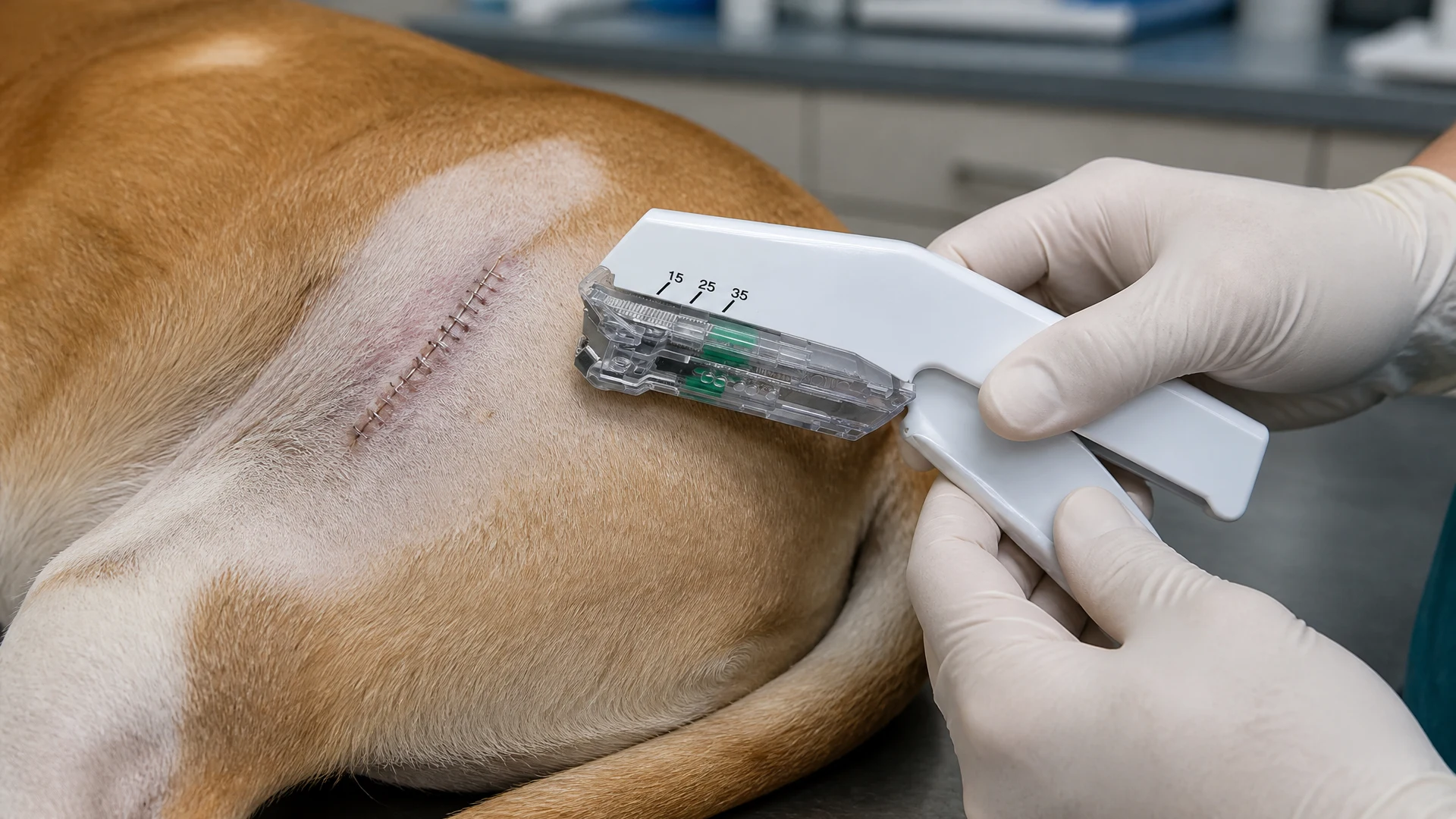
A veterinary clinic treating a torn pad on a working dog and an emergency room closing a human laceration both reach for the same basic tool: a 35W-class skin stapler. What differs is documentation and labeling, not the mechanism. This guide covers what “veterinary-labeled” actually means for a device like the Steriele huidnietmachine, doos met 10 stuks, who should be using it, and how it fits alongside the standard medical-labeled stapler line.
What Makes a Stapler “Veterinary-Labeled”
The Sterile Skin Stapler, Box of 10 is explicitly marketed for both medical and veterinary first-aid use. Mechanically, it’s a 35W-class device: W-type staples sized 7.0 x 4.0mm with a 0.6mm pin diameter, EO (ethylene oxide) sterilized, packaged white, 10 units per box and 100 per case. Those numbers are nearly identical to the standard 35W Medical Skin Stapler — the real distinction is in labeling and documentation, not a different mechanism.
That distinction matters more than it sounds. A veterinary practice, a mixed-species training program, or a mobile large-animal service needs product documentation that explicitly covers animal use for its own compliance and liability records. A device labeled only for human medical use leaves that question unanswered — not because the hardware would behave differently, but because the manufacturer never tested or documented animal-specific use cases.
Where Veterinary Stapling Is Actually Used
Skin staples show up across veterinary practice more than most pet owners realize, almost always in the hands of a licensed veterinarian or trained veterinary technician.
- Spay/neuter and routine surgical closure, where speed reduces anesthesia time for the animal.
- Laceration repair in working and farm animals, where staples hold up better than sutures against movement and licking.
- Emergency and mobile veterinary services, where a disposable, no-reprocessing-needed device fits a field setting without sterilization equipment.
- Veterinary technician training programs, which — like their human-medicine counterparts — use preloaded disposable staplers because the mechanism is simple to teach and transfers directly to practice.
Species and Tissue Considerations
Skin thickness varies meaningfully across species and even across breeds, and that’s the one place where veterinary use genuinely calls for more judgment than human use. A 0.6mm pin diameter staple that closes human skin cleanly may sit differently in the looser, more elastic skin common in dogs, or the notably thinner skin seen in cats and small exotic animals. This is a reason veterinary stapling is reserved for licensed veterinarians and trained technicians rather than treated as a general-purpose pet first-aid tool: correct wound assessment has to account for the specific animal in front of the clinician, not just a generic “skin wound” category.
Fur is the other practical complication unique to veterinary use. Hair at the wound edge has to be clipped back before stapling, or it can get caught in the closure and cause irritation or a less secure staple formation. This is routine technique in veterinary practice, but it’s a step with no equivalent in human medicine, and it’s one more reason this isn’t a tool for untrained use at home.
Veterinary-Labeled vs. Standard Medical: Side by Side
| Kenmerk | Steriele huidnietmachine, doos met 10 stuks (11688) | Medische huidnietmachine 35W (9912) |
|---|---|---|
| Gelabeld gebruik | Medical & veterinary first aid | Medisch / eerste hulp |
| Staple type | W-type, 7.0 x 4.0mm | 35W, approx. 7.5 x 4.3mm closed |
| Pin diameter | 0.6mm | 0.60mm wire |
| Sterilisatie | Gesteriliseerd met ethyleenoxide (EO) | Voor eenmalig gebruik, steriel |
| Verpakking | 10/box, 100/case | 10 nietmachines per doos |
| Prijs | $59.95 | $59.95 |
For a practice that treats both humans and animals — some mobile clinics and disaster-response teams do — standardizing on the dual-labeled unit removes any ambiguity about appropriate use across patients. For a facility that only ever treats one or the other, either stapler performs the identical mechanical job; the choice comes down to which labeling matches your documentation needs.
Who Should Not Use This at Home
It’s worth being direct here, because “veterinary” labeling sometimes gets misread as “safe for pet owners to use at home.” It isn’t. This device is intended for licensed veterinarians and trained veterinary technicians, not for a pet owner closing their own animal’s wound. Incorrect wound assessment, incomplete trigger compression, or stapling over contaminated tissue can cause more harm than the original injury. If your animal has a wound that looks like it needs closure, the right move is a vet visit, not a home repair.
Stocking Considerations for Mixed-Practice Clinics
A clinic or mobile service that treats both companion animals and, occasionally, provides first-aid support in human-adjacent settings — some large-animal and farm-call practices fall into this category — has a genuine stocking decision to make. Carrying the dual-labeled unit as the default stapler across the practice simplifies inventory: one SKU, one set of documentation, and no risk of reaching for the wrong box in a time-sensitive situation.
Cost-wise, there’s effectively no penalty for this choice. The veterinary-labeled unit and the standard medical unit are priced identically at $59.95 per box of 10, so standardizing on the dual-use product isn’t a budget trade-off — it’s simply a documentation and inventory simplification that happens to cost nothing extra.
Removal Follows the Same Rules
Staple removal in veterinary patients uses the same mechanical principle as in human medicine — a dedicated remover straightens the staple’s legs back out rather than cutting or pulling it free — but timing can differ by species and by how actively the animal is moving or licking at the site. A veterinarian will typically set a specific recheck date for staple removal based on the individual animal’s healing pace, which is one more reason this isn’t a procedure to manage without professional guidance.
Veelgestelde vragen
Is a veterinary-labeled skin stapler different from a human medical one?
Mechanically, no — both use the same 35W-class staple and closure mechanism. The difference is in labeling and documentation: a veterinary-labeled unit explicitly covers animal use, which matters for a clinic’s compliance records even though the hardware performs identically.
Can a pet owner use a veterinary skin stapler at home?
No. This device is intended for licensed veterinarians and trained veterinary technicians. Correct wound assessment and technique require training; a pet with a wound that may need stapling should be seen by a veterinarian.
Does fur need to be removed before stapling an animal’s wound?
Yes. Hair at the wound edge is typically clipped back before staple placement to prevent it from being caught in the closure, which can cause irritation or interfere with a secure staple formation.
Why would a mixed-practice clinic choose the veterinary-labeled stapler over the standard one?
Mainly for documentation and inventory simplicity. Since both products are priced the same and perform identically, a practice treating both humans and animals can standardize on the dual-labeled unit to avoid managing two separate SKUs with overlapping specifications.
Gerelateerde informatie en waar te koop
For full specifications on the standard 35W stapler line, see our medical skin stapler guide. For how the stapling mechanism works in general, see Hoe werken huidnietjes?
De Steriele huidnietmachine, doos met 10 stuks is available at $59.95, labeled for both medical and veterinary first-aid use.