

 ES
ES PT
PT DE
DE FR
FR IT
IT NL
NL PL
PL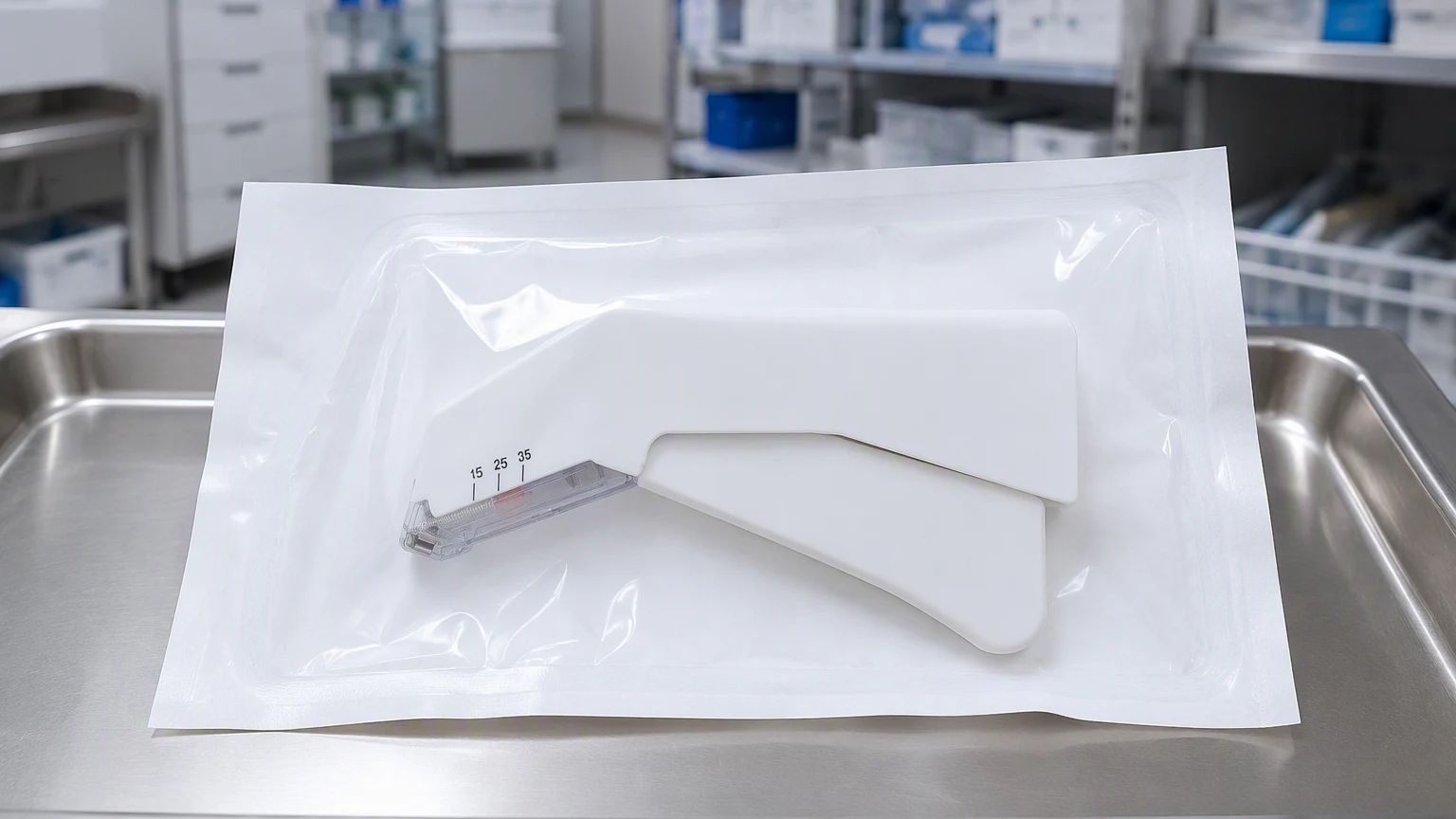
Every disposable skin stapler sold today exists because of one problem that reusable surgical instruments never fully solved: sterilization gaps between patients. A disposable skin stapler removes that gap entirely by shipping sterile, sealed, and ready for a single patient, then going straight into medical waste. This article looks specifically at the infection-control case for single-use staplers — not the general mechanics of stapling, which we cover in our how skin staples work guide.
The Infection Pathway Reusable Instruments Create
A reusable surgical stapler has to be cleaned, disinfected, and re-sterilized — typically through autoclaving — between every patient use. Each of those steps is a point where something can go wrong: incomplete cleaning leaves organic residue, a sterilization cycle can run short, or a device can be handled with unclean gloves after sterilization but before the next use. None of these failures require negligence; they’re simply additional steps where risk accumulates.
A disposable device collapses that entire pathway into a single checkpoint: the factory seal. If the seal is intact when opened, the device is sterile. There’s no reprocessing cycle to fail, no missed step in a multi-stage cleaning protocol, and no instrument tray that was accidentally mixed with an unsterilized one.
What “35 Preloaded Staples” Actually Buys You
The 35W Disposable Skin Stapler ships preloaded with 35 sterile staples in a single sealed plastic housing, sized at roughly 15 x 8 cm. That preloading matters for infection control in a way that’s easy to overlook: because the staples are sealed inside the device at the factory, there’s no intermediate step where loose staples sit in an open tray, exposed to room air, before being loaded into a stapler by hand.
| Attribute | Disposable Skin Stapler | Reusable Instrument |
|---|---|---|
| Sterility checkpoint | Single factory seal | Repeated cleaning + autoclave cycle |
| Cross-contamination risk | Eliminated between patients | Depends on reprocessing compliance |
| Prep time before use | None — ready to open and use | Requires sterilization turnaround |
| Staples per unit | 35 preloaded | Varies, manually loaded |
This is also why the device is positioned for emergency medicine, field triage, and high-volume outpatient settings. When clinicians are moving between patients quickly, a device that eliminates the reprocessing step isn’t just more convenient — it closes off an entire category of possible errors that only shows up under time pressure.
Where Single-Use Matters Most
Not every setting carries the same infection-control stakes, but a few stand out clearly.
- Emergency departments, where patient volume and turnaround speed make any reprocessing delay costly, and where exposure history isn’t always known before treatment begins.
- Field medicine and disaster response, where sterilization equipment may not be available at all, making single-use devices the only sterile option.
- Veterinary practice, where animals are frequently immunocompromised post-surgery and where a device that moves between species carries its own cross-contamination profile.
- Training and simulation labs, where a disposable unit lets each trainee practice on their own sealed device without sharing a reprocessed instrument.
What Single-Use Doesn’t Replace
A disposable stapler eliminates reprocessing risk, but it doesn’t eliminate the need for a sterile field. The surrounding environment — gloves, drapes, and wound-site preparation — still has to meet standard sterile technique. A sealed, sterile stapler opened with contaminated gloves, or used on a wound that wasn’t properly prepped, loses the infection-control advantage the device was designed to provide. Single-use solves one link in the chain; it doesn’t replace the rest of the chain.
It’s also worth being direct about scope: a disposable skin stapler is intended for use by trained medical and veterinary personnel. The device’s hygiene profile doesn’t change the fact that correct wound assessment and placement technique require training — a sterile device used incorrectly can still produce a poor closure.
Comparing the Economics: Disposable vs. Reprocessing
Infection control is the primary case for single-use devices, but the economics are worth separating out because they’re often misunderstood. A reusable surgical stapler isn’t actually free to use repeatedly — it carries ongoing costs that are easy to overlook when comparing a per-unit sticker price against a disposable device.
Autoclave cycles consume staff time, energy, and sterilization consumables on every single reprocessing run, regardless of whether the instrument sees light or heavy use that week. Reusable instruments also have a finite service life: repeated sterilization cycles stress metal components, and an instrument that’s been through hundreds of autoclave runs is more likely to need replacement than one that was only ever used once. A facility weighing disposable staplers against a reusable alternative is really comparing a flat per-unit cost against a variable cost that includes labor, utilities, and instrument depreciation — and that comparison tends to favor disposables more than the sticker price alone suggests.
None of this is an argument that reusable instruments have no place in medicine — many categories of surgical tools are reusable for good reason. It’s specifically that for a high-volume, fast-turnaround device like a skin stapler, the single-use model tends to win on both infection control and total cost once reprocessing labor is counted.
Disposal and Compliance
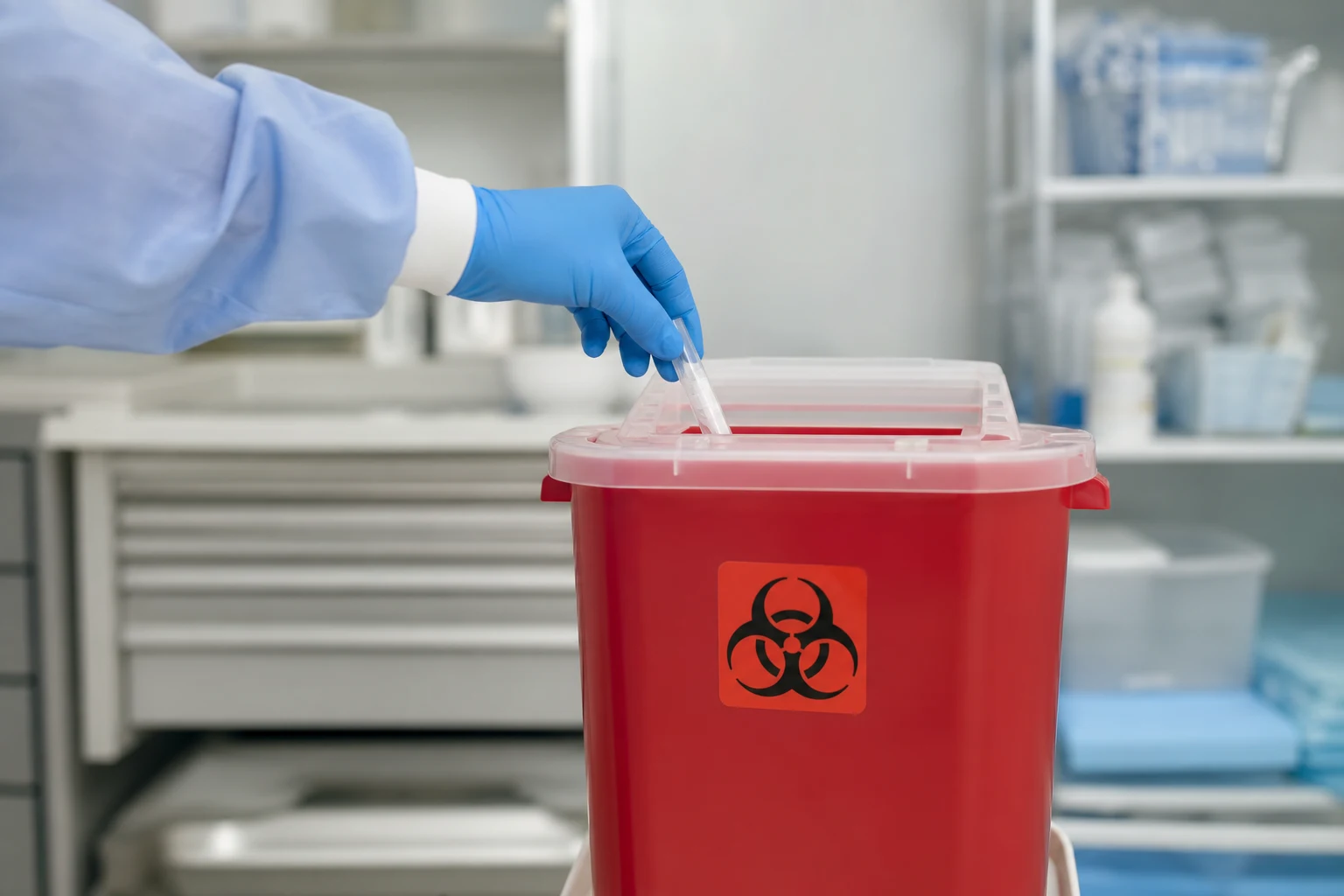
Once used, a disposable stapler and any unused staples it still contains should go into a sharps or biohazard waste stream per your facility’s protocol, not general trash. This is a small step, but it’s the other half of the infection-control story: single-use design protects the current patient, and correct disposal protects everyone who handles waste afterward.
How This Fits Alongside a Preloaded Medical Stapler
It’s a fair question why a facility would stock both a 10-staple medical stapler and a 35-staple disposable unit rather than standardizing on one. The honest answer is that both are disposable and both are sterile — the real difference is capacity and sizing. The 35W Medical Skin Stapler is sized for a single wound closure of typical length, while the 35-staple unit is built for longer wounds, multiple smaller lacerations in one visit, or settings where a clinician doesn’t want to reach for a second device mid-procedure.
In practice, many emergency departments stock both and let the wound dictate the choice: a short laceration gets the standard unit, while a longer incision or a multi-site trauma case gets the higher-capacity disposable. Neither displaces the other — they’re sized for different jobs within the same single-use, infection-control model.
Frequently Asked Questions
Is a disposable skin stapler actually sterile when it arrives?
Yes, as long as the factory seal is intact. The device is sterilized and sealed at manufacturing, and that seal — not the packaging appearance — is the indicator that sterility has been maintained up to the point of opening.
How many staples does a disposable skin stapler typically hold?
The 35W Disposable Skin Stapler holds 35 preloaded staples in a single sealed unit, which is more than the 10-staple preloaded count typical of standard medical skin staplers, making it suited to longer or multiple closure sites in one setting.
Can a disposable stapler be reused if staples remain inside?
No. Once opened and used on a patient, the device should be discarded as sharps/biohazard waste regardless of whether staples remain. Reuse defeats the single-use sterility design and introduces cross-contamination risk.
Related Reading and Where to Buy
For the mechanics behind how any skin stapler forms a closure, see How Do Skin Staples Work?. For a general comparison of staples and sutures, see our guide to surgical staples.
The 35W Disposable Skin Stapler is available starting at $6.95, with pricing scaled by pack size up to $19.50.