

 ES
ES PT
PT DE
DE FR
FR IT
IT NL
NL PL
PL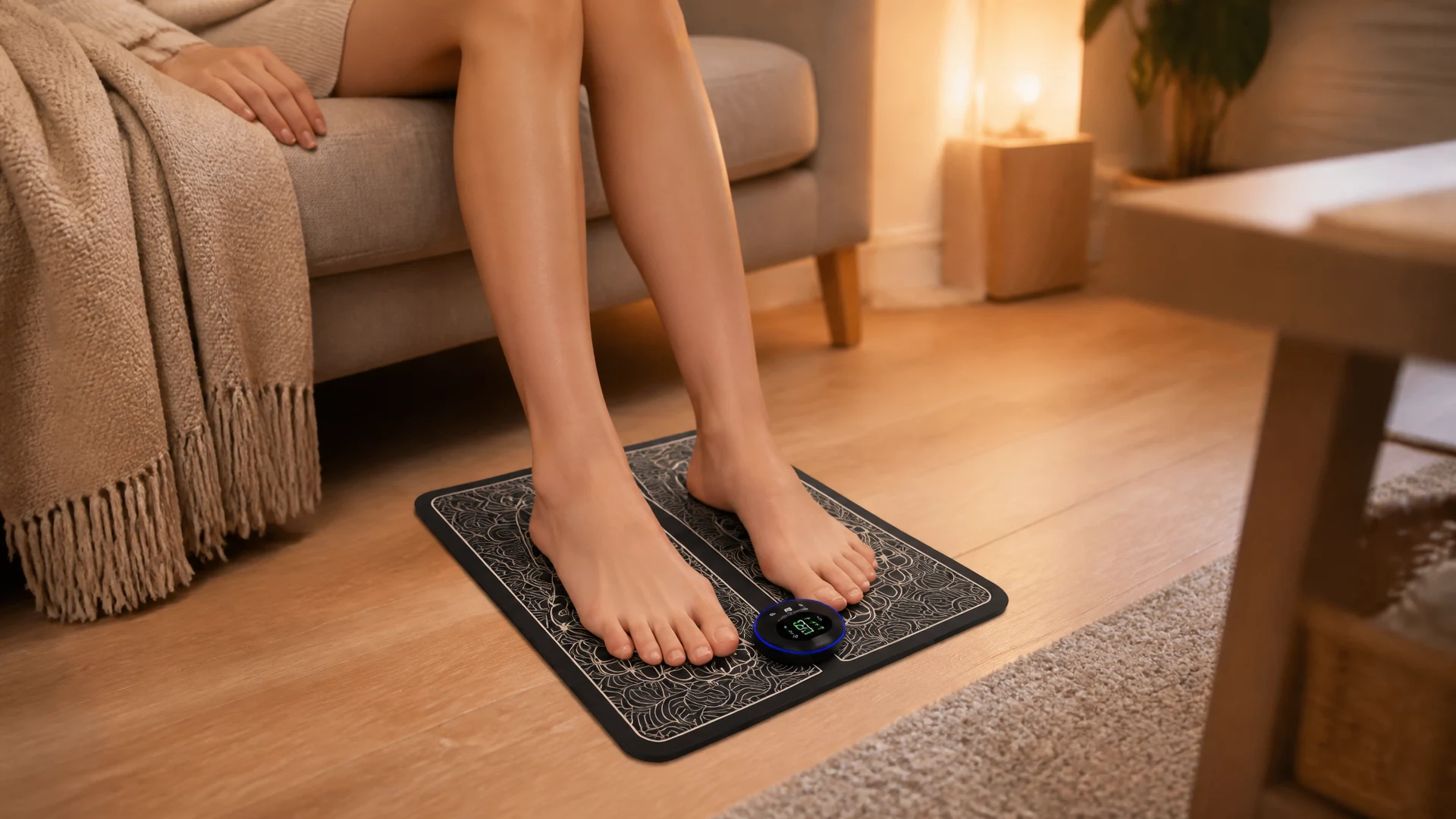
Neuropathy pain in the feet rarely announces itself gently. It’s a burning sensation at 2 a.m., a numb patch that makes you worry about stepping on something sharp, or a pins-and-needles buzz that no amount of sock-adjusting fixes. An EMS foot massager promises relief in 15 minutes a day, which sounds almost too simple for a condition that can take months of physical therapy to manage.
This article looks at what EMS actually does to nerve-affected feet, what the product page for the EMS Electric Foot Massager Pad promises versus what’s realistic, and who should steer clear of electrical stimulation altogether.
What EMS Actually Does to Your Feet
EMS stands for electrical muscle stimulation. A mat like the EMS Electric Foot Massager Pad sends low-voltage electrical pulses through the soles of your feet, causing the small muscles there to contract and release repeatedly. That contraction is what people feel as a tingling, pulsing, or kneading sensation, depending on the intensity setting.
Numbness and that constant pins-and-needles sensation come from damaged or compressed nerve fibers sending weak, scrambled signals. EMS doesn’t repair the nerve itself. What it does is flood the area with a different, stronger signal that can temporarily override the background static, which is why users often describe a session as “waking the foot back up” rather than “fixing” it. The sensation fades once the session ends — that’s expected. It’s symptom management, not a cure.
According to the product’s own description, the device is marketed for temporary relief of foot discomfort, muscle tension, and circulation support — not as a neuropathy treatment. That distinction matters, and it’s one this article will keep coming back to.
Can EMS Help with Diabetic Neuropathy Specifically?
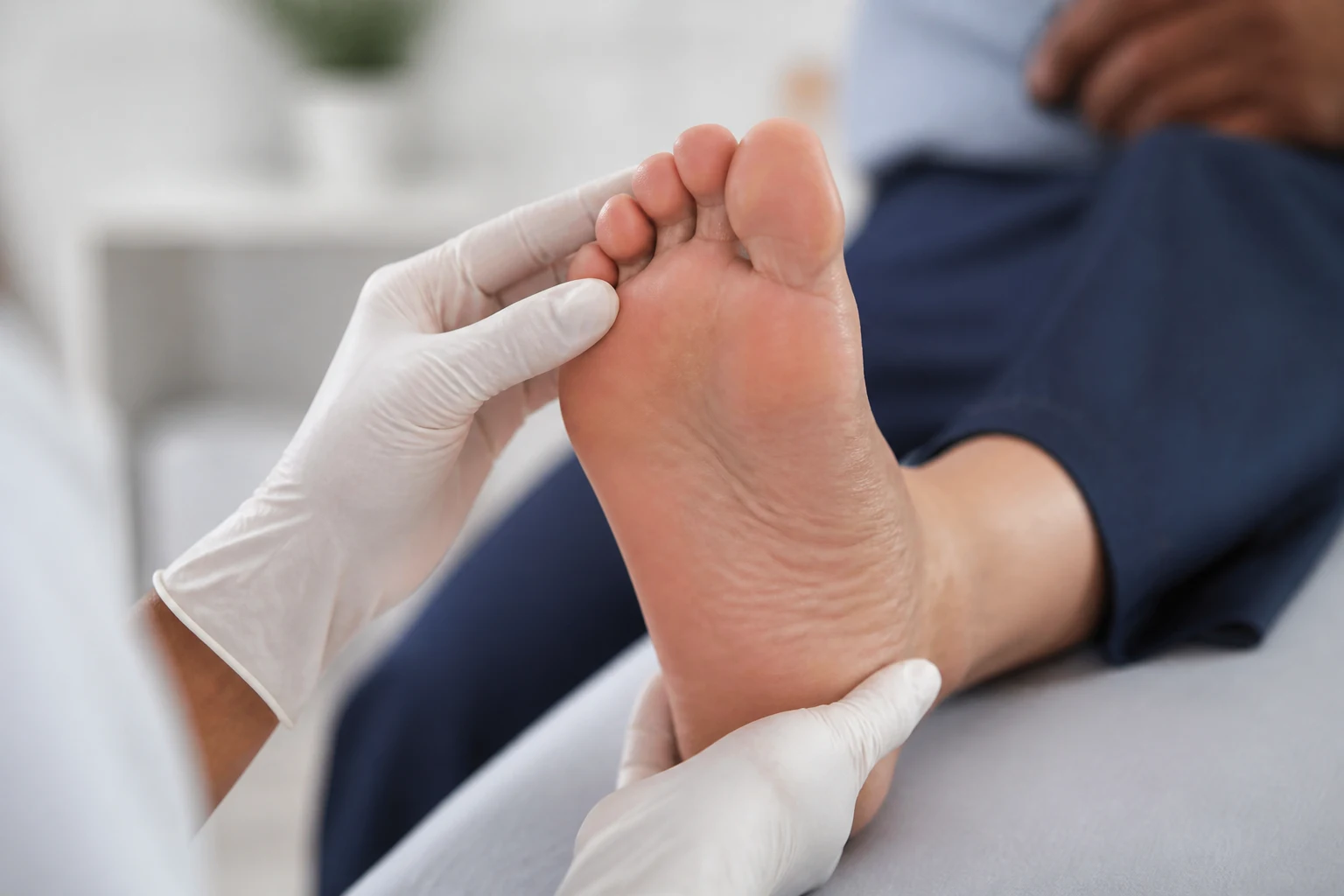
Diabetic peripheral neuropathy is the most common reason people search for an EMS foot massager, and it’s also where the most caution is needed. Reduced sensation in the feet is a known complication of diabetes, which means a person with diabetic neuropathy may not feel if a mat is set too high, running too hot, or causing skin irritation — the very nerve damage that makes EMS appealing is the same damage that makes self-monitoring during use harder.
Start at the lowest intensity. Check your skin after every session for redness or marks you didn’t feel happen. If you have open sores, ulcers, or active infections anywhere on the foot, skip EMS entirely until a doctor clears the area. None of this is a reason to avoid the device outright — it’s a reason to use it with more attention than someone with normal sensation would need.
Using the EMS Foot Massager Pad: What a Session Looks Like
The pad is a flat, USB-rechargeable mat you stand or sit with your feet on, controlled by a small wireless remote with power, mode, and intensity buttons. A typical session runs 15 to 20 minutes. Most people start on the lowest of the available intensity levels and work up only as the sensation becomes familiar — jumping straight to a high setting on the first try is the most common reason people report the feeling as unpleasant rather than therapeutic.
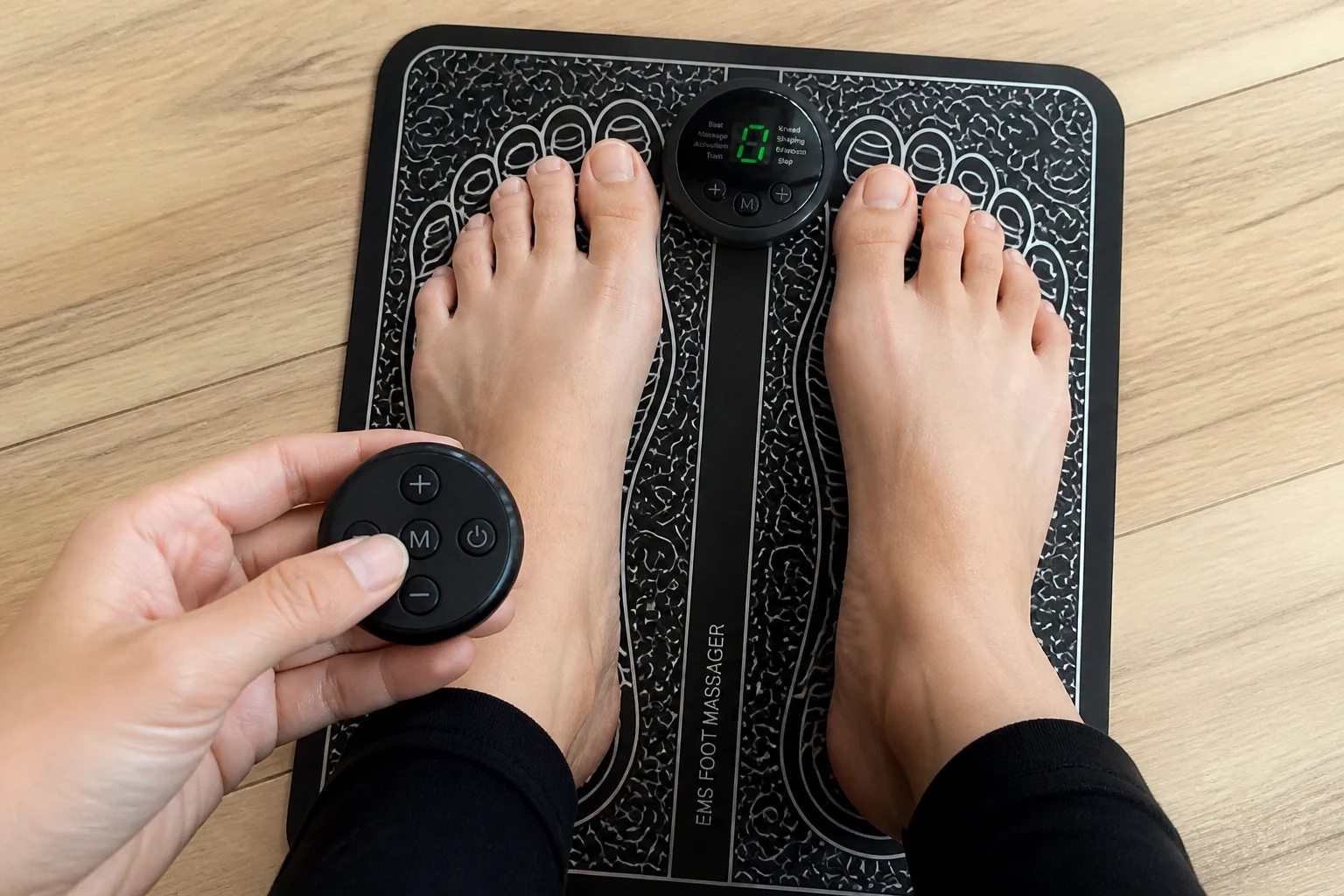
- Most users notice a warm, loosened feeling in the arches and toes within the first week of daily use.
- Several modes typically cycle through different pulse patterns — kneading, tapping, and acupressure-style settings.
- The mat folds for storage and charges fully from a standard USB cable in a couple of hours.
None of these are claims specific to neuropathy management; they describe the general mechanics of how the device works for anyone using it.
Who Should Not Use an EMS Foot Massager
Per the product’s own safety guidance, EMS devices are not suitable for everyone. The following groups should avoid using this mat unless a physician has specifically approved it:
- Pregnancy — avoid EMS during pregnancy unless approved by a doctor.
- Pacemakers or electronic implants — consult a healthcare professional before using EMS.
- Circulatory disorders, open wounds, infections, or deep vein thrombosis (DVT) — consult a doctor before use.
- Known skin sensitivity or allergy to electrodes/gels — perform a patch test first.
This list comes directly from the manufacturer’s own safety guidance, not a generic disclaimer — which is worth noting because it means the warnings are specific to this device’s electrode design and intensity range, not boilerplate copied across unrelated products.
EMS vs. Physical Therapy: Setting Realistic Expectations
A clinical course of physical therapy for neuropathy typically involves a trained provider targeting specific nerve pathways over weeks or months, often alongside medication management. An at-home EMS mat is a different category of tool entirely — closer to a daily comfort routine than a treatment protocol. Expecting it to replace a physician’s care plan sets up disappointment; expecting it to take the edge off evening discomfort is a more reasonable bar, and one the device can usually clear.
Some people pair the two: using EMS at home on non-therapy days to maintain the loosened, circulated feeling their physical therapist works to achieve in-session. That combination isn’t a documented clinical protocol — it’s simply what shows up anecdotally in product reviews — so treat it as one option to discuss with a provider rather than a verified strategy.
EMS Foot Massager vs. Other Neuropathy Tools
EMS is one of several electrical stimulation categories, and the terminology gets confusing fast. A TENS unit targets pain signals along nerve pathways rather than contracting muscle tissue, which makes it a different tool for a related but distinct goal. The table below breaks down where each approach fits.
| Tool | Primary Target | Typical Sensation |
|---|---|---|
| EMS foot mat | Muscle contraction | Pulsing, kneading |
| TENS unit | Pain-signal nerves | Tingling, buzzing |
| Manual reflexology | Pressure points | Deep pressure |
Frequently Asked Questions
Does an EMS foot massager cure neuropathy?
No. EMS foot massagers are designed for temporary relief of foot discomfort and muscle tension, not for curing or reversing nerve damage. Neuropathy requires medical diagnosis and management from a healthcare provider.
How long before I notice a difference?
Most users report a noticeable loosening or warming sensation during the first session, with the effect typically fading within an hour afterward. There is no documented timeline for lasting change, since the device is intended for session-by-session comfort rather than cumulative therapeutic effect.
Is it safe to use every day?
Daily sessions of 15 to 20 minutes are within the manufacturer’s guidance, provided there are no contraindications like open wounds, DVT, or pacemaker use. The product’s own warning against overstimulation recommends rest between sessions rather than back-to-back use.
Can diabetics use an EMS foot massager?
People with diabetes can often use EMS foot massagers, but reduced foot sensation from diabetic neuropathy makes self-monitoring harder, so starting at the lowest intensity and checking skin after each session is especially important. Anyone with active foot ulcers or circulatory complications should consult a doctor first.
The Bottom Line
An EMS foot massager won’t reverse nerve damage, and no credible product description claims it will. What it offers is a low-effort, low-risk way to interrupt the discomfort cycle for 15 minutes at a time — genuinely useful for many people, genuinely not a substitute for medical care. If you want to see the full specs, intensity range, and safety guidance for the model discussed here, the EMS Electric Foot Massager Pad product page has the complete details.