

 DE
 ES
 FR
 IT
 NL
 PL
 PT
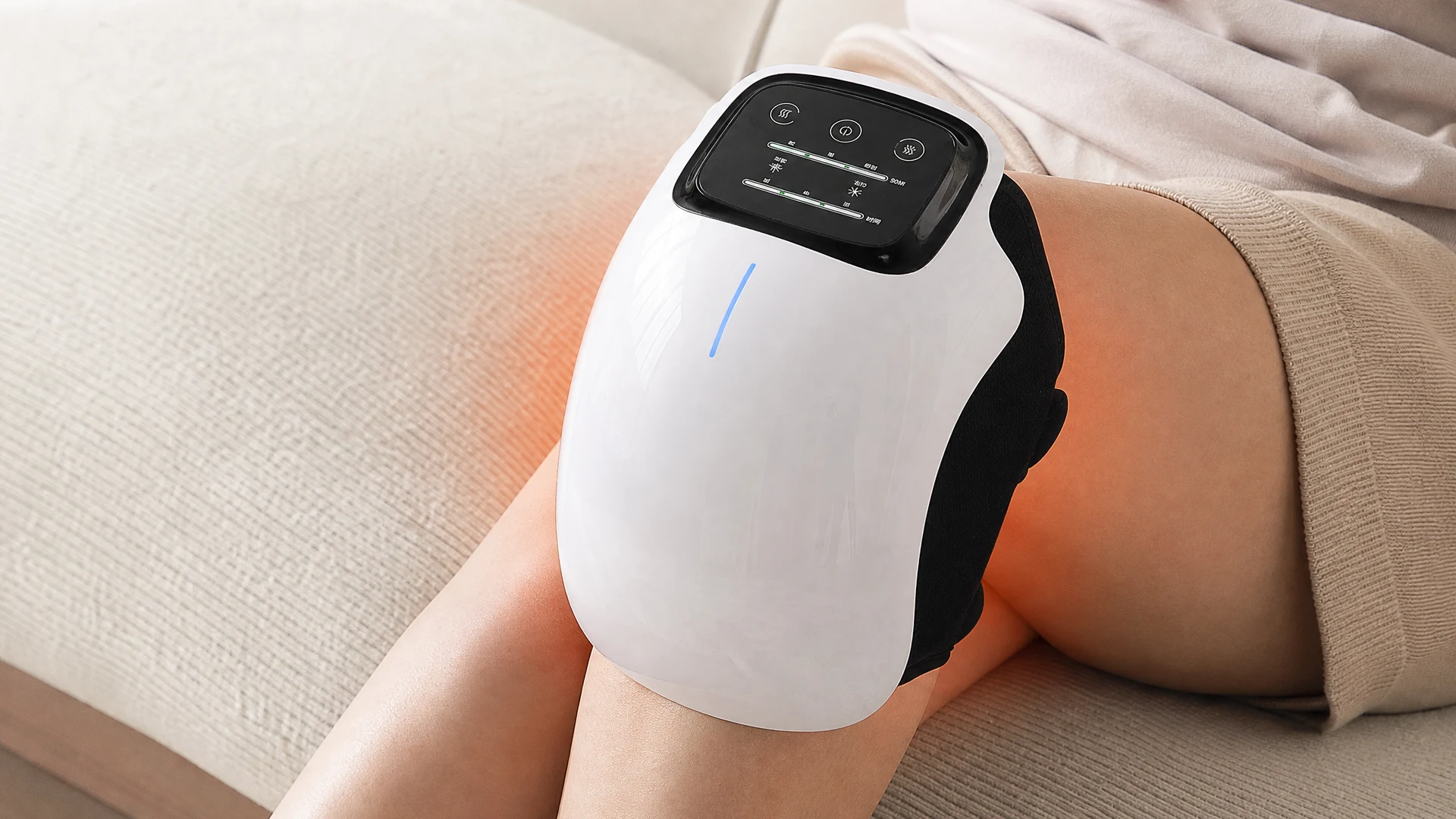
A device that combines heat, vibration, and light into one knee wrap can feel like a single “massage” experience, but each component is doing something mechanically different to your knee. Understanding the separate roles helps explain why some people feel more relief from one mode than another, and why using all three together isn’t redundant — it’s layering three distinct, independently studied mechanisms.
How Heat Actually Works on Joint Pain
Applying heat to the knee triggers a well-documented chain of physical effects: local blood vessels dilate, which increases blood flow and local metabolism; the collagen fibers in tendons and ligaments around the joint become more elastic and pliable; and muscle spasm in the surrounding tissue tends to relax. Heat also releases chemical mediators like histamine and prostaglandins that contribute to the vasodilation effect. None of this repairs joint damage, but the combination of improved blood flow, relaxed muscle tension, and more pliable connective tissue is a well-established, physiologically grounded reason knees feel looser and less painful during and shortly after heat application.
How Vibration Actually Works on Pain Signals
Vibration’s mechanism is almost entirely different from heat’s, and it has its own separate neurophysiological basis. A 2022 systematic review in the European Journal of Physical and Rehabilitation Medicine explains that localized vibration activates fast-conducting Aβ sensory fibers in the skin and underlying tissue, which engage what’s called the spinal gate control mechanism — essentially, these non-painful vibration signals compete with pain signals for the same neural pathway to the brain, and the vibration signal often wins, reducing the pain signal that gets through. The review found this effect was strongest at vibration frequencies between 100 and 250 Hz, and that the mechanism involves changes at multiple levels of the nervous system, not just the spinal cord.
This is sometimes called the “gate control theory” of pain, first proposed in 1965 and still considered a foundational, if incomplete, explanation for how non-painful stimulation can reduce the perception of pain. It’s the same general principle that explains why rubbing a stubbed toe provides immediate, if temporary, relief.
Why Combining Them Isn’t Just Marketing
Because heat works through vascular and connective-tissue changes while vibration works through a neural signaling pathway, there’s a legitimate physiological case for using them together rather than redundantly. The Smart Knee Massager with Heat & Vibration applies both to the same joint simultaneously, along with red and infrared light, which we cover separately in our guide to red light therapy for knee pain. Each mechanism is independently studied; what’s thinner is research on the specific combination of all three delivered by one consumer device, which is a newer product category than any single mechanism on its own.
When Heat Is a Bad Idea
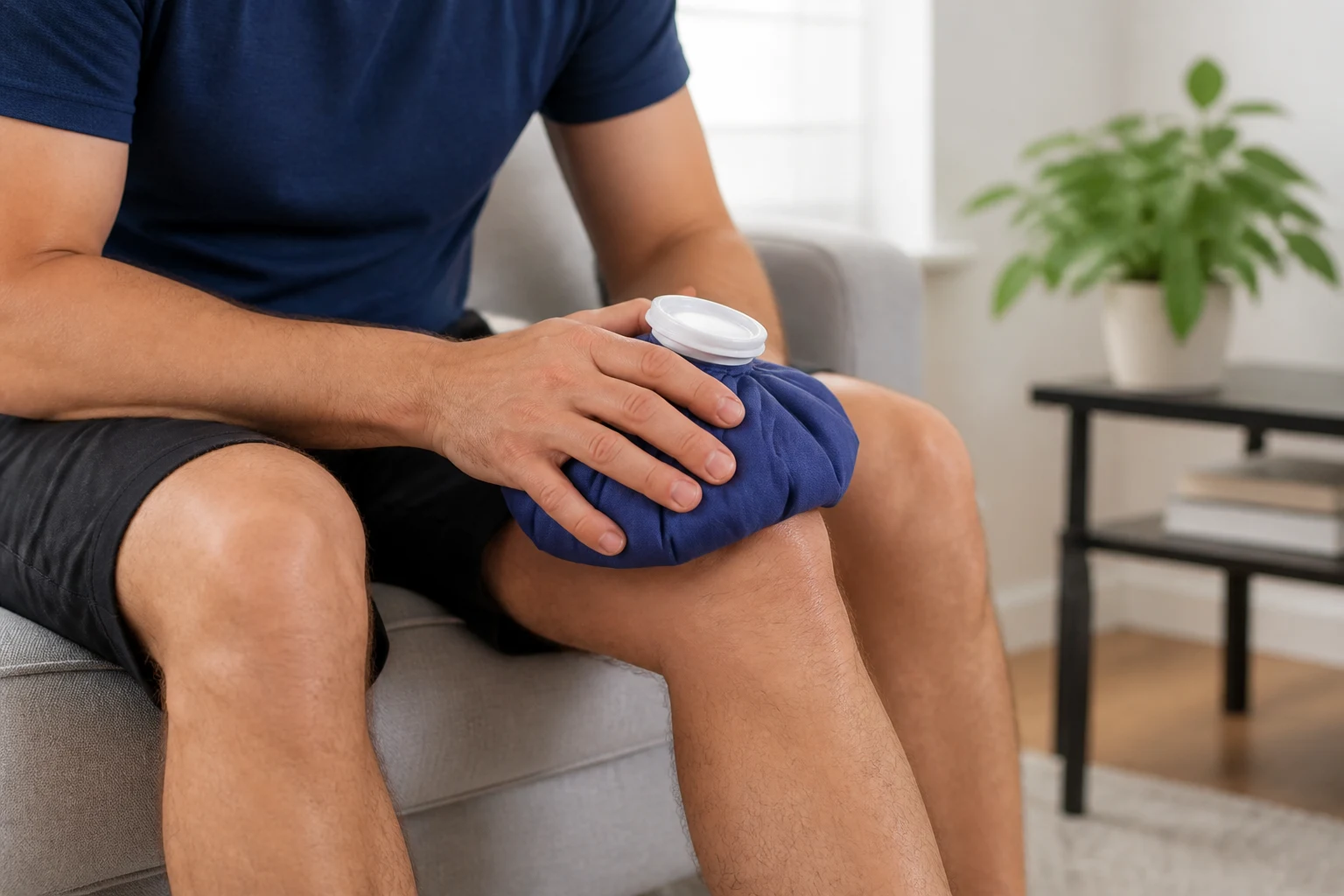
Heat is not universally appropriate for every knee problem. A joint that’s acutely inflamed, hot to the touch, or recently injured generally responds better to cold therapy in the first 24 to 72 hours, since heat’s vasodilating effect can increase swelling in acute inflammation rather than reduce it. Heat is better suited to chronic stiffness, muscle tension, and pain that isn’t accompanied by visible swelling or warmth. This distinction — heat for chronic stiffness, cold for acute inflammation — is one of the more consistently agreed-upon pieces of guidance across physical therapy sources, even though specifics of timing are debated.
Matching the Mode to the Problem
| Your Situation | Better-Matched Mode | Why |
|---|---|---|
| Chronic stiffness, limited range of motion | Heat | Increases collagen elasticity and blood flow |
| Sharp or nagging pain signal, no swelling | Vibration | Engages spinal gate control to reduce pain perception |
| Recent injury, visible swelling or warmth | Neither (use cold, see a doctor if severe) | Heat can worsen acute inflammation |
| General end-of-day tension, no specific flare-up | Both together | Combines vascular and neural mechanisms |
What the Product Specs Do and Don’t Tell You
The product description for this device mentions “multiple massage modes and intensity levels” for vibration and adjustable heat settings, but doesn’t publish the specific vibration frequency in Hz or the exact heat temperature range — details that would let you map the device directly onto the research cited above, which found the 100-250 Hz range most effective for vibration’s pain-gating mechanism. This is typical for consumer wellness devices in this category; the mechanism is sound, but matching a specific frequency number to a specific study result isn’t something most product pages support. Cycling through the available intensity levels and noting which setting you find most comfortable is a reasonable substitute for chasing an exact number you likely can’t access anyway.
A Realistic First-Week Routine
If you’re new to a combination device, a reasonable starting approach is to try heat and vibration separately for the first few sessions before combining them, so you can tell which effect you actually notice and prefer. Start each mode at its lowest intensity, use sessions of 15 to 20 minutes, and avoid heat specifically if your knee is currently swollen or was recently injured. Once you have a sense of how your knee responds to each mode individually, combining them for daily use is reasonable for ongoing stiffness or general tension management.
Frequently Asked Questions
Is heat or vibration better for knee pain?
Neither is universally better — they work through different mechanisms for different problems. Heat is better matched to chronic stiffness and muscle tension, while vibration is better matched to reducing the perception of a pain signal through the nervous system. Many people benefit from both, just not always at the same time.
Can I use heat on a swollen knee?
Generally, no. Heat increases blood flow through vasodilation, which can worsen swelling in an acutely inflamed joint. Cold therapy is the more commonly recommended approach for fresh swelling, with heat reserved for chronic stiffness once acute inflammation has settled.
How does vibration “block” pain if the problem in my knee hasn’t actually changed?
The gate control mechanism works at the level of signal transmission in the nervous system, not by changing the underlying tissue. The vibration signal competes with the pain signal for the same neural pathway to the brain, reducing how much pain signal gets through while the vibration is active and for some time after. This is why the relief is often temporary rather than permanent — it’s modulating signal transmission, not resolving the source of the pain.
Should I use heat before or after exercising my knee?
Heat before activity can help loosen stiff tissue and improve range of motion going into movement, which is why some physical therapists recommend it as a warm-up. Using heat immediately after an acute flare-up or injury is generally discouraged in favor of cold therapy, but heat after a normal workout for general muscle relaxation is commonly fine for most people without acute inflammation.
The Bottom Line
Heat and vibration aren’t redundant features bundled for marketing appeal — they work through genuinely different, independently documented mechanisms: heat through vasodilation and connective-tissue changes, vibration through spinal gate control of pain signals. Knowing which mechanism matches your specific knee problem, and avoiding heat on acutely inflamed joints, helps you use a combination device more effectively than just picking the highest setting on every mode. Full specs are on the Smart Knee Massager with Heat & Vibration product page.