

 EN
EN ES
ES PT
PT DE
DE FR
FR IT
IT PL
PL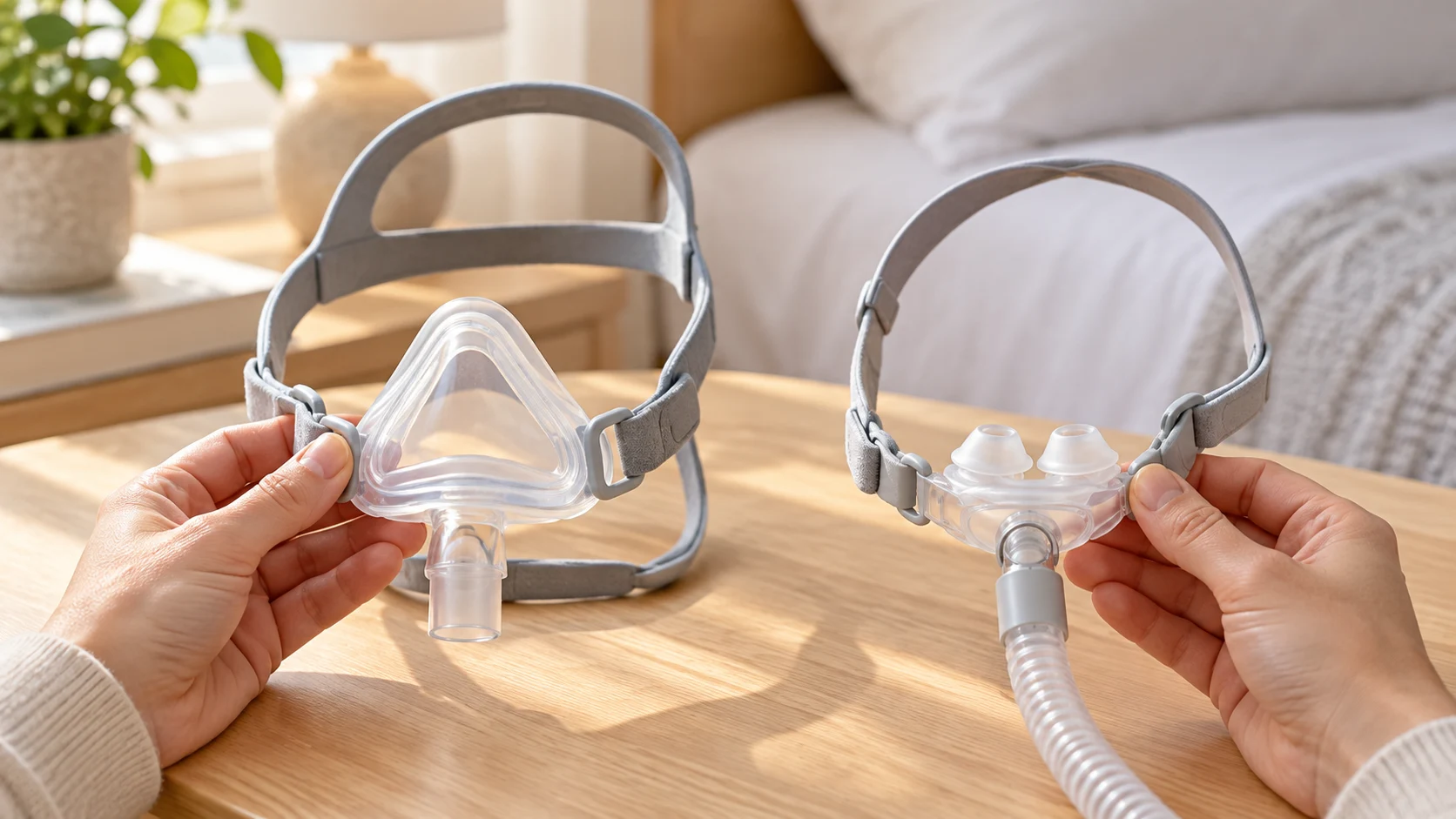
A nasal CPAP mask seals around your nose. Nasal pillows use two small cushions at the nostril entrances. Both leave your mouth uncovered. The useful comparison is therefore where the interface touches you, whether it maintains a comfortable seal, and how it works with your breathing and sleep position—not which style looks smallest in a photograph.
If you are comparing nasal masks vs nasal pillows for an existing CPAP setup, start with a fitting discussion with your equipment provider. Cleveland Clinic describes these as different mask options, and notes that finding a suitable type and fit can take more than one attempt. This guide explains the differences and the questions to take to that appointment.
Nasal Masks and Nasal Pillows: The Main Difference
A traditional nasal mask has a cushion that surrounds the nose, with headgear holding it in place. A nasal-pillows interface brings the seal closer to the nostrils, using two small pillow-shaped tips. Neither is a full-face mask, which covers the mouth as well as the nose.
Also distinguish nasal pillows from an under-the-nose nasal cradle. A cradle supports the underside of the nose without the same two projecting pillow tips. Product names can sound similar, so compare the actual cushion photographs and fitting instructions rather than relying on “nasal” or “under nose” alone.
| Vraag | Nasal mask | Nasal pillows |
|---|---|---|
| Where does it seal? | Around the nose; the exact contact area depends on the design. | At the nostril entrances using two small pillow cushions. |
| Does it cover the mouth? | Nee. | Nee. |
| What deserves a fitting check? | Cushion contact around the nose, including any contact near the bridge. | Pillow size, alignment and pressure at the nostril area. |
| What about glasses or facial space? | Check the frame and cushion against your glasses. | A smaller nose-area footprint can leave more space for glasses; headgear still matters. |
| Is it automatically better for side sleeping? | No; assess the actual seal and pillow contact. | No; assess the actual seal, headgear and tubing pull. |
Breathing Through Your Nose and Understanding Leaks
Because both styles leave the mouth uncovered, switching from a nasal mask to nasal pillows does not by itself address air escaping through an open mouth. If you regularly wake with a dry mouth, notice persistent leaks, or have difficulty breathing through your nose, describe those symptoms to your treating clinician or equipment provider.
That discussion may include nasal comfort, humidification, fit or another interface. A full-face style may be considered in some situations, but a symptom alone does not identify the right solution. Avoid treating a smaller mask as a guaranteed fix, forcing your mouth closed, or changing your prescribed therapy settings to compensate for a poor fit.
Compare Them in Your Normal Sleep Position
A mask that seems comfortable while you sit upright may feel different when you turn onto your side. During a fitting, check your usual sleeping position, whether your bed pillow pushes the cushion, and whether the tubing tugs on the mask as you move.
De American Thoracic Society’s PAP troubleshooting guide identifies tubing pull and mask readjustment as relevant to nighttime leaks. Use that as a reason to assess the whole setup, rather than choosing a style from a generic “best for side sleepers” label. A different size or headgear arrangement may matter as much as the category name.
A Fitting Checklist for Either Style
Bring the exact mask name and size to your provider, along with a description of what is uncomfortable. For nasal pillows, check that the two cushions are aligned with your nostrils and are not causing painful pressure. For a nasal mask, check the contact around the nose and any bridge contact. Do not assume that a size letter from one design transfers to another.
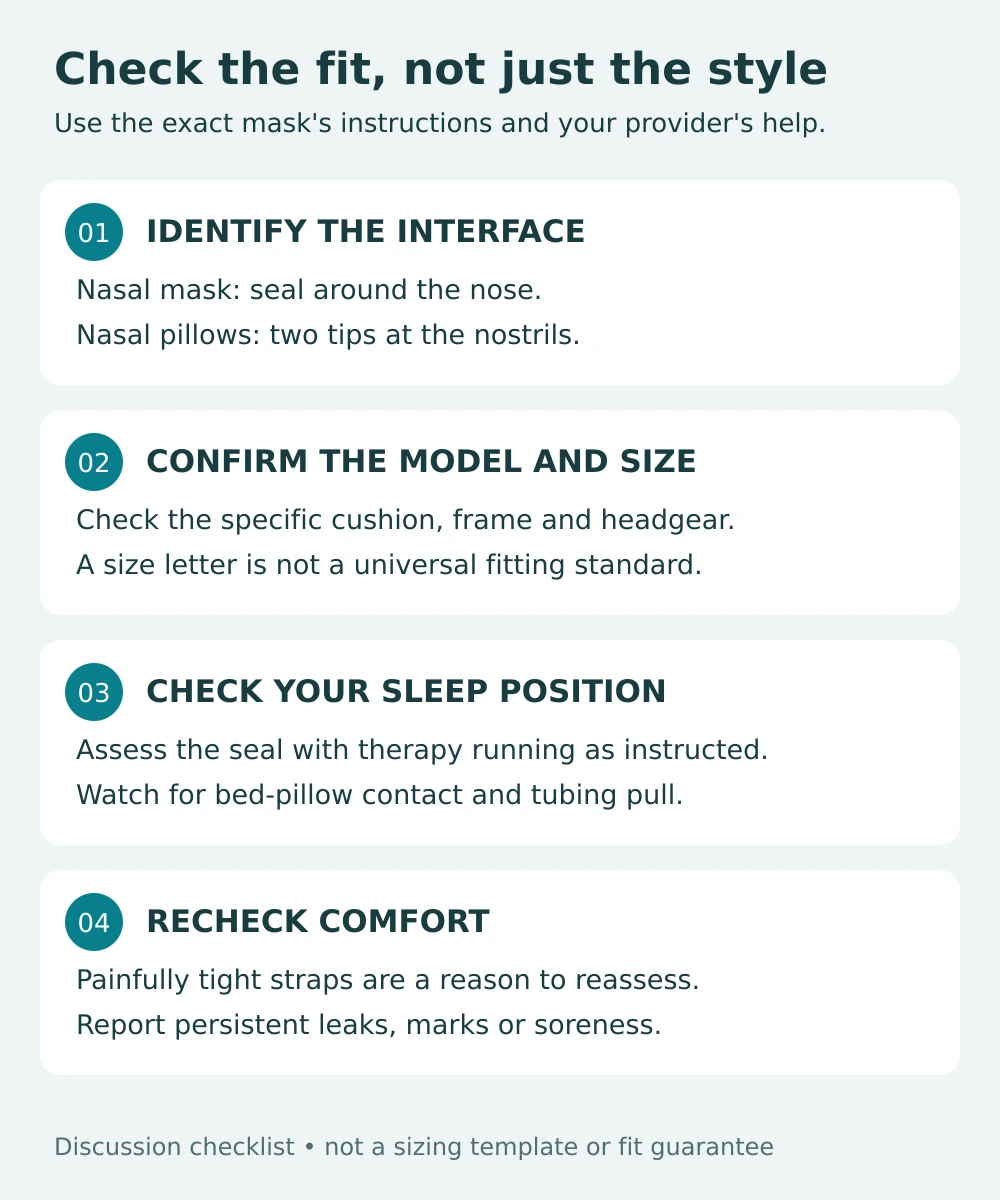
- Identify the complete design. Confirm the cushion type, frame, headgear and connector—not just the product title.
- Use the model’s fitting guide. Ask for the appropriate size assessment and follow that mask’s assembly instructions.
- Check with therapy running as instructed. Have your provider help assess the seal at your prescribed setup, including your normal sleeping position.
- Recheck comfort after adjustment. The straps should not need to be painfully tight to hold the mask in place. Report persistent leaks, pressure marks or soreness.
De National Heart, Lung, and Blood Institute explains that your healthcare provider can help find a comfortable mask and address problems adapting to CPAP. Ask for that help early if discomfort is preventing use.
What to Report When a Mask Is Uncomfortable
| What you notice | What to check or discuss |
|---|---|
| Air near your eyes or around the cushion edge | Describe where it escapes and whether it changes with position; ask about alignment, size and the condition of the cushion. |
| Sore nostrils or pressure around your nose | Explain the exact contact point and when it starts. Ask for a fit or size reassessment rather than continuing to tighten the straps. |
| The seal breaks when you turn | Check bed-pillow contact, tubing pull and the headgear fit in that position. |
| Dry mouth, nasal blockage or continuing difficulty using therapy | Discuss the symptoms with your clinician; a different cushion style is not a diagnosis or a guaranteed remedy. |
Use the mask’s own instructions to distinguish its normal exhaust flow from an unintended leak. Do not cover or alter its vent openings. Follow the manufacturer’s cleaning and inspection directions, and ask about worn or damaged components instead of applying a universal replacement timetable to every mask.
What to Check Before Buying a Replacement
Confirm whether the listing is a complete interface or only a replacement cushion. Check the included size, headgear, frame and connector, and whether any required adapter is supplied. A replacement part for one mask is not automatically interchangeable with another model, even when the names or size labels are similar.
You can review our nasal pillow product details en current nasal-interface listings alongside those checks. A product name containing “universal” does not establish compatibility with every machine, tube or accessory; confirm the exact combination before ordering. The illustrative cover compares interface types and does not show a promised sales package.
If the question is about the therapy machine rather than its interface, read CPAP vs BiPAP. For separating a mask purchase from the rest of your equipment budget, see our US CPAP cost guide.
Nasal Mask and Nasal Pillows FAQ
Are nasal pillows better than a nasal mask?
There is no automatic winner. Pillows concentrate contact at the nostril area, while a nasal mask seals around the nose. The better option for you needs a comfortable, usable seal with your prescribed therapy and a fitting assessment.
Can I use nasal pillows if I breathe through my mouth?
Nasal pillows leave your mouth uncovered, just as a nasal mask does. Discuss mouth leak, dryness and nasal breathing with your clinician or equipment provider before assuming either style will solve the problem.
Are nasal pillows the same as a nasal cradle?
No. Pillow interfaces have two small pillow tips at the nostrils; a cradle sits underneath the nose with a different contact design. Check the specific model’s pictures and instructions because retail naming varies.
Do I need a different CPAP machine to change mask styles?
Do not assume that a change of interface requires a new machine—or that every replacement will connect correctly. Ask your provider to confirm the exact mask, connector and device requirements. Follow their instructions for any applicable mask-type setting without changing prescribed pressure yourself.