

 ES
ES PT
PT DE
DE FR
FR IT
IT NL
NL PL
PL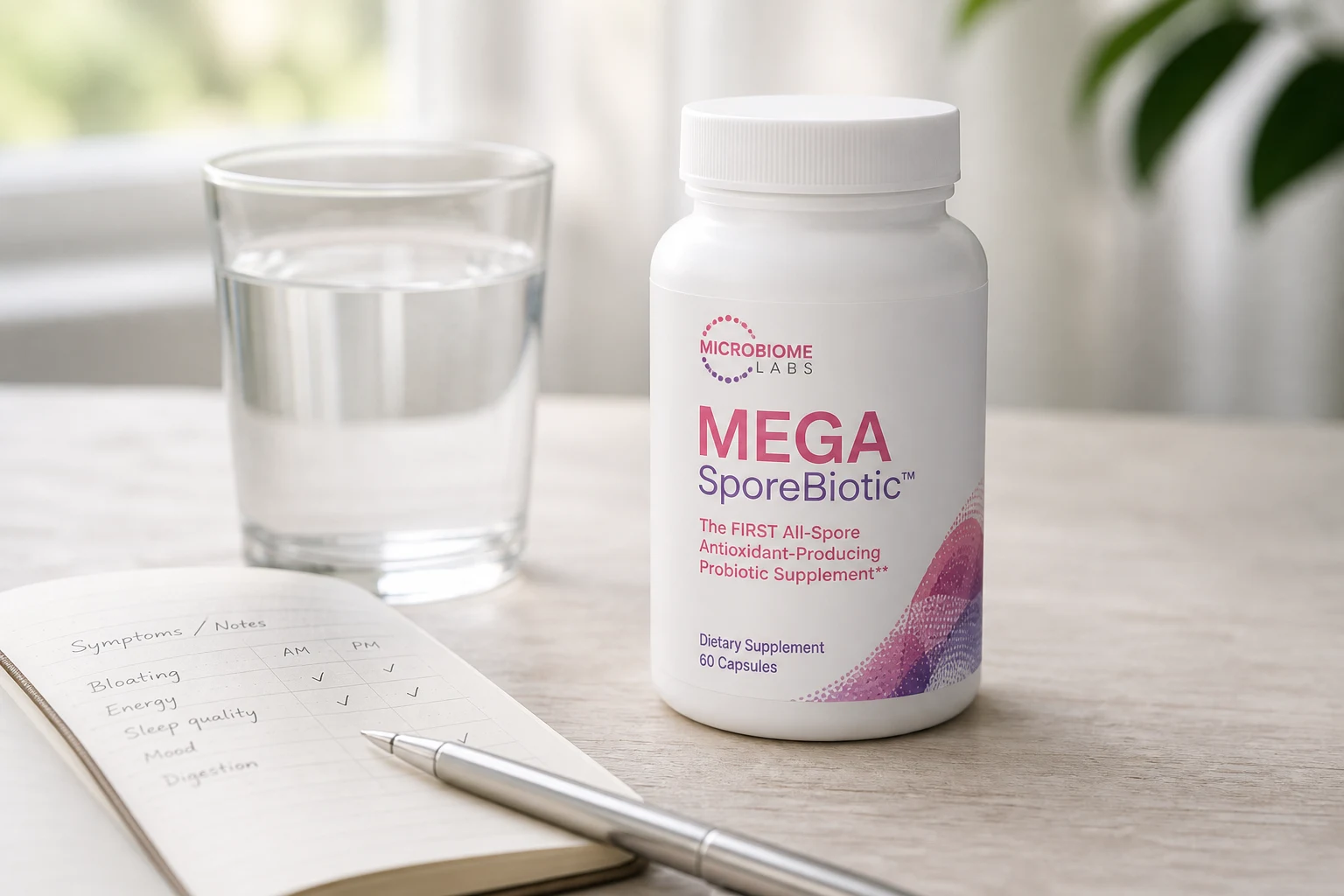
If you’re dealing with small intestinal bacterial overgrowth (SIBO), you’ve probably already learned that probiotics are a genuinely mixed bag for this condition — some strains can help, and some can make bloating and symptoms worse. So it’s a fair question: does a spore-based, broad-spectrum probiotic like MegaSporeBiotic fit into a SIBO protocol, or is it a risk? Here’s an honest look at what the mechanism suggests, what the evidence does and doesn’t say, and how to think about it if you’re considering it.
Why Probiotics Are Complicated for SIBO
SIBO happens when bacteria that normally live in the large intestine migrate into the small intestine and overgrow there, where they shouldn’t be present in large numbers. That’s exactly why the standard advice for probiotics gets complicated: many traditional probiotic strains are designed to colonize and multiply in the gut — which is generally a good thing, except that in SIBO, adding more live bacteria to an already overcrowded small intestine can sometimes worsen bloating, gas, and other symptoms before things improve.
This is why “just take a probiotic” isn’t reliable, catch-all advice for SIBO the way it might be for general digestive support. The type of probiotic and how it behaves in the gut genuinely matters.
There’s also a lot of individual variation. Two people with a SIBO diagnosis can react completely differently to the same probiotic — one might tolerate it fine, while another notices a flare in bloating within days. That’s part of why SIBO is often managed with a fairly individualized, trial-and-observe approach rather than a fixed protocol that works identically for everyone.
Why Spore-Based Formulas Are Discussed Differently in the SIBO Community
Spore-based probiotics, including MegaSporeBiotic, work through a different mechanism than most colonizing strains. Rather than settling in and multiplying extensively, spore-forming bacteria germinate temporarily, do their work, and are eventually cleared from the body rather than establishing a large permanent colony. In practitioner and functional-medicine discussions of SIBO, this transient mechanism is one reason spore-based probiotics are sometimes considered a gentler option compared to strains that aggressively colonize — the idea being that they’re less likely to directly add to bacterial overgrowth in the small intestine the way some traditional strains might.

It’s important to be precise here: this is a mechanistic rationale discussed in the functional and integrative medicine space, not a claim printed on MegaSporeBiotic’s own product label. The product’s official marketing describes general gut barrier support, microbial diversity, and relief of occasional abdominal discomfort in study subjects — it does not make a specific SIBO claim. Anyone researching probiotics for SIBO should treat that distinction as important, not a minor technicality.
What MegaSporeBiotic’s Own Research Actually Covers
MegaSporeBiotic is backed by ten peer-reviewed studies, according to the product’s official research summary. That research focuses on three areas: promoting greater microbial diversity, supporting the growth of health-promoting gut bacteria (including increased short-chain fatty acid production), and helping maintain reduced numbers of less beneficial flora. Separately, the manufacturer notes that in study subjects, the product provided relief for occasional abdominal discomfort and supported elimination and digestive health.
None of that research is SIBO-specific. If gut barrier support and microbial diversity are relevant to your broader digestive health goals, that’s worth knowing. But if you’re specifically looking for a product with clinical trials on SIBO patients, MegaSporeBiotic’s own published research doesn’t currently make that claim, and it would be misleading to imply otherwise.
What to Watch For If You Try It
If you have diagnosed SIBO and you’re considering any probiotic — spore-based or otherwise — a few things are worth keeping in mind:
- Talk to whoever is managing your SIBO treatment first. SIBO protocols are often built around a specific sequence (antimicrobials, dietary changes, motility support, and sometimes probiotics at a particular stage), and adding a new supplement outside that plan can complicate tracking what’s actually helping.
- Start low and watch closely. The standard MegaSporeBiotic dosing protocol already ramps up gradually over three weeks, starting at just one capsule every other day — but if you have SIBO, it’s reasonable to go even slower and pay close attention to how your specific symptoms respond.
- Mild adjustment symptoms are expected with this product generally — but with SIBO, it can be harder to tell the difference between a normal adjustment reaction and a sign that this particular approach isn’t right for you. If symptoms escalate rather than settle within a few days, stop and check in with your provider.
- Keep a simple symptom log. Noting bloating, gas, bowel changes, and energy levels day by day makes it much easier for you and your provider to tell whether a new symptom is related to the probiotic, to your underlying SIBO, or to something else entirely in your routine.
The Bigger Picture: Gut Barrier Support and SIBO
One thing worth separating from the “does it treat SIBO” question is gut barrier function. A compromised gut lining is a common thread in a lot of digestive health discussions, SIBO included, and MegaSporeBiotic’s core research focus — supporting the gut barrier and promoting microbial diversity — speaks to that broader picture rather than to bacterial overgrowth specifically. For people who’ve already addressed the overgrowth itself through their SIBO treatment and are now focused on longer-term gut health and barrier support, that’s a more direct fit for what this product’s research actually covers. You can read the full breakdown of the mechanism and research in our MegaSporeBiotic Complete Guide.
Frequently Asked Questions
Is MegaSporeBiotic safe for people with SIBO?
MegaSporeBiotic isn’t marketed or clinically studied specifically for SIBO, so there’s no official product-specific safety claim for this condition. Anyone with diagnosed SIBO should discuss any new probiotic, spore-based or otherwise, with the healthcare provider managing their treatment before starting.
Can spore-based probiotics make SIBO worse?
Spore-forming bacteria work transiently rather than establishing a large permanent colony, which is why they’re sometimes discussed as a gentler option compared to heavily colonizing traditional strains. That said, individual responses to any probiotic vary, and this isn’t a guarantee — tracking your own symptoms closely and involving your provider is the safest approach.
Should I take a probiotic before or after treating SIBO?
This depends on your specific treatment plan and should be decided with whoever is managing your SIBO protocol. Probiotic timing relative to antimicrobial or other SIBO treatment phases varies by individual case, so this isn’t a one-size-fits-all answer.
What should I do if a probiotic seems to be making my symptoms worse?
Stop taking it and contact your healthcare provider. Don’t try to push through worsening symptoms in the hope that they’ll settle, especially with a diagnosed condition like SIBO where the wrong probiotic strain genuinely can aggravate bacterial overgrowth. Your provider can help determine whether what you’re experiencing is a normal, brief adjustment reaction or a sign to discontinue.
The Bottom Line
MegaSporeBiotic isn’t marketed as a SIBO treatment, and its own published research is focused on gut barrier support and microbial diversity rather than bacterial overgrowth specifically. Its transient, spore-based mechanism is discussed favorably in some functional-medicine contexts as gentler than heavily colonizing probiotics — but that’s a mechanistic rationale, not a clinical claim about SIBO. If you’re managing SIBO, the right move is to loop in your healthcare provider before adding any new probiotic to your routine, spore-based or otherwise.
Want to understand the full mechanism and research behind MegaSporeBiotic first? Read our Complete Guide, or explore the product on Pophaw.