

 ES
ES PT
PT DE
DE FR
FR IT
IT NL
NL PL
PL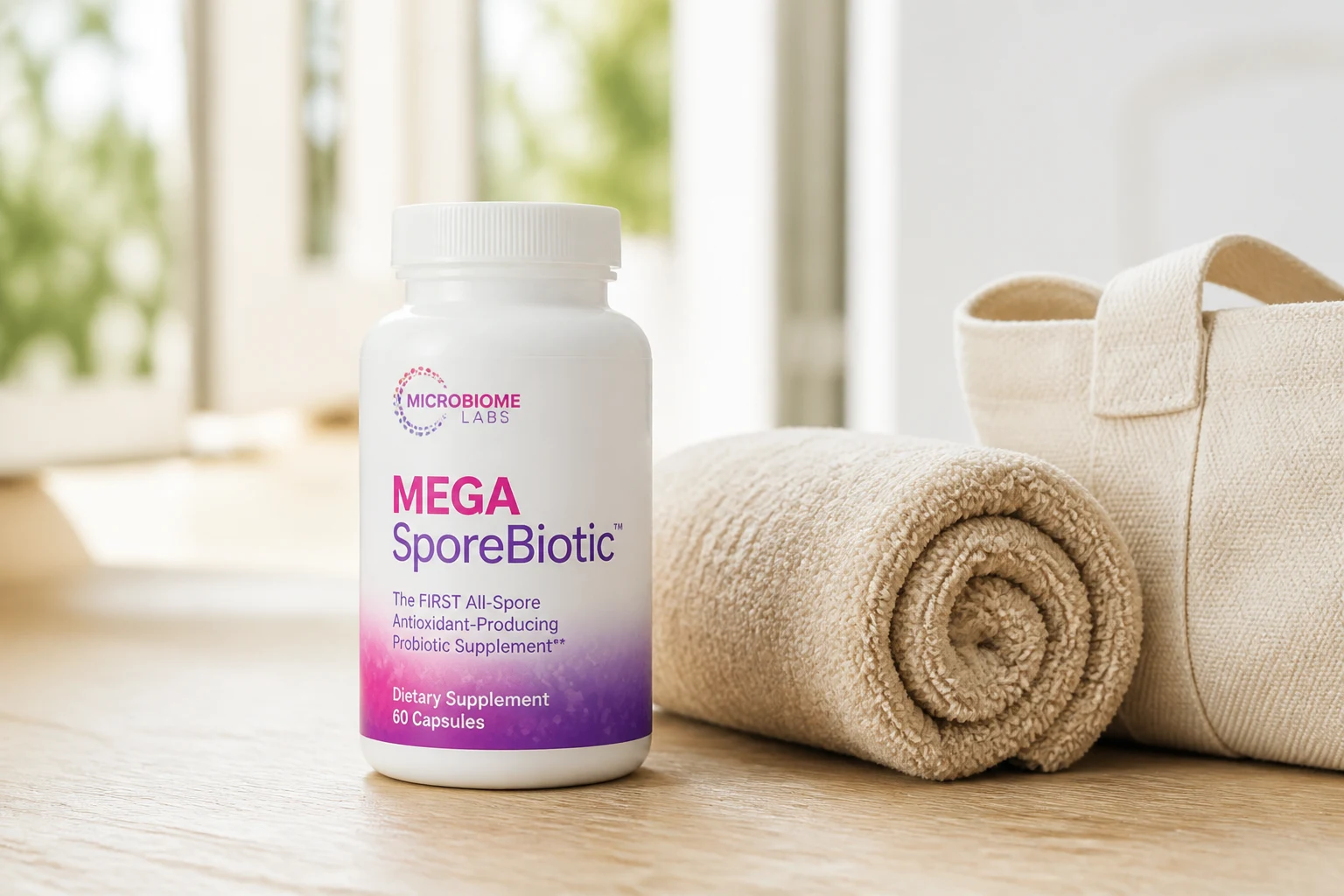
Walk down any supplement aisle and you’ll see dozens of probiotic options, but they’re not all built the same way. Spore-based probiotic supplements have grown popular specifically because they solve a problem that’s plagued traditional probiotics for decades: getting live bacteria to actually survive the trip to your gut. Here’s exactly how the two categories differ, and what that difference means for you as someone choosing between them.
The Core Difference: Survival Mechanism
Traditional probiotics — the kind found in most yogurt-aisle capsules — deliver live, active bacteria directly. These bacteria, typically from genera like Lactobacillus and Bifidobacterium, have to survive stomach acid, bile salts, and digestive enzymes before they ever reach the intestines where they can do any good. A significant portion simply doesn’t make it.
Spore-based probiotics take a fundamentally different approach. Strains like Bacillus subtilis exist in a dormant spore form — encased in a tough, protective outer coat that shields the organism from acid and heat. The spore stays inert through the stomach, then germinates into active bacteria once it reaches the more hospitable environment of the intestines. It’s the biological equivalent of traveling in armor instead of walking through a storm unprotected.
Shelf Stability: Refrigeration vs. Room Temperature
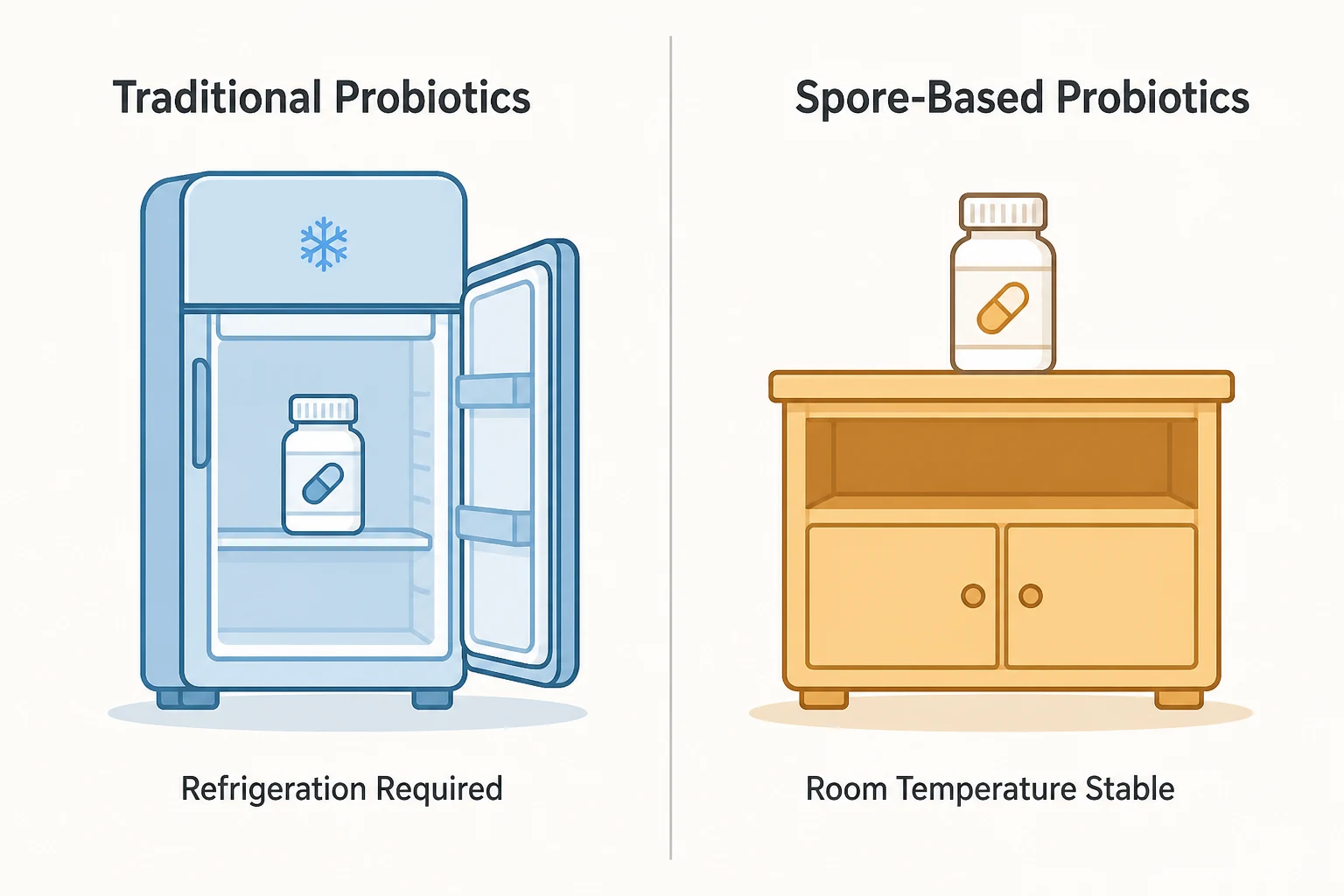
This is one of the most practical, everyday differences between the two categories. Traditional probiotic strains are often heat- and moisture-sensitive, which is why many brands require refrigeration to keep the bacteria viable until you take them. Miss that storage requirement — leave a bottle in a hot car or a bathroom cabinet — and potency can drop fast.
Spore-based formulas, including MegaSporeBiotic, are shelf-stable at room temperature precisely because of that protective spore coat. You can toss the bottle in a bag for travel or keep it in your kitchen cabinet without worrying about a refrigerator cutting into your daily routine.
What Each Type Is Typically Used For
Traditional probiotic strains have decades of research behind specific use cases — certain Lactobacillus strains, for example, are well studied for supporting general digestive comfort. They’re a reasonable, well-established starting point for people newer to probiotics, and their long track record means there’s a large body of strain-specific literature to draw on when choosing a product.
Spore-based formulas like MegaSporeBiotic are positioned differently: rather than adding one specific bacterial strain to your gut, the goal is to “recondition” the existing gut environment by promoting microbial diversity and supporting the growth of the commensal bacteria that are supposed to already be there. According to the product’s research summary, this includes maintaining reduced numbers of less beneficial flora and supporting production of short-chain fatty acids, which play a role in gut lining health.
That distinction matters practically. Adding a single strain works well when you’re targeting a narrow, well-studied outcome. Reconditioning the broader gut environment is a different goal entirely — it’s less about introducing a new organism and more about restoring the balance and diversity that’s supposed to exist in a healthy gut ecosystem in the first place.
Side Effects and Adjustment Period
Because spore-based probiotics survive intact and actively work to shift the gut environment, the initial adjustment period tends to be more noticeable than with milder traditional formulas. Mild abdominal cramping, looser stools, or changes in bowel regularity in the first few days are common with spore-based products and, per the manufacturer, are typically a sign the reconditioning process is working rather than a red flag. We cover this in full detail, including the gradual dosing schedule that minimizes discomfort, in our MegaSporeBiotic side effects guide.
Traditional probiotics generally produce a milder initial response, in part because a smaller fraction of the bacteria survives to actively colonize the gut in the first place.
Strain Diversity: One Organism vs. Broad-Spectrum
Another meaningful difference is scope. Many traditional probiotic products focus on one or a handful of specific bacterial strains, chosen because that particular strain has research behind a particular outcome. That’s a targeted approach, and it works well when you know exactly what you’re trying to support.
MegaSporeBiotic takes a broad-spectrum approach instead. Rather than betting on one strain to do one job, the formula is designed to support the diversity of your existing gut microbiome as a whole — encouraging a wider range of beneficial bacteria to thrive rather than introducing a single new organism and hoping it colonizes successfully. For people who don’t have one narrow symptom to target and are instead focused on general gut health and barrier function, that broader approach can be a more natural fit than a single-strain product.
Side-by-Side Comparison
| Factor | Traditional Probiotics | Spore-Based Probiotics (e.g. MegaSporeBiotic) |
|---|---|---|
| Survival through stomach acid | Variable — many strains don’t survive intact | High — protective spore coat shields the organism |
| Storage | Often requires refrigeration | Shelf-stable at room temperature |
| Primary approach | Adds specific live bacterial strains | “Reconditions” the gut to support existing commensal bacteria and microbial diversity |
| Initial adjustment period | Typically milder | Can be more noticeable in the first few days |
| Research base | Decades of strain-specific research, varies by brand | MegaSporeBiotic specifically: 10 peer-reviewed studies |
Which Should You Choose?
If you’re specifically looking to support gut barrier function and overall microbial diversity — rather than just adding one bacterial strain to your system — the spore-based mechanism is designed exactly for that. For a full walkthrough of what MegaSporeBiotic does, how it works, and how to dose it correctly, see our MegaSporeBiotic Complete Guide.
If your lifestyle involves a lot of travel, inconsistent access to a refrigerator, or you’ve struggled to stick with a probiotic routine because cold storage got in the way, the shelf-stability of a spore-based formula removes one practical barrier to actually taking it consistently. On the other hand, if you’re already comfortable with a specific traditional strain that’s working for a particular concern, there’s no need to switch just because a newer delivery mechanism exists.
Whichever category you choose, consistency matters more than which brand you pick off the shelf. A probiotic only works if you actually take it as directed, so factor storage requirements and your own routine into the decision, not just the label claims.
Frequently Asked Questions
Are spore-based probiotics better than traditional probiotics?
Neither category is universally “better” — they work through different mechanisms. Spore-based probiotics have an advantage in survivability and shelf stability, while traditional probiotics have a longer track record of strain-specific research for particular use cases. The right choice depends on what you’re trying to support.
Do spore-based probiotics need to be refrigerated?
No. Spore-based probiotics like MegaSporeBiotic are shelf-stable at room temperature because the protective spore coat keeps the organism viable without refrigeration.
Can I take a spore-based probiotic and a traditional probiotic together?
The two categories work through different mechanisms and aren’t inherently contradictory, but combining supplements always changes your overall dosing and adjustment experience. If you’re considering combining products, it’s worth checking with a healthcare provider, especially while you’re still in the initial adjustment period for either one.
The Bottom Line
The choice between spore-based and traditional probiotics comes down to survivability, storage convenience, and what you’re actually trying to support. Spore-based formulas like MegaSporeBiotic are built to survive stomach acid intact and work by reconditioning the broader gut environment, backed by product-specific peer-reviewed research. Traditional probiotics remain a solid, well-studied option, particularly for people who prefer a milder introduction to probiotic supplementation.
Ready to try the spore-based approach? Explore MegaSporeBiotic on Pophaw.