

 DE
 ES
 FR
 IT
 NL
 PL
 PT
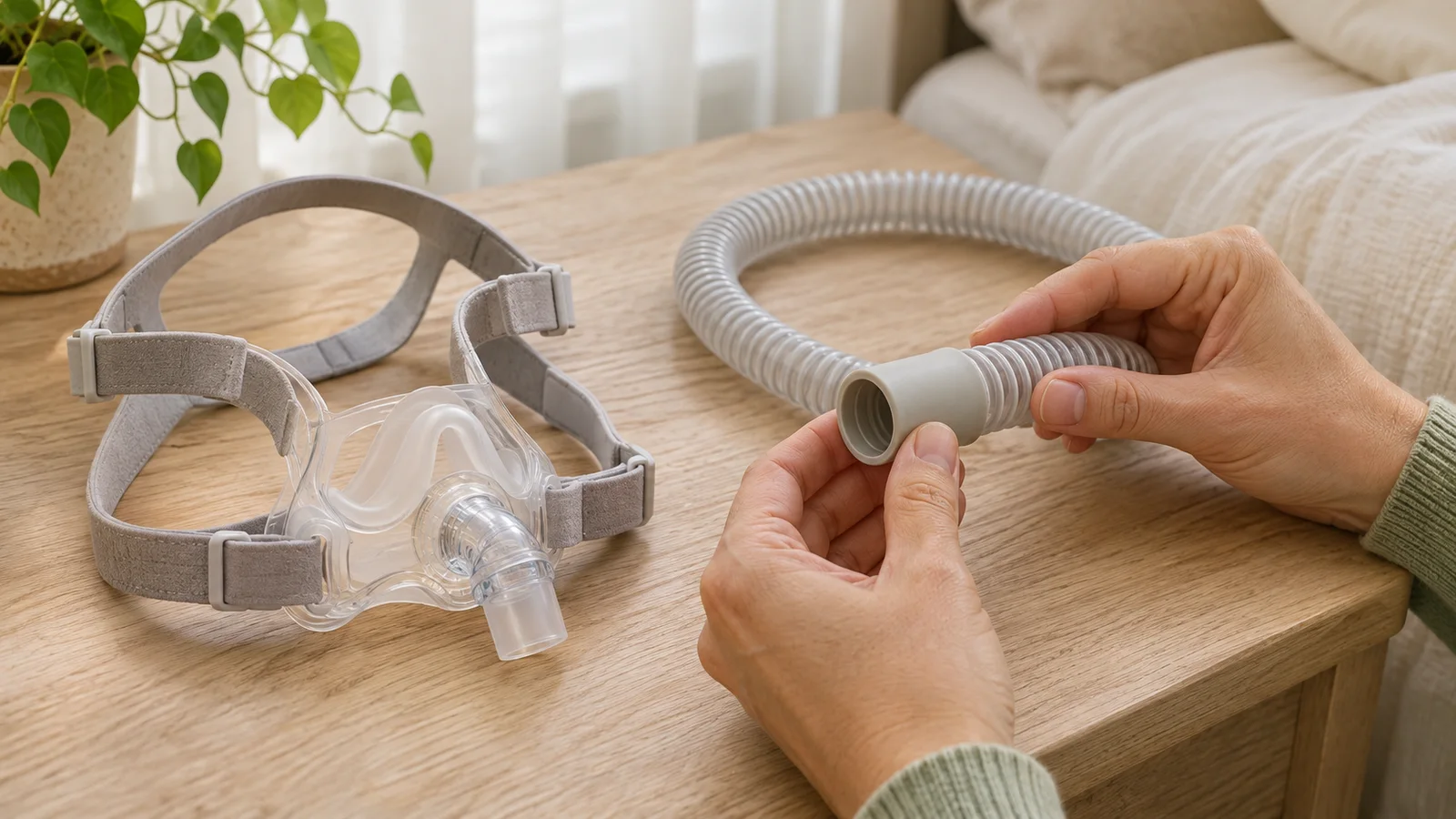
CPAP mask and hose replacement starts with identifying what has worn out. A leaking cushion, stretched headgear and a split hose call for different replacement parts. Replacing the whole mask is not always necessary, and a calendar reminder alone cannot tell you whether your equipment is still in good condition.
This guide explains what to inspect, what to check before ordering, and how to keep a useful replacement record. Follow the instructions for your own mask and machine; use your equipment supplier or sleep-care team when a problem persists.
When should you replace a CPAP mask or hose?
Inspect your supplies regularly and replace damaged or worn components according to their user guides. Look for changes in condition and function: a cushion that no longer seals, headgear that has lost elasticity, cracks in a frame, or tears in tubing. ResMed’s mask replacement guide identifies wear as a reason to replace parts.
There is no single replacement interval that applies to every brand, material and user. Your manual, supplier recommendations and insurance eligibility may each describe a schedule. Keep those separate: being eligible for a reimbursed part does not prove that a particular part has failed, and visible damage should not be ignored while waiting for a routine reminder.
What to inspect before ordering replacement parts
| Component | What to look for | What to confirm next |
|---|---|---|
| Mask cushion or nasal pillows | Tears, stiff or deteriorating material, or a seal that remains unreliable after correct cleaning and fitting | Exact mask model, cushion family and cushion size |
| Headgear | Stretched straps, damaged fasteners, or difficulty maintaining the intended fit | Compatible headgear model and size; do not assume all straps interchange |
| Mask frame, elbow and clips | Cracks, broken fittings or a connection that no longer stays secure | Which separate component the manufacturer supplies and its part number |
| Air hose | Holes, tears, damaged cuffs or loose connections | Machine model, tube type and connector requirements |
ResMed’s replacement-parts information discusses checking supplies for wear and buying individual components. These examples describe inspection principles, not compatibility approval for another manufacturer’s equipment.
A leak does not always mean you need a new mask
Before shopping, note where the leak seems to come from and when it happens. A loose hose connection, incorrectly assembled cushion, poor mask fit or a hose pulling on the mask may need a different response from a visibly torn component. Follow the fitting and assembly steps in your mask manual rather than repeatedly tightening the straps.
Remember that masks have intentional exhaust vents. Do not cover or obstruct them to try to stop airflow. Read our CPAP leak-rate guide to distinguish report measurements from the physical checks you can make, or use the mask-leak troubleshooting tool to organize observations.
If you still cannot maintain a comfortable seal, ask your supplier to check the fit and parts. A leak reading alone is not a reason to change prescribed pressure settings yourself.
Should you replace the cushion, the headgear or the whole mask?
Start with the name of the component that is actually failing. If a replaceable cushion is damaged and the remaining assembly is sound, ask whether the correct cushion is sold separately. If the frame is cracked, a new cushion will not fix the frame. If several components are worn, compare the contents and cost of a complete replacement with separate parts.
Product photos can make different generations look similar. A familiar shape or the same size letter is not enough to establish compatibility. For a change in mask style, our nasal masks and nasal pillows comparison explains the structural differences; your supplier can help assess suitability and fit.
How to choose the correct replacement CPAP hose
Record your machine’s full brand, model and generation before ordering. Then check its user guide for the supported tubing. A standard hose and a heated hose are different purchasing choices; a heated tube may require a specific machine connection. A tube that appears to fit mechanically is not proof that all features will work.
Also identify whether you need the main air hose or a short tube belonging to the mask assembly. These are separate parts. Keep any required manufacturer instructions about tube selection or device configuration with the replacement; ask your supplier for help with an unfamiliar setup.
A simple order note might read: machine model, mask model, component name, size, manufacturer part number and the reason for replacement. Leave a field blank until you can verify it instead of guessing from the words “universal” or “standard.”
Replacement reminders and US insurance coverage
ResMed publishes suggested replacement guidance. Treat a manufacturer’s schedule as guidance for the products it describes, rather than a guaranteed lifespan for all CPAP supplies. Confirm your own insurer’s requirements with your equipment supplier before ordering through coverage.
Ask which component is eligible, whether authorization or documentation is needed, and what you would pay. Do not assume that a suggested replacement date means a shipment is free or automatically covered.
| Record | Why it helps |
|---|---|
| Component and exact part number | Prevents ordering a similar-looking but incompatible part |
| Date first used and inspection findings | Keeps the reminder connected to the actual item |
| Manual’s care and replacement instructions | Preserves the advice specific to the material and model |
| Supplier or insurer confirmation | Separates coverage eligibility from equipment condition |
Use the CPAP supply replacement planner to organize your checks. A reminder supports inspection; it does not certify safety or determine insurance benefits.
Can cleaning make a worn part usable again?
Cleaning and replacement solve different problems. Cleaning according to the user guide helps remove residue; it cannot repair a torn cushion, broken fitting or split hose. Do not improvise repairs or use stronger chemicals to compensate for worn material.
The FDA’s CPAP cleaning advice emphasizes following the manufacturer’s instructions and discusses limitations and risks of certain cleaning devices. Check the instructions for each material, including foam cushions and electrical connections, before washing anything.
For intake filters, see the separate CPAP filter guide; filter care depends on the device and filter type. For your broader routine, use the cleaning planner.
Common questions
Do I need a whole new mask every time the cushion wears out?
Not necessarily. Check whether your manufacturer supplies the correct cushion separately and whether the rest of the mask is in good condition. Confirm the exact model and size before ordering.
Can I use any CPAP hose with my machine?
Do not assume that. Match the machine and tubing instructions, especially for heated tubing and mask-specific short tubes. Confirm any required connections with the equipment supplier.
Should I wait for my insurance replacement date if a hose is damaged?
Contact your supplier promptly about the damaged part and how to obtain a suitable replacement. Coverage dates do not repair equipment. Ask your sleep-care team for guidance if the problem interrupts treatment.
Will replacing the mask fix every high leak reading?
No. Fit, assembly, hose connections and other factors may contribute. Use the device and mask instructions and ask for a fitting review if the problem continues.
Explore the CPAP learning and care hub for related guides and tools. This article provides general equipment-care information and does not replace your equipment instructions or individualized clinical advice.