

 ES
 PT
 DE
 FR
 IT
 NL
 PL
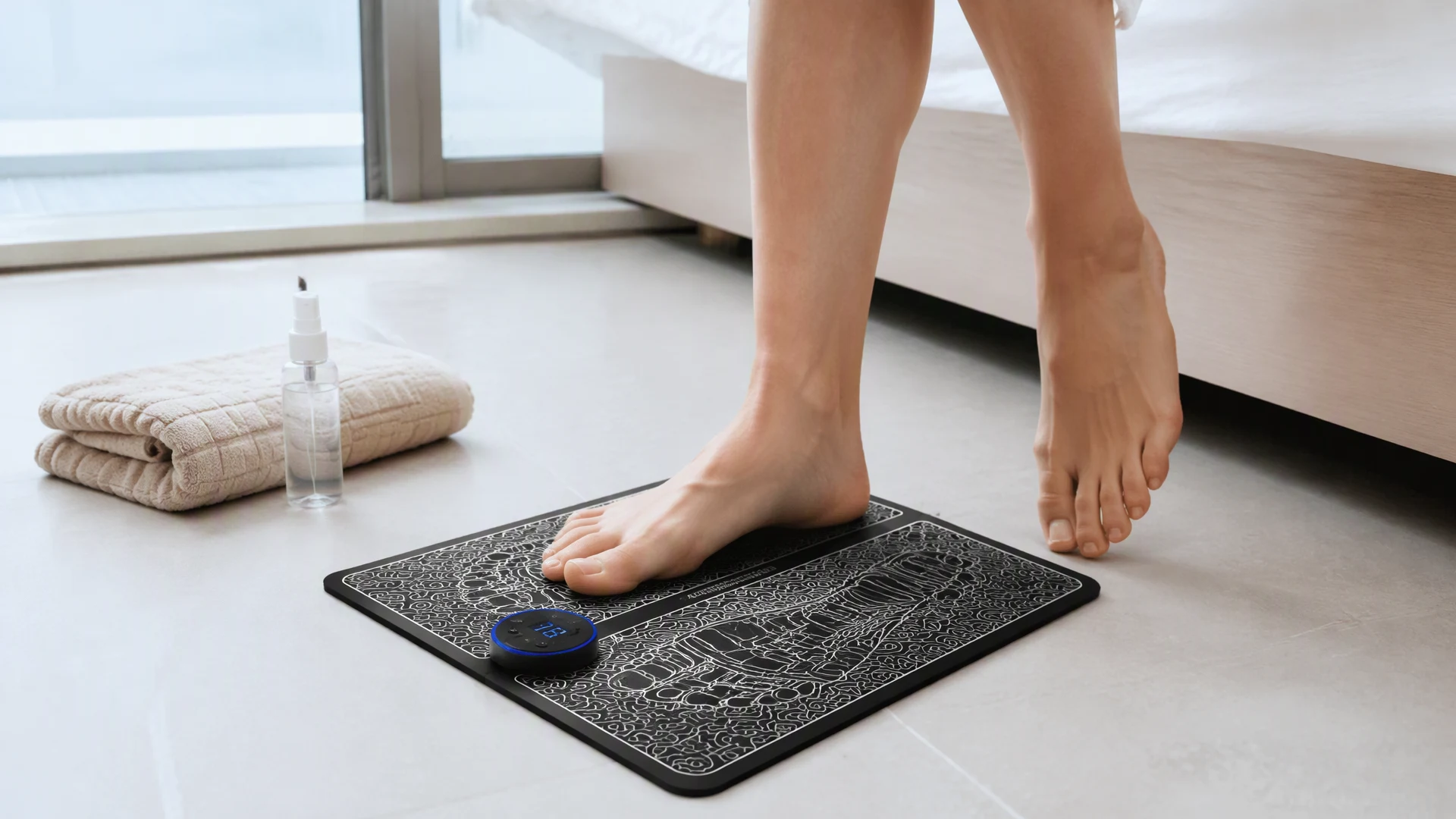
A quick search for “EMS foot massager side effects” turns up a mix of reassuring marketing copy and vague horror stories, neither of which is particularly useful if you’re trying to decide whether to use one tonight. This article sticks to what the manufacturer’s own safety guidance actually says, plus what’s documented about electrical muscle stimulation more broadly, so you can make an informed call rather than guess.
The Short Answer: EMS Side Effects Are Usually Mild and Temporary
For most healthy adults, the most common side effects reported with an EMS foot massager are muscle soreness or discomfort after a session, usually tied to using too high an intensity setting or running the session too long. These effects are not dangerous for most users, but they are a sign to dial back the intensity or shorten the session next time.
Documented Risk Factors, Straight from the Manufacturer
The product’s own “Can this be harmful for me?” guidance lists specific scenarios where caution is needed. These aren’t generic legal disclaimers — they map directly to how electrical stimulation interacts with the body, and they’re worth reading in full before your first session.
Medical conditions that require a doctor’s okay first
If you have circulatory disorders, open wounds, infections, or deep vein thrombosis (DVT), consult a doctor before use. Skin sensitivity is also flagged separately — if your skin reacts easily to adhesives or mild irritants, that’s worth factoring in before placing electrodes directly on bare skin for 15-20 minutes.
Allergies and sensitivity to the electrodes
Some people react to the electrode material or the gel used on EMS devices. The manufacturer specifically recommends a patch test before full use — a short, low-intensity trial session to confirm your skin tolerates contact before committing to a full 15-20 minute routine.
Improper use: intensity and session length
Excessive intensity or long sessions can cause discomfort or muscle soreness. This is the single most preventable side effect on this list — it’s directly tied to user behavior rather than an inherent risk of the device, and it resolves by following the manufacturer’s guidance on intensity level and session duration.
Overstimulation and muscle fatigue
Prolonged use may lead to muscle fatigue. The fix here is simple: allow rest between sessions rather than running the mat back-to-back or multiple times in a single day. Muscles that are being repeatedly made to contract need recovery time just like they would after any other form of exercise.
Who Should Not Use an EMS Foot Massager at All
Two groups are flagged specifically, not as a “consult a doctor” caveat but as a stronger caution: pregnant women should avoid EMS unless a doctor has approved it, and anyone with a pacemaker or other electronic implant should consult a healthcare professional before using EMS at all. Electrical stimulation devices can interfere with the function of implanted electronic medical equipment, which is why this isn’t treated the same as general soreness advice.
How to Minimize Side Effects Before They Start
- Start every new session at the lowest intensity, even if you’ve used the device before — skin and muscle response can vary day to day.
- Keep first-time sessions shorter than the full 15-20 minute range, and extend gradually once you know how your body responds.
- Do a patch test on a small area before your very first full session if you have any history of skin sensitivity.
- Leave at least a few hours between sessions rather than using the mat multiple times back-to-back in one day.
Benefits Worth Weighing Against the Risks
None of this is meant to scare you away from trying an EMS foot massager — for the large majority of healthy adults without the specific conditions listed above, the main benefits reported are a loosened, relaxed feeling in the feet and improved circulation sensation after a session, with side effects limited to mild soreness that resolves on its own. Weighed against that low-risk profile, most people find the trade-off reasonable for a few minutes of daily relief.
If you’re specifically considering this device for nerve-related foot pain, see our companion guide on EMS foot massagers and neuropathy for a closer look at what the device can and can’t realistically do for that condition.
Frequently Asked Questions
Is tingling or buzzing a side effect or how it’s supposed to feel?
Tingling, pulsing, and a mild buzzing sensation are the expected effect of EMS, not a side effect. Sharp pain, burning, or marks on the skin after a session are not expected and are a sign to lower the intensity or stop use.
Can I use it if I have a metal implant like a knee or hip replacement?
The manufacturer’s specific caution is for pacemakers and electronic implants, not orthopedic hardware like a knee or hip replacement. Still, when in doubt about any implanted device, checking with your doctor first is the safer approach.
How soon after a session do side effects, if any, show up?
Muscle soreness from overuse typically shows up within a few hours of a session, similar to mild post-exercise soreness. Skin reactions from sensitivity or allergy tend to appear during or immediately after the session, which is why a patch test beforehand is useful.
The Bottom Line
Most EMS foot massager side effects are mild, predictable, and tied to how the device is used rather than inherent risks — soreness from too much intensity, fatigue from skipping rest between sessions, or skin reactions in people prone to them. The exceptions worth taking seriously are pregnancy and pacemakers or electronic implants, where the manufacturer’s guidance is clear: check with a doctor first. Full specs and safety details are on the EMS Electric Foot Massager Pad product page.
What Regulators Say About EMS Devices Broadly
Beyond manufacturer-specific guidance, the FDA’s consumer guidance on electronic muscle stimulators is worth knowing about. The agency has received reports of shocks, burns, bruising, skin irritation, and pain linked to EMS devices — and specifically flags unregulated or improperly manufactured products with substandard cables and leads as a higher-risk category, separate from the general soreness most users experience.
That distinction matters when shopping: a well-made device with clear instructions and reasonable intensity limits carries a different risk profile than a cheap, unregulated knockoff with no safety documentation. Checking that a device comes with clear usage instructions and documented intensity settings — as opposed to a bare mat with no guidance — is a practical way to apply this regulatory concern to a purchasing decision.
A Quick Pre-Use Checklist
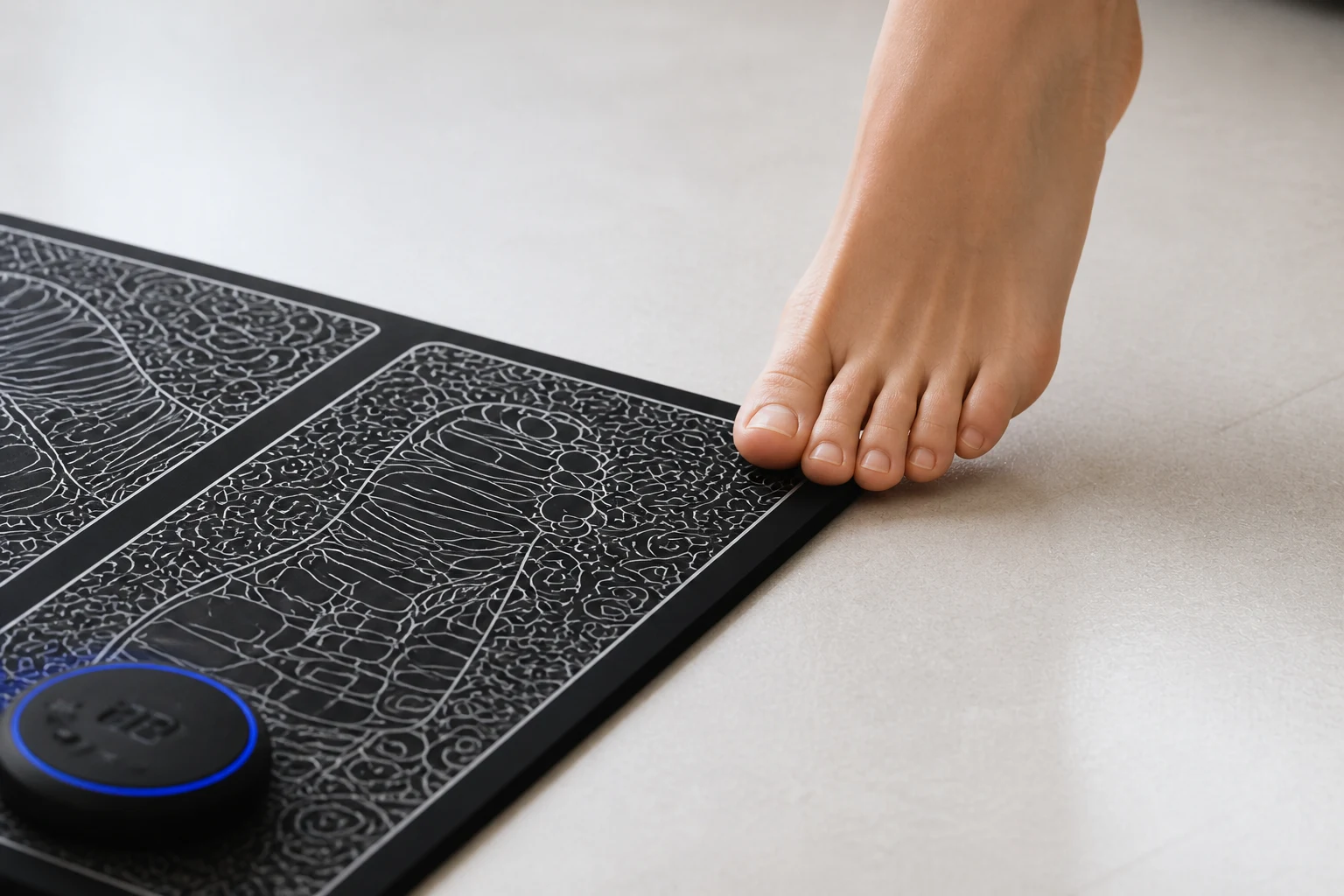
Before your first session, run through this short list rather than skipping straight to the remote. It takes under a minute and covers the scenarios most likely to turn a relaxing routine into an unpleasant one.
- Confirm you’re not pregnant, or have a doctor’s approval if you are.
- Confirm you don’t have a pacemaker or other electronic implant, or have consulted a healthcare professional if you do.
- Check your feet for any open wounds, active infections, or unhealed sores.
- Set the intensity dial to its lowest position before powering on, not after.
- Have a timer set for your intended session length so it’s easy to stop on schedule rather than losing track of time.