

 ES
 PT
 DE
 FR
 IT
 NL
 PL
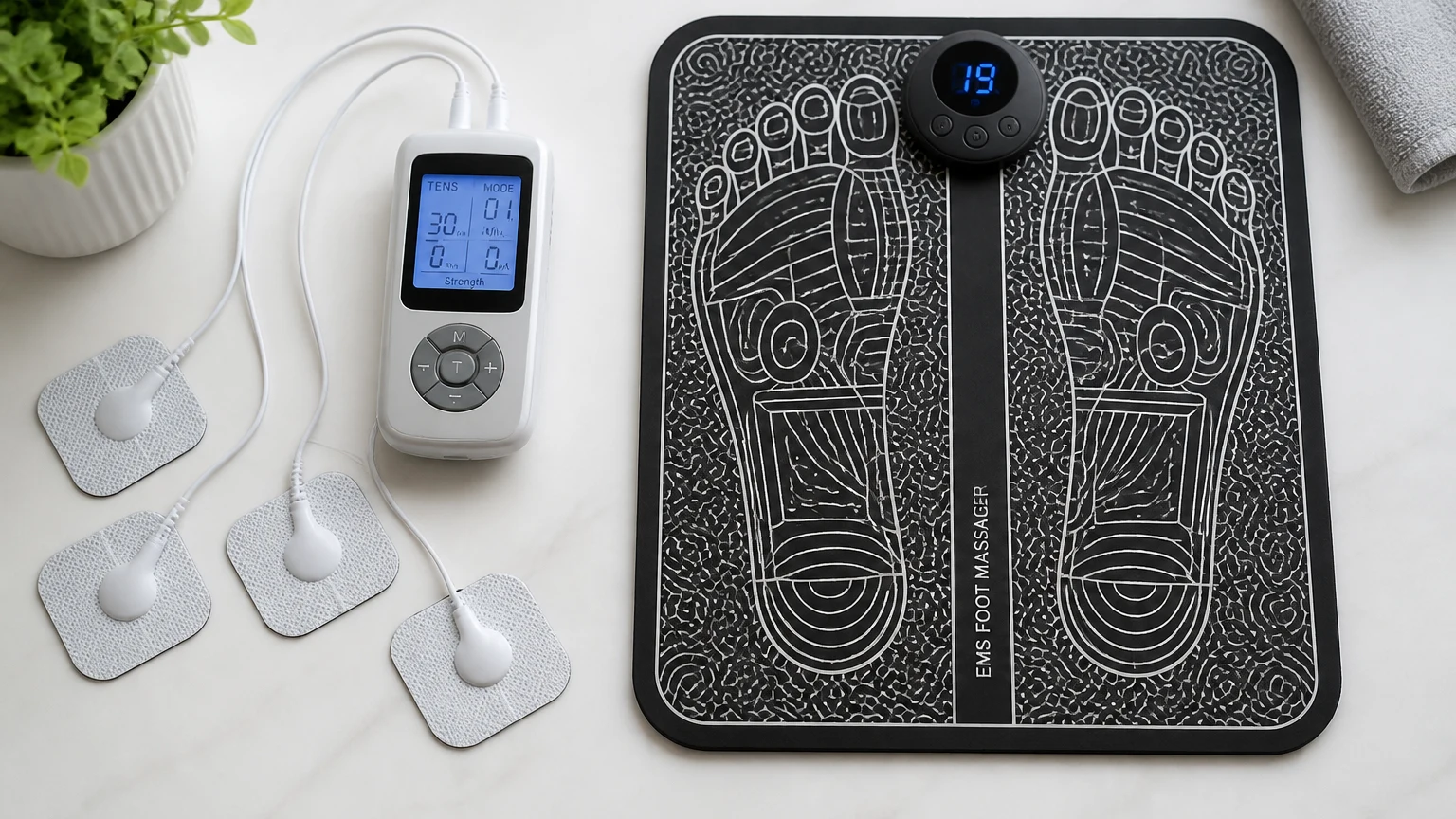
Shop for a foot pain device and you’ll run into both “TENS” and “EMS” within the first few search results, often used almost interchangeably in product titles. They are not the same thing, and picking the wrong one means spending weeks using a device that was never designed for your actual problem. This guide breaks down the real mechanical difference, when each one fits foot pain specifically, and whether you need one, the other, or both.
The Core Difference: Nerves vs. Muscles
According to Healthline’s comparison of e-stim therapies, TENS devices target pain signals through the nervous system, while EMS devices work by directly contracting muscle tissue. That’s the entire distinction in one sentence, but it has real consequences for which device actually solves your specific foot problem.
A TENS unit uses small electrode pads placed over specific points — often along a nerve pathway — and sends a current intended to interrupt or override pain signals before they reach the brain, a mechanism related to what’s known as the gate control theory of pain. An EMS foot massager instead sends pulses that cause the muscles in your feet to physically contract and release, more like an automated workout for small foot muscles than a pain-blocking signal.
What Each Device Physically Looks Like
The hardware difference is as telling as the mechanism. The Tens Unit Muscle Stimulator sold here comes with a controller, six separate electrode pads, electrode cables, a massager slipper, and a treatment points chart — you’re expected to place individual pads at specific locations based on where the pain actually is. The EMS Electric Foot Massager Pad is a single flat mat you simply stand or sit with your feet on, with no pad placement decisions to make.
That placement precision is both the TENS unit’s strength and its friction point: it can target a specific nerve pathway more precisely, but it takes more setup time and a bit of trial and error to find the right spot, guided by the included treatment points chart.
Which One Fits Your Foot Problem?
| Your Situation | Better Fit | Why |
|---|---|---|
| Sharp, localized nerve pain at a specific point | TENS | Targets pain signals directly at the source |
| General foot fatigue, tension, stiffness | EMS | Contracts and relaxes muscles broadly across the foot |
| Want a no-setup, stand-and-go routine | EMS | No pad placement or chart-reading required |
| Chronic nerve-related pain needing precise targeting | TENS | Electrode placement can be adjusted to the exact pain site |
Can You Use Both Together?
Yes, and it’s a fairly common approach rather than an either-or decision. Some people use a TENS unit when pain flares at a specific point, and an EMS mat on other days for general end-of-day foot relaxation. There’s no documented harm in alternating between the two as long as you follow each device’s own safety guidance — they work through different mechanisms, so one doesn’t cancel out or interfere with the other.
If nerve-related pain like neuropathy is your main concern, our guide to EMS and neuropathy covers that scenario specifically, including who should avoid EMS altogether.
Safety Differences Worth Knowing
Both device types share similar core cautions: avoid use during pregnancy unless a doctor approves, consult a healthcare professional if you have a pacemaker or other electronic implant, and skip use over open wounds or areas with active infection. Because EMS causes muscle contraction rather than just a nerve-level sensation, overuse soreness is more commonly reported with EMS than with TENS, which tends to produce a milder tingling sensation at comparable intensity settings.
How Long Does Relief Last With Each?
Neither device produces permanent relief, and expecting one session to last all day sets up disappointment regardless of which you choose. TENS-induced pain relief is generally reported to last anywhere from a few hours to the rest of the day after a session, since it works by temporarily altering how pain signals are processed. EMS-induced muscle relaxation tends to be shorter — often fading within an hour or two — since it’s a direct physical effect on muscle tissue rather than a nervous-system-level change. Neither timeline is fixed; it varies by individual, intensity setting, and the underlying cause of the pain.
Setting Up a Combined Routine Safely
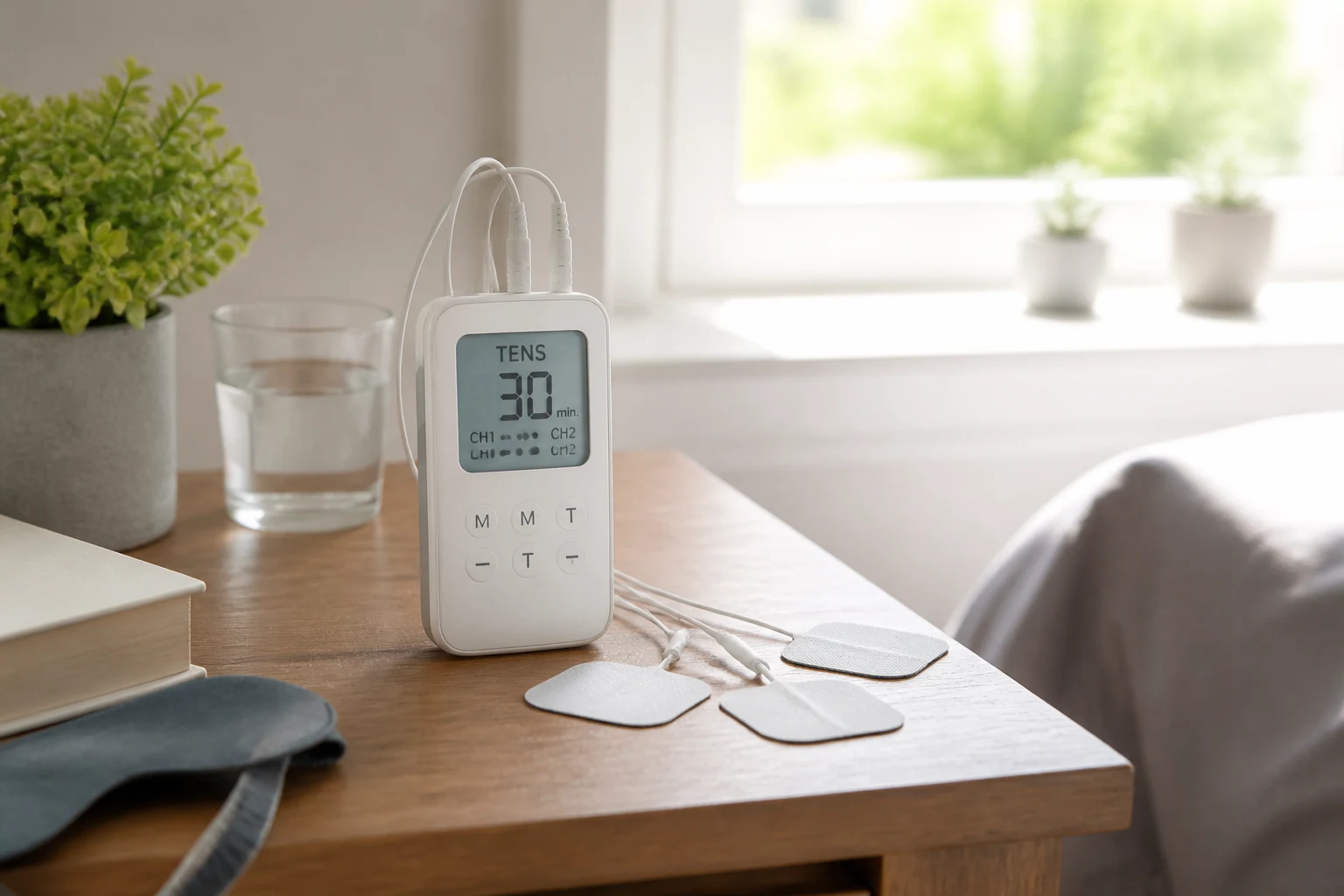
If you decide to use both, the simplest approach is to keep them on separate days or separate times of day rather than back-to-back in the same session. A common pattern reported by users is TENS in the morning for pain management before a long day on your feet, and EMS in the evening as a relaxation routine. This isn’t a documented clinical protocol — it’s simply a practical way to use two tools built for different jobs without overcomplicating your routine.
Whichever order you choose, apply the same lowest-intensity-first rule to both devices when you’re new to either one, and keep a basic log of what settings and timing worked for you — foot pain causes vary enough from person to person that your own trial period matters more than any generic recommendation.
Which One Should You Buy First?
If you had to pick just one to start, let the type of pain decide. Sharp, burning, or electric-shock-like sensations that follow a specific nerve path point toward TENS. A general tired, tense, or achy feeling across the whole foot after a long day points toward EMS. If your pain genuinely doesn’t fit either description clearly, that’s a reasonable signal to get a professional opinion before buying either device, rather than guessing and hoping one happens to help.
Frequently Asked Questions
Is a TENS unit the same as an EMS device?
No. TENS targets pain signals through the nervous system, while EMS directly stimulates muscle contraction. Some combination devices offer both modes, but a standalone TENS unit and a standalone EMS mat work through different mechanisms.
Which is better for plantar fasciitis, TENS or EMS?
Neither is a documented cure for plantar fasciitis. TENS may help manage the pain signal itself, while EMS may help with general foot muscle tension that can accompany the condition. Neither replaces stretching, proper footwear, or a podiatrist’s treatment plan.
Do I need a prescription for either device?
Both the TENS unit and EMS foot massager discussed here are sold as over-the-counter consumer devices, not prescription equipment. That said, anyone with a specific medical condition listed in the safety guidance should check with a doctor regardless of whether a prescription is technically required.
Can I switch between TENS and EMS modes on the same device?
Some combination units do offer both modes in one device, but the standalone TENS unit and EMS foot massager pad discussed in this article are single-mode devices — each is built around one mechanism rather than switchable between the two. If you want both functions, check a product’s specifications for combination-mode support before assuming it covers both.
The Bottom Line
TENS and EMS solve different problems through different mechanisms — one quiets pain signals, the other contracts muscle tissue — and the right choice depends on whether sharp, localized pain or general foot fatigue is your bigger issue. Many people end up using both, just not for the same purpose. Full specs for both devices are available on the TENS Unit Muscle Stimulator and EMS Electric Foot Massager Pad product pages.