

 DE
 ES
 FR
 IT
 NL
 PL
 PT
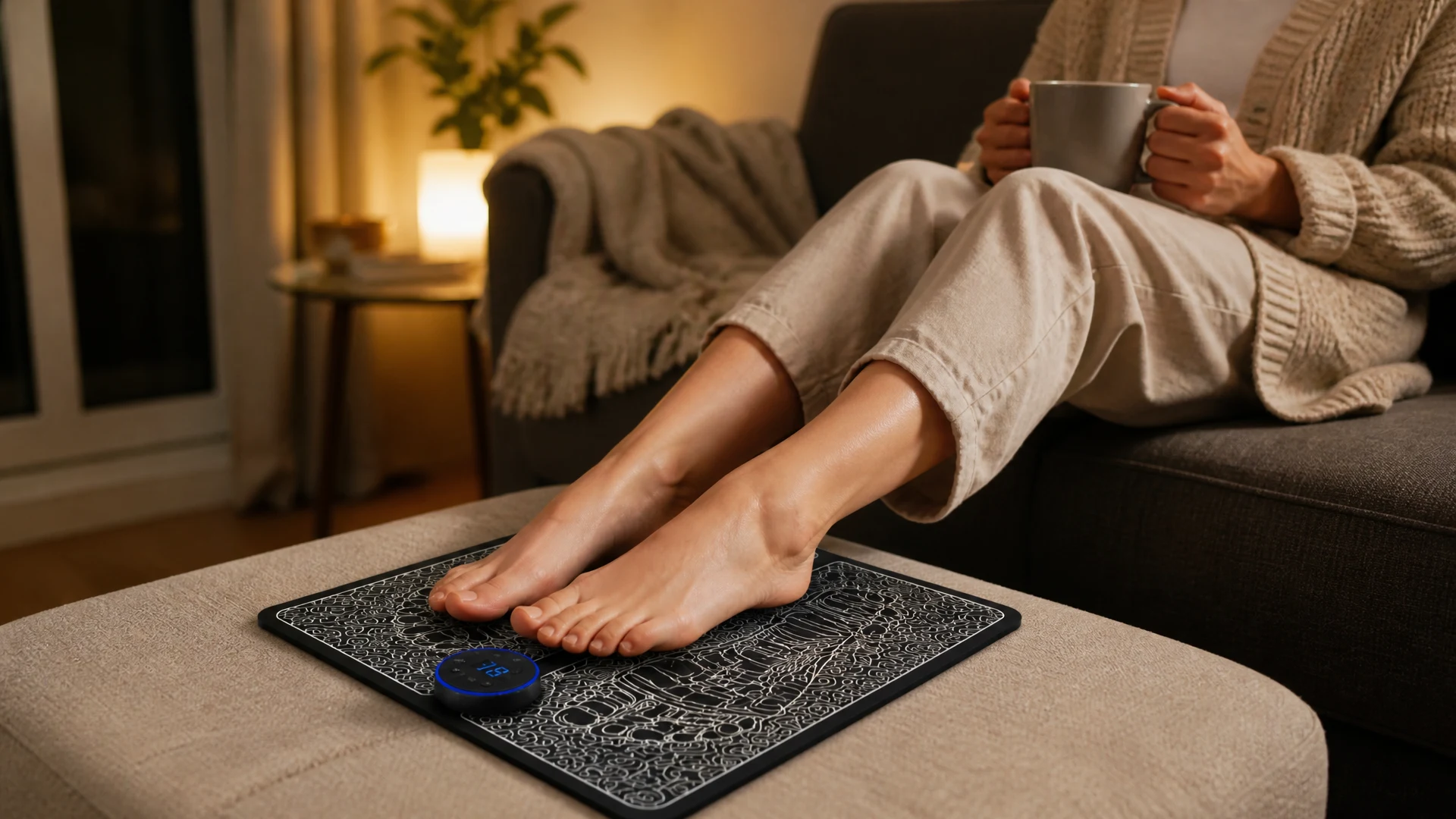
Swollen feet at the end of a long day — whether from standing all shift, a long flight, pregnancy, or just getting older — are common enough that most people have tried at least one remedy for them. EMS foot massagers are increasingly marketed for this specific complaint, and unlike some of the other claims in this product category, there’s actually reasonable research behind the mechanism. Here’s what that research says, and what it doesn’t.
How Swelling Happens in the First Place
Foot and ankle swelling, medically called edema, often results from fluid pooling in the lower legs when the muscles that normally help pump blood and lymph fluid back toward the heart aren’t being activated — which is exactly what happens when you sit or stand still for long stretches. Gravity pulls fluid downward, and without muscle contraction to help push it back up, it accumulates in the feet and ankles.
What the Research Actually Shows
This is one area where EMS-type technology has genuinely supportive evidence, not just marketing language. A 2019 systematic review published in peer-reviewed research concluded that neuromuscular electrical stimulation (NMES) — the same underlying technology used in the EMS Electric Foot Massager Pad — supports reducing abnormal fluid accumulation that shows up clinically as edema. Separate research on ankle sprain recovery and lower-limb swelling found that NMES-induced muscle contraction activates what’s called the musculo-venous pump, helping move fluid back toward the heart in people who aren’t otherwise moving enough to do it themselves.
This mechanism lines up directly with the product’s own description, which states the device “utilizes Neuromuscular Electrical Stimulation (NMES) technology to help temporarily reduce swelling, cramping, and discomfort.” Unlike the plantar fasciitis claim covered in a separate article, this one has a plausible, researched mechanism behind it rather than borrowed evidence from a different technology.
An Important Caveat: Research Context vs. Everyday Use
The studies supporting NMES for edema were largely conducted in clinical rehabilitation settings — ankle sprain recovery, post-surgical swelling, chronic venous disease management — using controlled protocols and, often, professional guidance on electrode placement and settings. That’s a different context from using a consumer foot mat at home for garden-variety end-of-day swelling. The underlying mechanism is the same, but the strength of evidence for casual home use specifically is thinner than for the clinical scenarios the research actually studied.
The One Warning That Matters More Here Than Anywhere Else
Swollen feet and ankles are, in most cases, a benign result of gravity and inactivity. But swelling is also a symptom of deep vein thrombosis (DVT) — a blood clot in a deep vein, usually in the leg — and the product’s own safety guidance specifically lists circulatory disorders and DVT as conditions requiring a doctor’s consultation before use. Using muscle-contracting electrical stimulation on a leg with an undiagnosed clot is a genuine safety concern, not a minor caveat.
Swelling that’s sudden, one-sided, accompanied by warmth, redness, or pain in the calf, or that doesn’t improve with elevation and rest, should be evaluated by a doctor before you reach for any at-home device. Gradual, symmetrical swelling that worsens through the day and improves overnight or with elevation is more typical of the benign, gravity-related kind this article is primarily discussing.
Who Tends to Deal With This Most
Pregnant women, people who stand for long shifts in jobs like retail, nursing, or food service, frequent flyers, and older adults with reduced mobility are the groups most commonly affected by benign lower-limb swelling. If you fall into one of these categories and have ruled out more serious causes with a doctor, the muscle-pump mechanism behind EMS may be a reasonable daily habit to add to your routine, alongside — not instead of — the basics like elevation, movement breaks, and compression socks where appropriate.
A Realistic Routine for Desk Jobs and Long Shifts
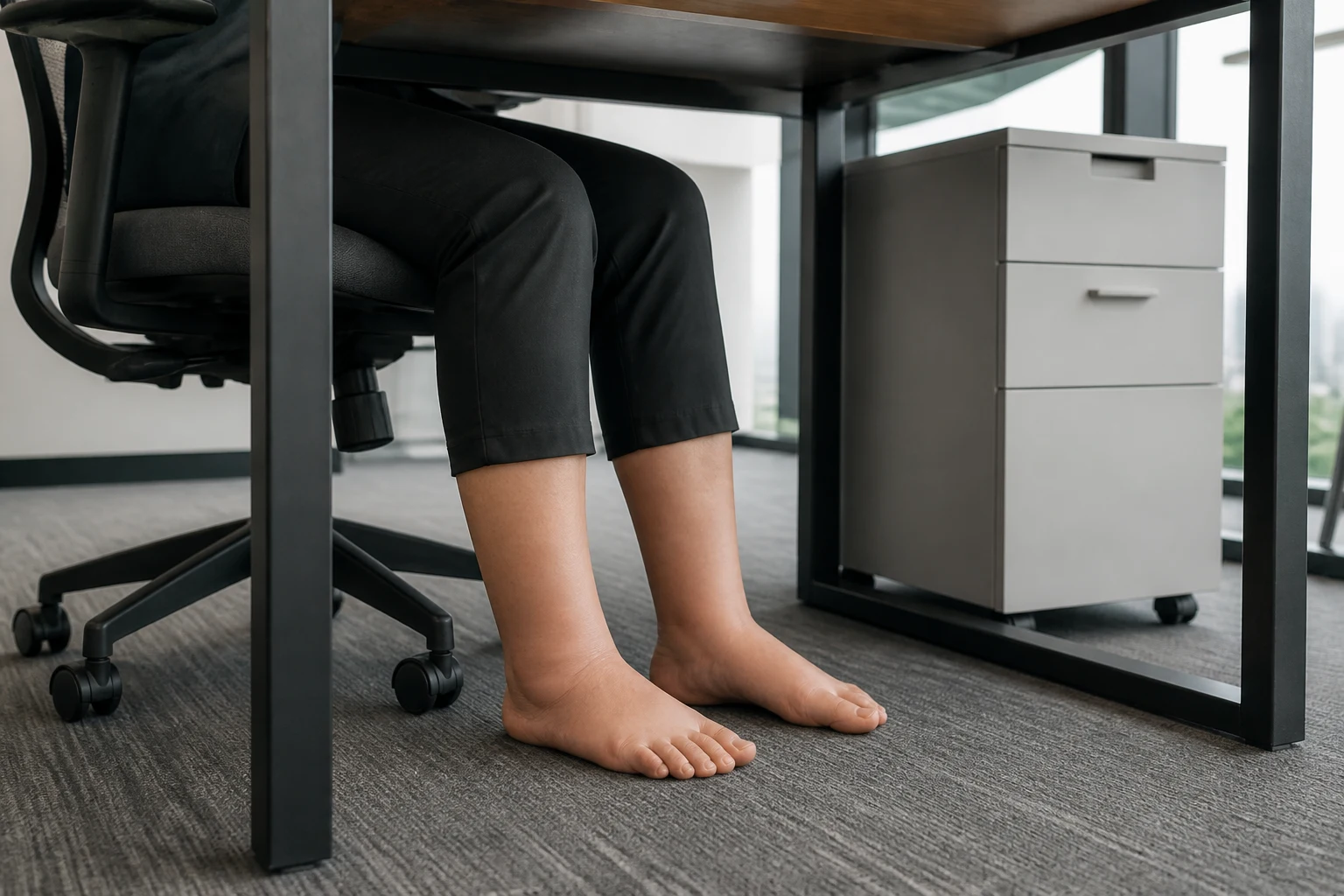
If prolonged sitting rather than standing is your main contributor to swelling, the muscle-pump mechanism works the same way but the timing of when you intervene matters. Sitting for hours compresses circulation in the back of the knees and keeps calf muscles inactive, which is the same inactivity problem standing jobs create, just from a different position. A short EMS session during a lunch break, in addition to an evening session, addresses the swelling before it fully accumulates rather than only after the fact.
For long flights specifically, using the device during a layover or immediately after landing — combined with simple ankle circles and short walks whenever possible during the flight itself — targets the same inactivity-driven swelling that makes feet feel tight in shoes by the end of a trip.
Practical Tips for Using EMS for Swelling
- Use in the evening when swelling has typically accumulated most, rather than first thing in the morning.
- Elevate your feet during or shortly after the session to work with gravity rather than against it.
- Pair with movement breaks throughout the day if your swelling is job-related — EMS at night doesn’t offset eight hours of standing still.
- Stop and consult a doctor if swelling suddenly worsens, becomes one-sided, or is accompanied by pain, warmth, or redness.
If circulation more broadly, rather than swelling specifically, is your main concern, the mechanism discussion in our EMS and neuropathy guide covers related territory, since both conditions involve how well blood flow reaches the extremities.
Frequently Asked Questions
Can EMS replace compression socks for swelling?
No. Compression socks work continuously throughout the day by applying steady external pressure, while EMS works in discrete sessions by activating the muscle pump. They address the same problem through different mechanisms and can reasonably be used together rather than as substitutes for each other.
Is it safe to use EMS for swelling during pregnancy?
Pregnancy-related swelling is common, but the manufacturer’s guidance specifically advises avoiding EMS during pregnancy unless a doctor has approved it. Given that swollen feet are frequently a pregnancy symptom, this is one of the more relevant warnings on this list — check with your OB before using an EMS device for this purpose.
How quickly does swelling go down after a session?
There’s no universal timeline, since swelling reduction depends on the underlying cause, session length, and individual circulation. Research on NMES for edema generally evaluated effects over repeated sessions rather than a single use, so consistent daily use is more likely to show a noticeable difference than a one-off session.
Does the research apply equally to feet, ankles, and lower legs?
Most of the NMES-for-edema research focused on the ankle and lower leg specifically, since that’s where the musculo-venous pump mechanism is most active and where post-injury and post-surgical swelling studies were conducted. Extending that mechanism to general foot swelling is a reasonable inference given the shared circulatory pathway, though it hasn’t been studied as a completely separate category in its own right.
The Bottom Line
Unlike some of the other claims surrounding EMS foot massagers, the edema-reduction mechanism has genuine research support — activating the muscle pump to help move fluid back toward the heart is a real, studied effect. The caveat is that most of that research comes from clinical rehabilitation contexts, and the one warning worth taking seriously is ruling out DVT before assuming your swelling is the benign, gravity-related kind this device is meant for. Full specs and safety guidance are on the EMS Electric Foot Massager Pad product page.