

 DE
 ES
 FR
 IT
 NL
 PL
 PT
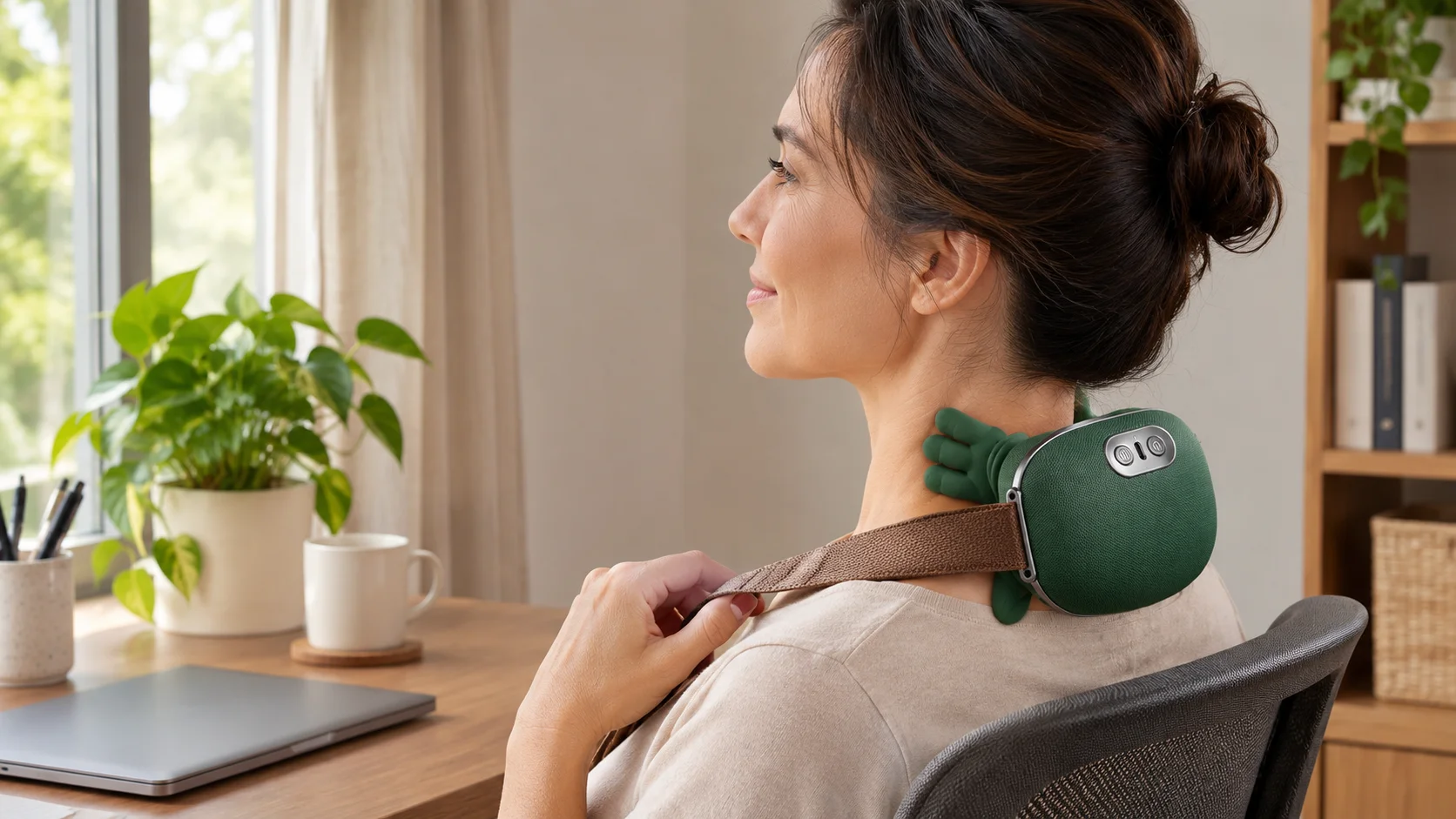
You’ve decided to actually use the neck massager sitting in its box, or the one you just unwrapped, and the obvious question comes first: how long is one session supposed to last, and is there a wrong way to do this? Most buying guides skip straight to listing features and never answer either question with any real specificity. The honest answer involves a distinction that gets lost in most advice online — the difference between what the device is built to do automatically and what you should actually decide for yourself.
The Timer Is a Design Limit, Not a Medical Recommendation
Most heated, kneading-style neck massagers, including the shiatsu model covered on this site, include an automatic shut-off somewhere between 15 and 20 minutes. It is easy to read that number as “the safe amount of time to use this,” but that is not quite what it means. The auto shut-off exists mainly to prevent the motor from overheating and to stop the device from running unattended, not because research has established that minute 21 suddenly becomes dangerous.
That distinction matters because of where the actual guidance comes from. Physical medicine physicians interviewed by Consumer Reports have pointed out that a massager can loosen tissue and increase blood flow, which is a genuine benefit for everyday stiffness, but the research backing specific session lengths for consumer devices is thin. In practice, most people get meaningful relief well before the auto shut-off kicks in. Starting at 10 minutes and seeing how your neck feels afterward is a reasonable approach, rather than treating the full 15 to 20 minutes as a target to hit every time.
Start on the Lowest Setting, Even If It Feels Too Gentle
The instinct to jump straight to the highest intensity setting is common and understandable when a knot feels stubborn, but physical therapists advise against it. The guidance from a doctor of physical therapy quoted in Consumer Reports is straightforward: start gently, and dial the intensity back or stop entirely if it starts to hurt rather than relieve.
This is where having adjustable intensity levels and a reversible kneading direction actually earns its place in the design, rather than being a spec sheet bullet point nobody uses. The first session on a new device should be spent finding the lowest setting that still feels like something is happening, not the highest setting that feels the most intense. Pain during a massage is not a sign that the device is working harder on a stubborn knot; it is a signal to back off.
Sitting, Reclining, or Lying Down: What Actually Changes
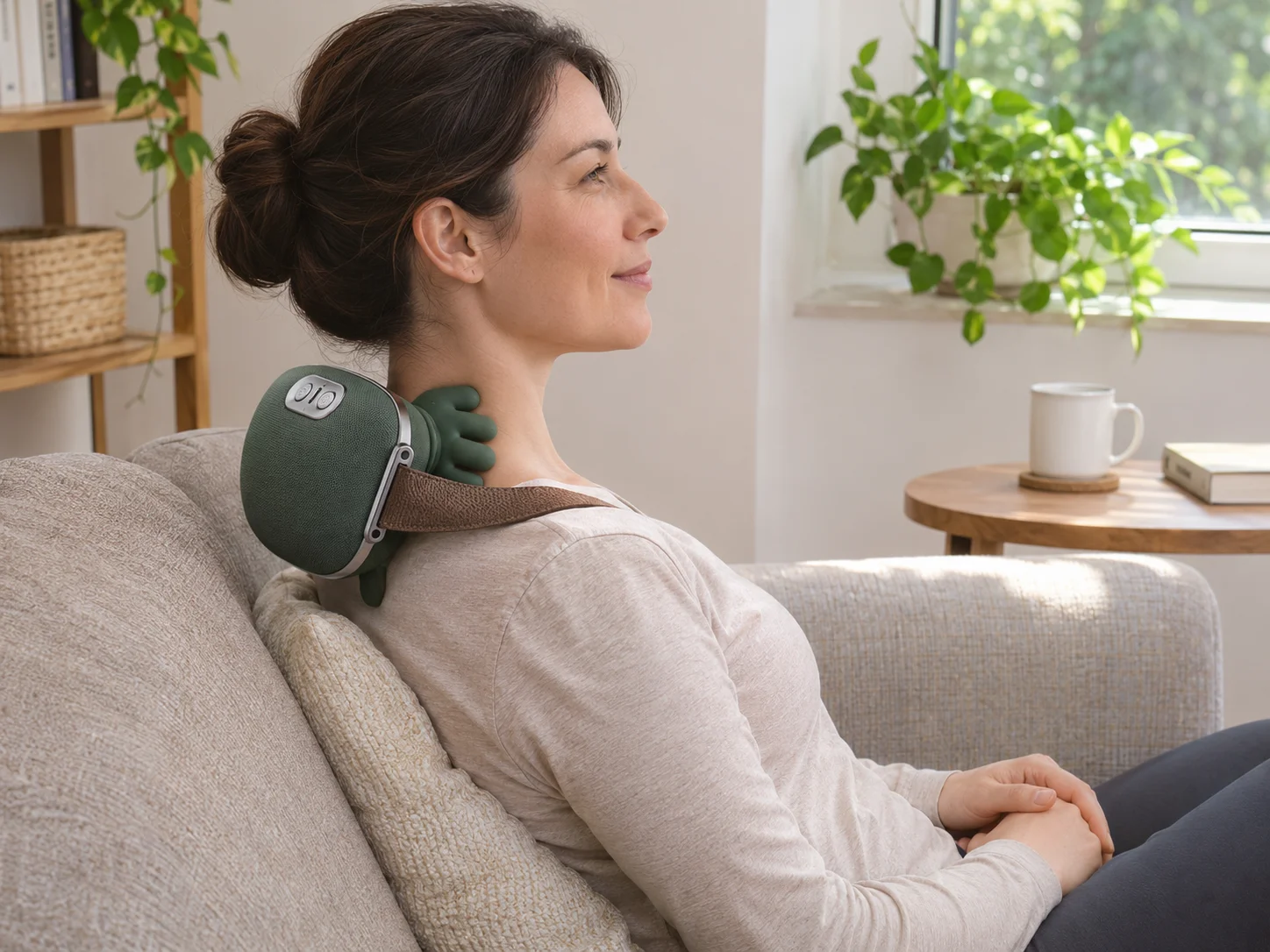
A U-shaped device that rests behind the neck with arms draping over the shoulders works in more positions than most people assume, but the position does change how it performs. Sitting upright at a desk lets gravity help the device’s weight settle naturally against the trapezius, which is useful for a quick session between tasks. Reclining on a sofa shifts more of the device’s weight forward, which can increase pressure on the shoulders without any change to the intensity setting.
Lying flat is generally not recommended for this device shape, since the kneading nodes are designed to press forward into the shoulders and neck under the pull of the straps and the device’s own weight, an arrangement that depends on being upright or reclined rather than horizontal. If a session is meant to lead into actual rest or sleep, it makes more sense to finish the massage first and then lie down afterward, rather than trying to combine the two.
Where on the Neck the Massager Should and Shouldn’t Sit
A physical medicine physician at Ohio State told Consumer Reports that the back of the neck is generally the safer target for massage, while the front and sides should be avoided because they contain major blood vessels and nerves. This lines up exactly with how a device like this is meant to be worn: the main body rests behind the neck, with the kneading arms reaching forward over the shoulders and trapezius, never wrapping around to press against the front of the throat.
If you want the fuller explanation of why the front midline specifically matters, including the carotid sinus and what can happen under firm sustained pressure there, our guide to where not to massage on your neck covers it in detail. The short version for daily use is simple: let the device sit naturally at the back and sides, and never manually reposition it to press against the front of your throat.
When to Check With a Doctor Before Your First Session
A fitness director quoted by Good Housekeeping put this plainly: if you’re experiencing neck pain, it could be a sign of something more serious, and a massager may do more harm than good before that’s ruled out. This is not the product page talking — it is general clinical caution, and it deserves to be stated clearly rather than buried in fine print.
A first session is a reasonable time to pause and check in with a doctor if your neck pain came on suddenly without an obvious cause, if it’s accompanied by numbness or tingling down an arm, or if you have a condition affecting bone density, blood clotting, or an implanted medical device near the neck. None of this means the device is unsafe for ordinary stiffness and tension; it means a new or unexplained symptom deserves a diagnosis first, not a massage session as the first response.
How Often to Use It Week to Week
There is no single clinically validated frequency for how often a consumer neck massager should be used, and claims that cite a precise number without a source are worth being skeptical of. What’s reasonable instead is matching frequency to what you’re actually trying to manage. For everyday tension from desk work or screen time, a daily short session tends to work better than an occasional long one, because it addresses tightness before it accumulates into something more stubborn.
If you’re using it for an acute flare-up of stiffness, like after a rough night’s sleep covered in our guide to waking up with a stiff neck, more frequent short sessions over a few days tend to help more than one long session. And if you’ve read nothing else on this page, this is the one rule worth keeping: the device should never be the only thing you try for pain that isn’t improving or that keeps coming back.
Does a Cheaper Model Cover the Basics Just as Well?
For straightforward daily tension, a simpler device can genuinely do the job. The shop’s Shiatsu Back and Neck Massager covers the core kneading motion at a lower price point, and it’s a sensible starting point if you’ve never used one and want to confirm you actually like the sensation before spending more.
Frequently Asked Questions
How long should you use a neck massager per session?
Most heated kneading neck massagers include an automatic shut-off around 15 to 20 minutes, but that is a design limit to prevent overheating, not a clinically validated session length. Starting around 10 minutes and adjusting based on how your neck feels afterward is a reasonable approach.
What intensity setting should you start on?
Start on the lowest intensity setting, even on a new device, and only increase it if the sensation feels too gentle rather than ineffective. Physical therapists advise dialing back or stopping immediately if pressure starts to hurt instead of relieve.
Can you use a neck massager lying down?
It’s not ideal for a U-shaped wraparound massager, since the device relies on gravity and strap tension to press the kneading nodes into the shoulders, which works best sitting upright or reclined rather than fully horizontal.
How many times a week should you use a neck massager?
There is no single validated frequency, but a short daily session tends to manage everyday desk-related tension better than one long occasional session. For an acute stiff neck, more frequent short sessions over a few days is usually more effective than one extended one.
The Bottom Line
The auto shut-off timer tells you when the device will stop, not how long you should actually run it. Start low on intensity, stay seated or reclined rather than lying flat, keep the device at the back and sides of your neck rather than the front, and treat any new or worsening pain as a reason to see a doctor rather than a reason to turn up the setting. Used that way, a neck massager is a genuinely useful tool for everyday tension — just not a substitute for figuring out what’s actually causing pain that won’t go away.