

 DE
 ES
 FR
 IT
 NL
 PL
 PT
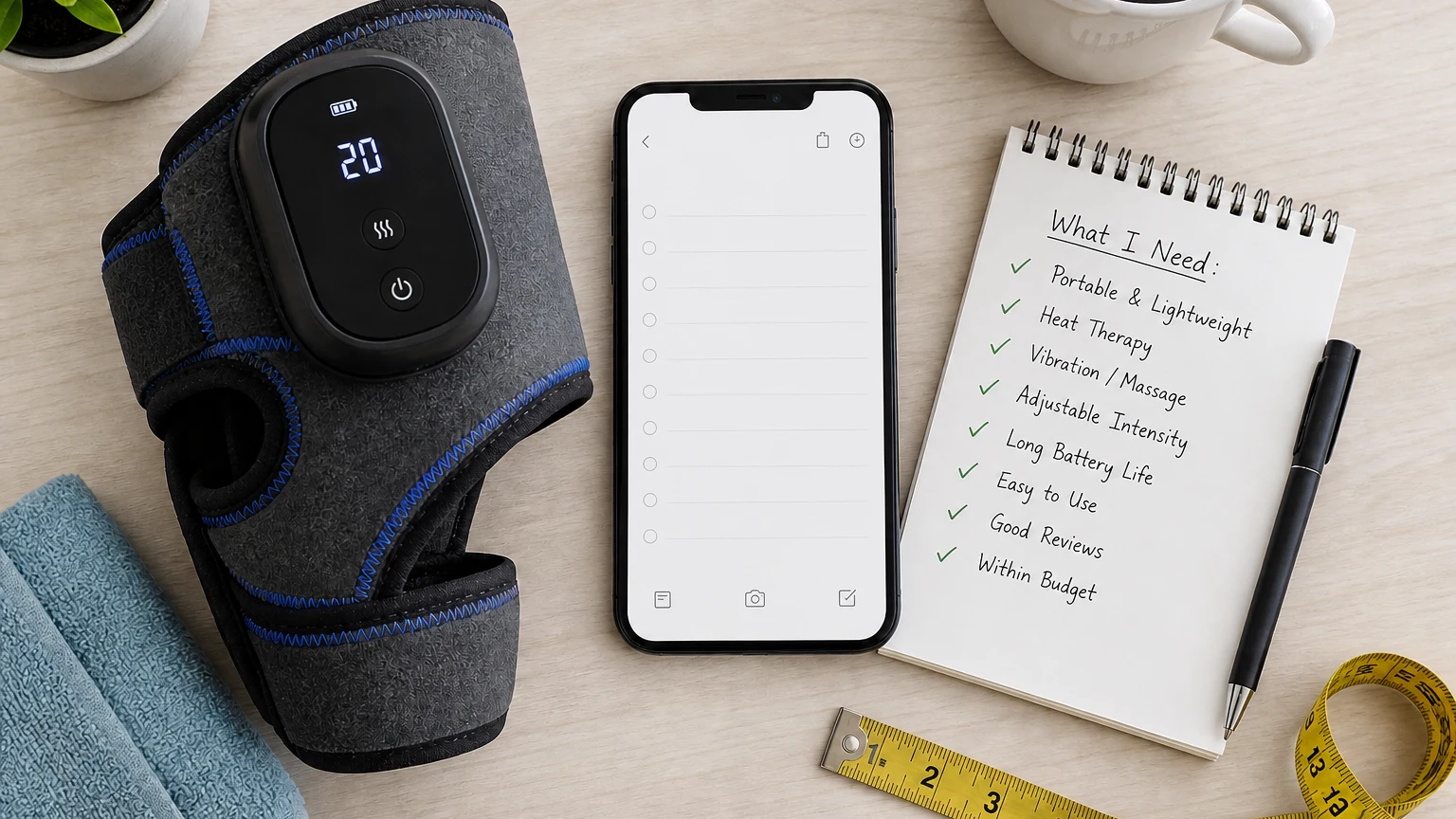
Once you’ve decided a device might help your knee pain — whether for post-workout recovery, arthritis management, or general stiffness — the market is crowded with options that all claim to be the “best” solution. This guide skips the marketing language and focuses on the practical specs and features that actually affect whether a portable knee therapy device will work for your situation.
Portable vs. Fixed: Why It Matters More Than You’d Think
“Portable” in this product category usually means battery or USB-rechargeable rather than requiring a wall outlet during use, and wearable rather than a stationary unit you sit next to. This matters practically: a wearable wrap-style device lets you stay mobile around the house, work at a desk, or travel with it, while a corded or stationary unit ties you to one spot. If your knee pain happens most during specific moments — after a workout, before bed, during a long flight — portability determines whether the device fits into that moment or becomes another thing you have to make time for.
The Core Features Worth Comparing
Number of therapy modes
Single-mode devices (just heat, or just vibration) are simpler and often cheaper, but a combination device like the Smart Knee Massager with Heat & Vibration lets you match the mode to the problem — heat for chronic stiffness, vibration for pain signal relief — without buying two separate products. Our guide to how heat and vibration actually work breaks down when each mode makes sense.
Strap and sizing design
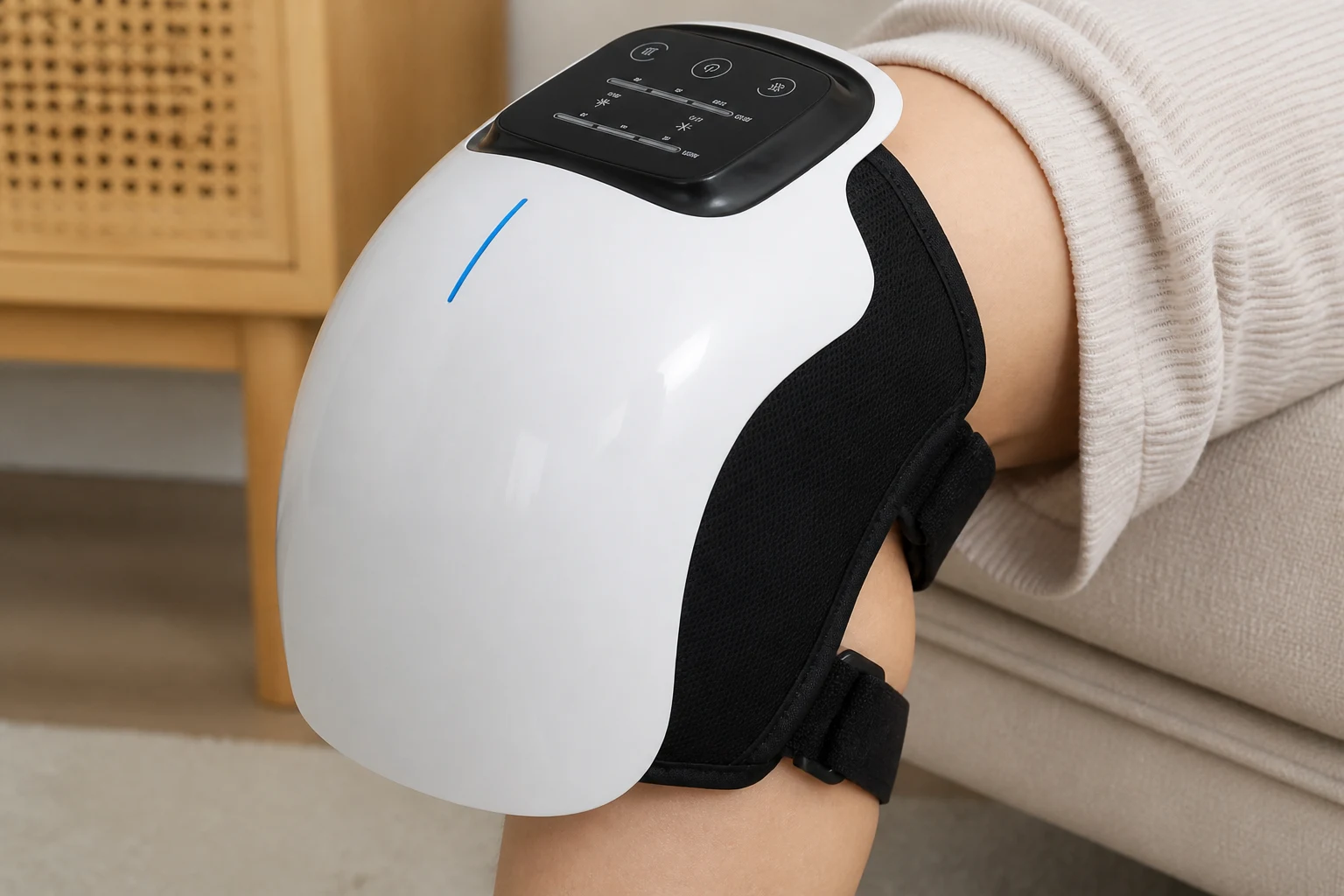
A device that doesn’t stay securely in place during movement is one you’ll stop using within a week. Look for adjustable elastic straps that can accommodate different knee sizes and a wrap shape that conforms to the knee’s curve rather than a flat pad that slides. If you plan to wear it while walking around rather than only while seated, strap security matters even more.
Battery life and charging
USB-rechargeable devices avoid the ongoing cost and waste of disposable batteries, but battery life varies enough between products that it’s worth checking before buying if you plan daily use. A device that needs charging after every single session becomes a hassle fast; one that holds a charge across several sessions fits more naturally into a daily routine.
Published specifications vs. vague marketing language
As covered in our red light therapy article, many consumer devices describe their features in general terms — “therapeutic red light,” “multiple intensity levels” — without publishing the specific wavelength, frequency, or temperature range. This isn’t necessarily a dealbreaker, but a product that does publish more specific numbers gives you more ability to compare it against published research, which matters more if you’re buying primarily for a documented condition rather than general comfort.
Intensity and temperature adjustability
A device with only one fixed intensity level forces everyone into the same settings regardless of pain tolerance or sensitivity, which is a real limitation for a body part that varies so much between users and even between sessions for the same person. Multiple adjustable levels for both heat and vibration let you start low and build up as covered in our safety guidance, rather than being stuck with a single setting that might be too intense for a sensitive knee or too mild to notice.
Red Flags Worth Watching For
- Claims of curing arthritis, regrowing cartilage, or permanently fixing joint damage — no consumer device does this, and such claims are a signal of overpromising marketing rather than accurate product information.
- No listed safety information or contraindications at all, which makes it harder to know if the device is appropriate for conditions like pregnancy, pacemakers, or circulatory issues.
- Extremely short return windows for a product category where it often takes a few weeks of consistent use to know if it’s helping.
- Reviews that are overwhelmingly generic or posted in a short burst, which can be a sign of incentivized or fake reviews rather than genuine user experience.
Device vs. Manual Massage: Do You Need Both?
A device isn’t a replacement for understanding basic manual technique, and the two work well together rather than competing. Our guide on how to massage a knee manually covers trigger points and simple hands-on techniques that require no equipment at all — useful for moments when you don’t have a device on hand, or as a complement to device sessions. A device adds consistency and hands-free convenience that manual technique can’t match, particularly for heat and targeted vibration frequencies that are hard to replicate with your hands alone.
Matching a Device to Your Situation
| Your Priority | What to Look For |
|---|---|
| Daily chronic stiffness management | Combination heat + vibration device with good battery life for consistent daily use |
| Post-workout recovery | Portable, quick-charging device that fits into a gym bag |
| Travel or frequent flights | Compact, battery-powered, no cords required |
| Documented condition (arthritis, post-surgery) | Device with published specs you can discuss with your doctor |
| Budget-conscious, occasional use | Single-mode device rather than full combination unit |
Frequently Asked Questions
Is a more expensive knee therapy device always better?
Not necessarily. Price often reflects the number of therapy modes, build quality, and brand, but a simpler single-mode device can be the right choice if you’ve identified that one specific mechanism — heat or vibration — is what actually helps your particular knee issue. Matching the device to your actual need matters more than maximizing features.
How long should a portable knee massager’s battery last?
There’s no industry standard, which is exactly why checking the specific battery life listed for a product matters before buying. For daily use, a device that lasts multiple sessions per charge is more practical than one requiring a charge before every single use.
Should I buy a device before or after trying manual massage techniques?
Trying manual techniques first is a reasonable, free way to gauge whether general knee massage helps your specific pain before investing in a device. If manual massage provides noticeable relief, a device can make that relief more consistent and convenient; if manual massage doesn’t help at all, that’s useful information before spending money on an electronic version of the same general concept.
Do I need a device with light therapy, or is heat and vibration enough?
It depends on what you’re targeting. Heat and vibration alone cover muscle tension and pain-signal management well on their own. Light therapy adds a third mechanism with its own separate evidence base, covered in detail in our red light therapy guide — worth considering if chronic joint pain rather than just muscle tension is your main concern, but not strictly necessary if your issue is primarily muscular.
The Bottom Line
The right portable knee therapy device depends on matching features to your actual situation — therapy modes to your specific pain type, strap design to your activity level, and battery life to your usage frequency. Watch for red flags like cure claims and missing safety information, and remember that a device complements rather than replaces basic manual technique. Full specs for one combination option are on the Smart Knee Massager with Heat & Vibration product page.