

 DE
 ES
 FR
 IT
 NL
 PL
 PT
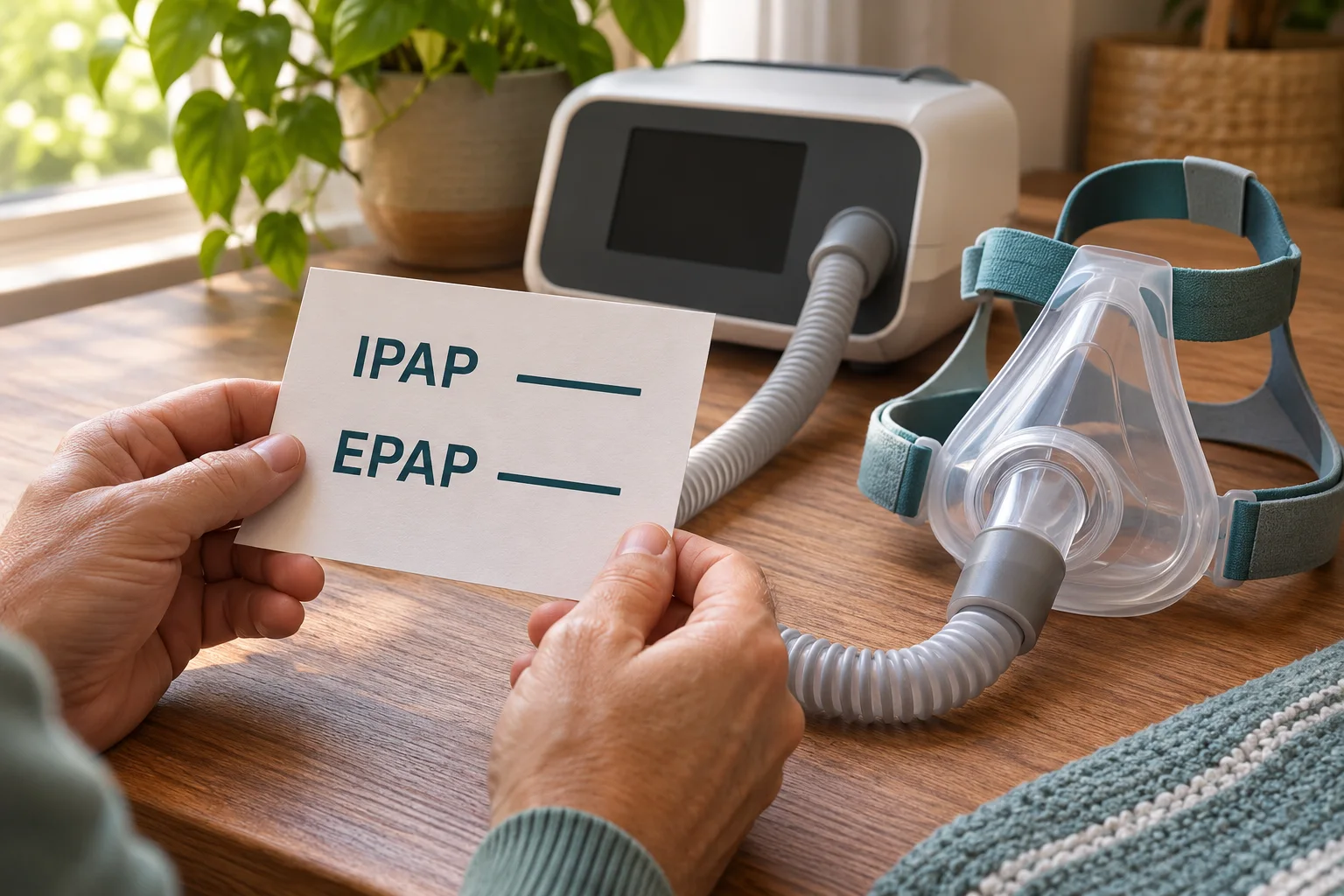
A BiPAP machine delivers pressurized air through a hose and mask, using a higher pressure when you breathe in and a lower pressure when you breathe out. BPAP is the generic abbreviation for bilevel positive airway pressure; BiPAP is a brand name often used in conversation for the same type of therapy.
If the term appears on your prescription, the useful next question is which bilevel mode and settings your clinician intends. Two devices can look identical while supporting different modes. A product photograph cannot establish what treatment a machine provides.
How does a BiPAP machine work?
The machine changes between two positive pressure levels during breathing. The lower level does not mean that airflow switches off when you exhale. Your treatment team determines the pressures and how the machine coordinates with your breathing.
Cleveland Clinic explains the basic pressure cycle and the role of a fitted mask.
Read the Cleveland Clinic BiPAP guide
IPAP, EPAP and pressure support explained
| Term | What it means |
|---|---|
| IPAP | Inspiratory positive airway pressure: the higher pressure delivered during inhalation. |
| EPAP | Expiratory positive airway pressure: the lower pressure maintained during exhalation. |
| PS | Pressure support: the difference between IPAP and EPAP. |
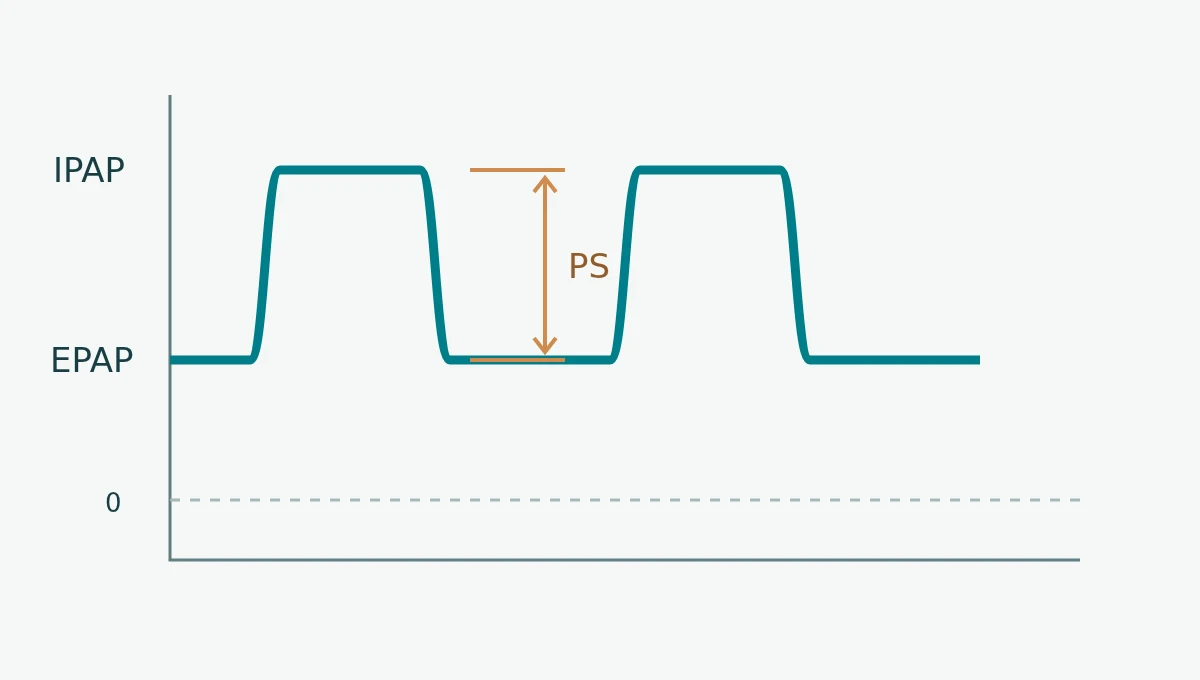
Pressure support describes a pressure difference, not a promise that every machine with the same PS value behaves identically. Timing, supported modes and the breathing circuit also matter. Resmed describes these terms in its professional ventilation guidance.
Read the pressure-support explanation
Why might a clinician prescribe bilevel therapy?
CPAP is commonly used for obstructive sleep apnea. Bilevel therapy may be considered when a person has difficulty tolerating CPAP or needs a different form of breathing support. The American Thoracic Society explains that bilevel is not generally more effective than CPAP for everyone with obstructive sleep apnea.
Read the American Thoracic Society patient resource
A diagnosis alone does not tell you which device to buy. Ask your clinician to connect the prescribed mode to your own treatment needs, rather than choosing from a list of conditions in a sales description.
For a separate comparison of CPAP, APAP and bilevel therapy, use our comparison article.
CPAP vs. BiPAP: understand the differences
Does every BiPAP machine have a backup rate?
No. A backup rate is a separate capability that can provide timed support when specified breathing criteria are not met. Do not assume that a device provides it simply because its listing says bilevel or BiPAP. Confirm the exact model, available mode and prescribed configuration with the supplier and your treatment team.
The terms S, S/T and auto-bilevel are not interchangeable. Read the specific manufacturer manual: an automatic pressure feature does not by itself confirm a timed backup function.
What to confirm before ordering a prescribed machine
- Prescription and mode: ask for the exact therapy mode and a written explanation of the required setup.
- Model and documentation: match the complete model identifier to the manufacturer manual, not just the enclosure or product name.
- Mask and circuit: check the specified mask, tubing, connectors and circuit requirements. A connector that fits physically is not proof of compatibility.
- Included equipment: ask which humidifier, power supply, tubing and mask are actually included. Check replacement-part availability separately.
- Follow-up: confirm who will review your treatment data and whom to contact about discomfort, leaks or difficulty using the device.
For the broader PAP terminology and equipment overview, start with our introductory guide.
What if breathing feels uncomfortable or the mask leaks?
Record what you notice and share it with your care team: when discomfort starts, where air escapes and whether the problem changes with your sleeping position. Mask fit and humidification may need attention. MedlinePlus recommends working with your provider on PAP problems rather than giving up treatment.
Read the MedlinePlus PAP therapy overview
Our leak guide explains intentional venting, unwanted leaks and what information to bring to a follow-up appointment. Pressure or mode changes should be handled by your treatment team.
Frequently asked questions
Is BiPAP better than CPAP?
It depends on the treatment need. Two pressure levels do not make a device a universal upgrade. Use the mode prescribed for you and discuss persistent problems with your clinician.
Can I use my existing CPAP mask with bilevel therapy?
Check the mask and device instructions together with your supplier. Compatibility depends on the complete circuit and prescribed setup, not simply the word CPAP on the mask packaging.
Does lower exhalation pressure mean zero pressure?
No. EPAP remains a positive pressure level. The change from IPAP to EPAP is the difference between two pressure levels, not an on-off cycle.
Should I copy someone else’s IPAP and EPAP settings?
No. Settings and timing are individualized. Ask your treatment team to explain your prescription; an educational diagram or another person’s settings cannot replace that assessment.
Sources and further reading
The linked clinical and patient resources above were checked on November 3, 2026. This article explains terminology for discussion with your care team and does not prescribe a device, mode or pressure setting.