

 DE
 ES
 FR
 IT
 NL
 PL
 PT
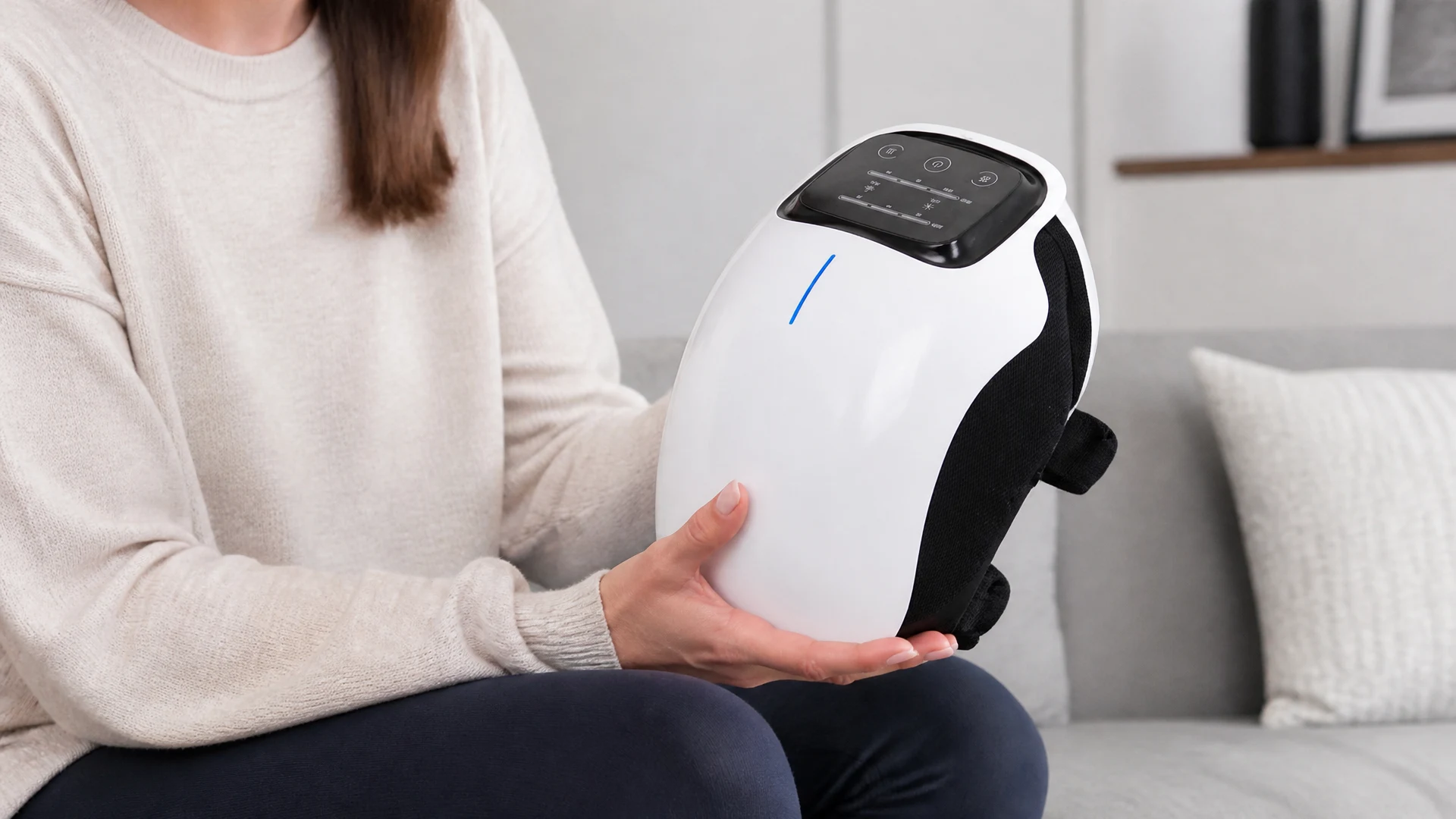
“Do knee massagers work?” is a fair, skeptical question, and it deserves a direct answer rather than a marketing deflection. Having gone through the research on red light therapy, heat, vibration, and arthritis-specific evidence across this site’s knee content, here’s the honest synthesis: yes, parts of it work, in specific and limited ways, and understanding exactly which parts matters more than a simple yes-or-no answer.
The Honest Summary of What Has Evidence
Pulling together the research covered across this site’s knee massager coverage: heat therapy has solid physiological evidence for reducing muscle tension and joint stiffness through vasodilation and improved collagen elasticity. Vibration has a credible neurological mechanism — spinal gate control — for temporarily reducing pain signal perception. Red and infrared light therapy has genuine placebo-controlled clinical trial support for knee osteoarthritis pain specifically, though the strongest results came from medical-grade devices at specific wavelengths most consumer products don’t publish. None of these mechanisms reverse joint damage, regenerate cartilage, or cure arthritis.
Where the Evidence Gets Thinner
Two areas deserve particular skepticism. First, the specific combination of heat, vibration, and light delivered by one consumer wearable device hasn’t been studied as a unit — each mechanism is individually supported, but “three mechanisms in one gadget” is a newer product category than the research base for any single mechanism. Second, plantar fasciitis-style claims (relevant if you’re comparing knee devices to other joint massagers) often borrow evidence from different technologies than what’s actually in the product, a pattern worth watching for across this entire device category, not just knee products.
What About the Placebo Effect?
It’s a legitimate question, and the honest answer is that placebo plays some role in almost every pain intervention, including prescription treatments. What makes the research cited across this site’s knee content meaningful is that the key studies were placebo-controlled — real light therapy was compared against a sham device that looked and felt the same, and the real treatment still outperformed the fake one. That doesn’t eliminate placebo effects entirely, but it does mean the benefit isn’t purely “I believe this will help, so it does.” The gap between the real and sham groups in those trials represents something beyond expectation alone.
Who Is Likely to Notice a Real Difference
Based on the trial populations and mechanisms covered in this site’s research, people most likely to notice a genuine effect include those with chronic knee stiffness from mild-to-moderate osteoarthritis, general muscle tension around the knee from standing or activity, and stable, non-flaring arthritis symptoms. People least likely to be satisfied include those expecting cartilage regeneration or a cure, anyone with an active injury or acute inflammation (where heat is actually contraindicated), and anyone whose knee pain stems from a mechanical problem like a torn meniscus or ligament damage that needs surgical or structural intervention rather than symptom management.
Why Review Sites and Product Pages Often Overstate the Evidence
It’s worth understanding why there’s such a gap between cautious research summaries and confident marketing claims. Product descriptions are written to sell, not to disclose nuance — a page that says “clinically proven to relieve joint pain” is technically referencing real research on the underlying mechanism, even if the specific product was never itself tested in a trial. This isn’t necessarily dishonest, but it blurs an important distinction: the mechanism has evidence, the specific consumer product usually doesn’t have its own dedicated trial. Review sites compound this by aggregating marketing language without checking whether cited studies actually used comparable devices, wavelengths, or doses. Reading the actual research, as this article series has tried to do, is the only reliable way to close that gap.
A Skeptic’s Framework for Testing One Yourself

If you remain unconvinced by research summaries (a reasonable position), here’s a practical way to test a device on your own knee without fooling yourself. Commit to a fixed schedule — the trials that showed benefit generally ran 2 to 3 sessions weekly for several weeks, not daily sessions for three days. Track a simple pain or stiffness rating before starting and at the same time each week, rather than relying on memory of how you felt a month ago. Separate your evaluation of heat from vibration from light by trying each mode individually for at least a week before combining them, so you can tell which one, if any, is doing the work for your specific knee.
Dig Deeper Into Any Specific Mechanism
If one particular mechanism is most relevant to your situation, the detailed breakdown is worth reading before deciding. Our red light therapy guide covers the clinical trial data and the important wavelength caveat. Our heat vs. vibration guide explains the separate neurophysiological mechanisms behind each mode. If arthritis specifically is your concern, our arthritis-focused guide covers the distinction between osteoarthritis and rheumatoid arthritis and the safety considerations for each. And if you’re still deciding whether to buy a device at all, our buying guide covers the practical features worth comparing.
Frequently Asked Questions
Do knee massagers actually work?
The individual mechanisms — heat, vibration, and red light therapy — each have documented evidence for reducing knee pain and stiffness symptoms, with red light therapy having the strongest placebo-controlled clinical support. None of them cure arthritis or repair joint damage; they manage symptoms, not the underlying condition.
Do knee massagers work for osteoarthritis?
Heat therapy and red/infrared light therapy both have research support for osteoarthritis symptom relief specifically, including reduced pain scores in placebo-controlled trials. The effect is modest, not curative, and works best alongside — not instead of — exercise and standard medical treatment.
How do I know if it’s working or if I’m just feeling the placebo effect?
Track a consistent pain or stiffness rating at the same time each week over several weeks rather than relying on daily impressions, and compare how you feel on days you skip versus use the device. A genuine, mechanism-based effect tends to show a more consistent pattern over weeks; pure placebo effects often fade in intensity once the initial novelty wears off.
If it’s not a cure, is it even worth buying?
That depends entirely on what you’re hoping to get out of it. If you’re looking for a low-risk, non-pharmacological way to reduce day-to-day stiffness and discomfort alongside your existing treatment plan, the documented symptom-relief mechanisms make it a reasonable purchase. If you’re hoping to avoid surgery, reverse joint damage, or replace a doctor’s treatment plan, it’s not designed to do that, and expecting it to will lead to disappointment regardless of which specific device you buy.
The Bottom Line
Knee massagers “work” in the limited, specific sense that heat, vibration, and red light therapy each have documented evidence for reducing pain and stiffness symptoms — genuinely useful for many people with chronic, stable knee discomfort. They don’t cure arthritis, regenerate cartilage, or replace medical treatment for an active injury or autoimmune flare. Knowing that distinction going in is the difference between reasonable satisfaction and disappointed expectations. Full specs for the device discussed throughout this series are on the Smart Knee Massager with Heat & Vibration product page.